PROUD TO BE A
FARMER
I received
in the last days of February and in quick succession, three French articles
that have heckled me, and that I want to analyze in a parallel.
I think what
is happening in France can be extended to many industrialized countries,
although the phenomenon has not everywhere the same intensity, there is a safe
bet that we will see the phenomenon worsen in the coming years unless
agriculture, farmers and agricultural organizations and trade unions are able
to change the trend.
First of
all, we observe on challenges.fr that "in
2014, farmers' incomes are expected to fall by 5% to 24,400 euros, according to
early estimates.
Breeders are still worse off. For example cattle
farmers have seen their income drop by more than 20% to 14,500 euros per year.
But this year, two spinnerets join the breeders in the
rank of the lowest paid farmers. First, the fruit growers with annual sales
revenue falling by over 55% to 13,400 euros. Involved, a production of peaches
and apricots abundant with low prices, and the Spanish competition pulling
prices down.
But above all it is the grain producers, until now
considered the rich sector of agriculture, which bear the brunt of the fall in
cereal prices. They should record in 2014, a revenue loss of about 40% to
11,500 euros per year.
In this gloomy picture, only the vine growers and
dairy farmers are spared. "
As a first observation, farmers
often live badly, with modest or low incomes. Because it's difficult to live in
France with 14,500 euros per year, even worse with 13,400 euros, and even more
with 11,500 euros, less than 1,000 euros per month.
It is known
as the years go by and not alike. This is often true, but not always. Sometimes
they look alike.
There are
always a few farmers that are going better than others, which are often taken
as an example of success or wealth. Yet the reality is that described in the
article by challenges.fr.
The French and European agriculture
as a whole through a very difficult period.
The article
does not mention the huge price distortions between the price paid to the
farmer and that paid by the consumer. Yet the theme appears in a comment. How
the consumer, whose share of the budget spent on food continues to rise, can he
understand that the farmer is worse off than him? Currently, I mean in the
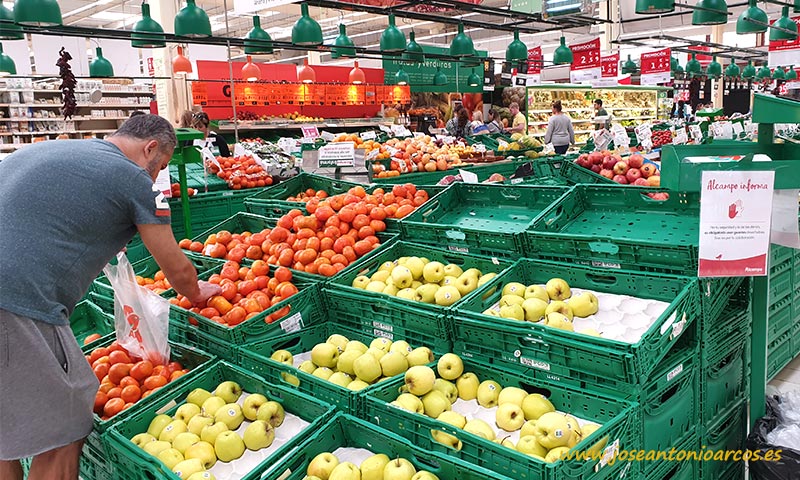
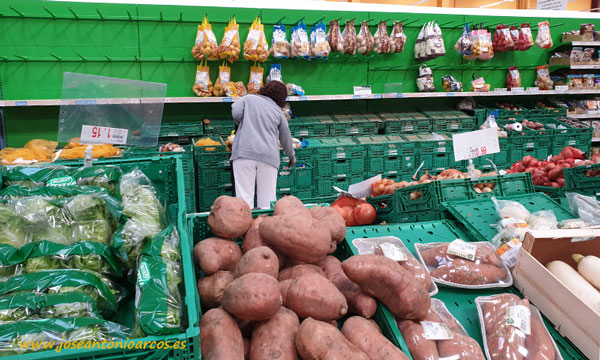
winter period 2014-2015, the potatoes are paid to the farmer to 4 cents / kg,
oranges to 7 cents / kg. With these prices, the farmer does not cover its
costs, is losing money and has no choice but to have to go into debt to
continue.
These same
products, paid to these shockingly low prices, are sold in stores to the
consumer, between 20 and 40 times the original price. This is unacceptable.
How has the system been able to
vitiate at the point that the only two really indispensable links in the chain,
that is to say, the producer and the consumer, are the only victims? All other links (packaging
or control or transportation companies, commercial operators, wholesalers,
retailers, supermarkets), live well, or very well.
How can
governments allow to sustaining such a situation that affects almost everyone,
including the state itself?
Because when
the purchasing power declines, food is the first necessity and the whole
consumption is reduced.
Furthermore
the farmer, with a low income, is sentenced to live in self-sufficiency, stops
investing, and doesn't consume anything.
And everyone
is surprised to see that the economy of industrialized countries is stagnating.
Then on
delitsdopinion.com, we find that several opinion surveys on agriculture have
been recently published:
"In a recent Harris Interactive poll, conducted
for Groupama on occasion of the Agriculture Show of Paris, 72% of French people
say they have a good picture of farmers. Few professions can now boast of
having one as good. This is based primarily on the representation of the
"work" value (90% of French people believe that farmers work great)
and the sense of commitment (74% consider that farmers represent well this
value), as well as a heritage defense conjugation (76% identify them as the
guarantors of the natural heritage of the country) and modernity (84% say they
have been able to integrate new technologies into their business). Nearly 2/3
of French people (64%) even argue that farmers should be considered as an
example. Same tone in the Odoxa poll for Le Parisien, where the rate of
"good opinion" goes to 82%. Farmers are being skilled of helpful
(96%) and brave (94%), impassioned (90%) and sympathetic (73%).
The image of feeder, hard at work, cultivating the
attic of France or raising livestock to fill our plates continues and is a part
of the identity of our country. This is probably why so many politicians throng
the aisles of the Salon de l'Agriculture. In addition, the farmer's job is
associated with a significant sense of sacrifice: the fact of no counting the
hours, of not taking holidays ... often for income considered as not being up
to the level of the effort. In this context, it would be churlish to criticize
farmers which our country could not do without. And it is quite welcome to
promote the involvement or even a form of self-denial. »
It's OK, the
French people have a very positive and virtuous opinion of farmers and values
they represent, and that's good. Poorly paid but useful (!!!), courageous and
friendly.
Let us be
proud! But is this for us something?
Because
everything is not all sweet.
"On the issue of subsidies, the French are fairly
ambivalent. Certainly 47% of the French people describe, in the farmers image
barometer of the Ifop institute for Dimanche Ouest France, farmers as
"assisted", that is to say, dependent on public assistance (+3 points
compared to 2014). But this figure had already reached 61% in 2006. And a
majority wants subsidies persist or are amplified. In fact, 76% say they feel
the need "to continue to subsidize agriculture to maintain a rural France.
Regarding food safety, 51% of French denounce in the
Odoxa poll, a profession they consider insufficiently attentive to this issue.
In the Harris Interactive poll, nearly one in three French people, thinks even
agriculture is inefficient to reduce risks in food safety for the consumer
(traceability, labeling ...). In the Ifop barometer, if a majority of French
people believes it can trust the farmers, this proportion fell by 3 percentage
points since 2014 and 13 points since 2003. In addition, the French are this
year only 52% to judge the farmer is friendly to their health against 59% in
February 2014 and 69% in 2013. This relatively sharp deterioration carries
questions.
Most importantly, in the Harris Interactive poll, 61%
of French believe that French agriculture is ineffective in the fight against
pollution of water, air and soil. In Odoxa survey, 64% believe that agriculture
is not otherwise sufficiently attentive to the environment, 52% qualifying
therefore farmers "polluters". Same criticism manifested in the Ifop
survey: only 44% of the French people consider that farmers are environmentally
friendly, down 5 points since 2014 and 12 points since 2012. The impact of
agriculture on environment is therefore a potential point of tension between
the French people and farmers. »
What a
situation! The farmer is actually a
helpful friendly virtuous poor brave polluter, dangerous and attended. The
portrait advance, but it is grinning. One can only wonder what kind of
strange being is about to appear.
Fortunately,
the Agricultural Show of Paris will take steps to reconcile the population and
agriculture. Is this so sure?
"The Show capitalizes on a friendly and informal
image, that of an emblematic and mediatic event. A surreal image very far from
modern agriculture. Despite the short traditional visit of the President of the
Republic and of the entire political class, the Show makes it a point of honor
to maintain this surreal gap between the vision of a becoming marginal
rurality, and realities of an agricultural world who took an impressive
technological shift.
Certainly, the Show organizers are not totally unaware
of that. They rightly chose as the theme of "Agriculture in motion"
for this year 2015 edition, to promote modern scientific techniques used by the
profession. But clearly, the choice of theme is a formality quickly shipped. On
the website of the event are, next to the theme, topics such as "I love
animals", "Bar and wine cellar", "Local products",
"General Agricultural Competition" ... Besides, this year, the space
for animals will increase.
A Show that lies knowingly about the reality of modern
agriculture.
An almost timeless image... Yet agriculture has
tremendously progressed. And despite his critics say, it is not limited to the
debate on the use of fertilizers or the development of GMOs. Who will tell
this, if farmers are not convinced themselves, if they are paralyzed, complexed
to the point of hiding behind an outdated frontage?
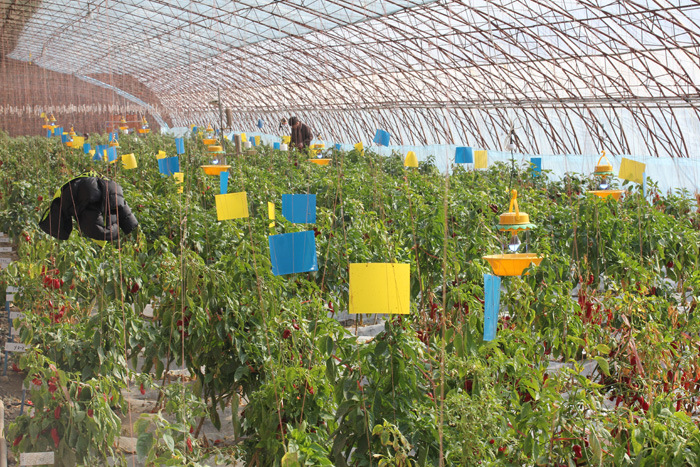
Within a few years, farmers have moved from
traditional agriculture to intensive agriculture and then to very high precision
farming. Through satellite guidance systems, a tractor is no longer driven like
yesterday. Thanks to information systems, a cow is no more milked today, like
it was done before, even in the 1990s.
More decisive, the use of mathematical models to optimize
the use of a field, the importance of molecular biology, integrated pest
management and plant breeding to protect ecosystems against threats, or modern
genetics to better understand the physiology of an animal, the architecture of
irrigation networks that now allow to grow wheat almost anywhere, even in the
desert ... And what is to say about the progress that has been made to save
water, improve animal welfare, design products more suited to the demands and
constraints of modern life? Yes, these are the realities we should dare to
valorize, since all these aspects are now the heart of the occupation of farmer
or rancher in developed countries.
Moreover, it is by mastering these upheavals that our
agricultural production is the first of the European Union, up to 18%, far
enough ahead of Germany, Spain and Italy, which are to about 12%. France is one
of the countries with the highest levels of per capita productivity and cereal
yields in the world, with the United States, Australia and Brazil. Our agri-food
sector remains competitive internationally with a trade surplus since the
1970s, including in recent years marked by the crisis.
So how to explain that the Agriculture Show does not
make more visible the technological advances and innovative machines that
enabled these results? That would certainly delight children and probably their
parents, as well as the softness of the wool of a sheep or the taste of a local
sausage. »
Here we
attack another level, however closely linked with the previous articles.
It seems
that there is some complex, a sort of shyness of the agricultural world.
Maybe it comes from the excessive
and unwarranted pressure on him, dangerous and insidious combination of:
-an
approximate shape of diffuse environmentalism in the population, often
uneducated on agriculture, and blind as soon as it is spoken about environment,
-the
irrational fear of poisoning, strongly supported by environmentalists and
widely reported by the media and governmental administrations, while the risk has never been so
low since the world began,
-a sort of
awkwardness of agricultural organizations, not always in tune between them, to
form a common front in defense "of a certain idea of agriculture,"
and therefore each pulling the blanket to him,
-a clear populism
of the political class, for which 5.6% of employment and 3.6% of GDP does not
necessarily weigh very heavily in the politico-electoral balance, even if
"many politicians throng the alleys of Agricultural Show. "
-and the
impotence of scientific and technique agricultural organizations, often
blocked, either by the "politically correct" orientation of their
works, or by excessively low budgets, or suspected of partiality for having to
seek financing from private companies, in order to maintain their business and
the jobs that depend on it.
"And if farmers also assumed their job with
pride?
The bet deserves to be addressed, as it is a great
scientific and human adventure. Unfortunately, the opinion does not always
realize, and remains suspicious about agricultural technology, between the
ethical controversies surrounding GMOs and the excesses of a few large
multinationals involved in the "Green Revolution". But how blame it
if the Show, which is the unique opportunity to celebrate agriculture in France,
does not fulfill its mission of education and information, as does, for
example, the World of Agriculture and Breeding of SIMA, unfortunately too
little known?
Such ambition is far from inaccessible. Officials may
fear a lack of audience by upsetting their strategy, but they are not expected
to show whether cautious. In the US, the Museum of Science and Industry in
Chicago has been remarkably successful, specifically for its ability to offer
concrete and playful experiences for a family audience, in a revamped
agricultural universe, revealing the sometimes incredible feats that our
current production systems daily demonstrate.”
This way, the public could feel the
real evolution of agriculture, understand the issues, and note that farmers are
not any more these dangerous and assisted polluters, regularly presented to
them.
Indeed in my
opinion, it is very simplistic and counterproductive to maintain, in the
consumer’s mind, year after year, the farmer's image just like the good
traditional peasant in his folk costume, with the main attractions of shows, in
livestock competitions and wine tasting, cheese and delicatessen.
I'm not
saying we should remove them, this friendly and crude image participates in the
generally positive opinion. But as it says in the article, it should be done more emphasis on the many aspects of very modern and
high-tech agriculture.
Precision agriculture is more and
more a reality, and it's also one of the main available means to meet the
productive and environmental coming challenges.
And never
forget that agriculture is a highly strategic sector. That is both
- A
bargaining chip: industrial products are swapped with agricultural products
with countries with few other resources,
- A
geopolitical weapon: see what happens in the conflict between Ukraine and
Russia: to protest against the blockage, Russia closed its borders to food
products from countries supporting these measures. The result is an agricultural
crisis by excess production,
- An
environmental control tool, maintaining many natural balances, contrary to what
one would have us believe. Just imagine the Landes (former marshland in the
South of France) without agriculture and forestry? We should certainly observe
the return of malaria, to name one example,
- An
essential basis of the industry and crafts by providing numerous raw materials
(see in this regard, my article Nº30 "They're everywhere," September
2014).
Leave the agriculture left to
itself, like the European Union seems to want to do, is also and above all,
take the risk of leaving disappear expertise and knowledge of many farmers,
agronomists and agricultural technicians, ruined or tired of making efforts
without return, retrain or leave relocate in countries, often in development,
who themselves know value their skills.
Farmers must
learn to reveal their job to consumers who do not know, just by showing and
explaining reality, with the support of officials and scientific organizations.
Agriculture has been metamorphosed (see my post No. 2 "metamorphosis"
of January 2014) but, apart from the farmers, who is aware of?
A
communication directed to the consumer may only have a positive effect on his
opinion and an indirect positive effect on consumption.
Agriculture
as a whole has everything to gain, but we have to find the right way to do it.
Let us be proud of being farmers. Let us be proud of the
hard work we do every day for the population to have available an abundant,
diverse and healthy food.
A recent and scandalous event gave me because even
before publishing this article. Logically, it will be my next theme.