Affichage des articles dont le libellé est EN- European Union. Afficher tous les articles

vendredi 8 décembre 2017

120- Plants protection -6- Feeling a change in the wind

GLYPHOSATE: FEELING A CHANGE IN THE WIND

In full controversy throughout the European Union after the re-authorization of glyphosate for 5 years, a small French company takes advantage of the confusion to make its public ad.

Picture: of my own

It explains that it has an organic alternative to glyphosate, but that its commercialization is blocked by the administration.
It broadly publishes on social networks (with the help of its supporters and / or environmental lobbies) articles telling anyone who wants to hear that its product exists, that it has a proven effectiveness, but that the administration, for 4 years, is blocking its file without cause. It therefore portrays itself as a victim of a situation suggesting that the administration is under influence.
And it works. In recent weeks, it is entitled to articles in all periodicals, even the most serious, it goes on television, even outside France. A well-orchestrated and, it seems, effective advertising.
Here are some French links. There are many others.

The administration in charge of the case, the ANSES (National Agency for Public Health Security, for Food, for Environment and for Work), probably tired of being attacked from all sides, has just published a statement in which it specifies the situation.


It indicates in particular that, although it's true that the file does not progress, it's completely wrong to make the administration responsible. In fact, the company in question is the only responsible for not having provided the competent administration with the necessary elements, and for not having paid the corresponding taxes.

"Upon receipt of the file, it appeared that most of the necessary documents were missing, including the Cerfa administrative application form, which specifies in particular the characteristics of the product and its intended uses, as well as, for example:
- the integral composition (the active substances which enter the composition having
necessarily to be approved beforehand at European level),
- tests and studies to evaluate the efficacy of the product, and its impact on the health and on the environment,
- The product label project.
The payment of the fee for the investigation of the file (tax reduced to 2 000 € instead of 40 000 €, in the case of a biocontrol product) has never been carried out."

It is therefore very clear that a so-called biocontrol product, in other words a biological pesticide, must follow a clear and precise procedure to be approved. We can only rejoice.
The assumption that everything natural is good is regularly undermined by reality.
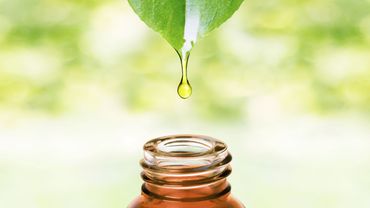

We can mention, for instance,
-       Nicotine, extracted from tobacco, still used in many countries as a biological insecticide and yet directly responsible for millions of deaths per year,
-       Arsenic, a natural mineral whose toxicity is undisputed, used as a fungicide (sodium arsenate) on the vines until 2001, and combined with lead (lead arsenate), another natural mineral whose toxicity is widely recognized, which has been widely used as an insecticide for example against the Colorado potato beetle until 1971,
-       Neem oil, a plant extract from the Neem tree, a complex bunch of natural substances, authorized worldwide as a biological insecticide, and a proven endocrine disruptor,
-       Natural pyrethrins, extracted from certain plants, very versatile natural insecticides, very widely used even in domestic insecticides, very toxic to aquatic fauna, and disruptive of nerve connections (neurotoxic),
-       Copper, the first pesticide in the history of modern agriculture, fungicide and bacteriostatic recognized, widely used in agriculture, both conventional and biological, despite its status as a heavy metal and known pollutant of soil and water.
-       We could also mention many natural substances, known for centuries, such as hemlock, snake or scorpion venom, ergot of rye, curare, and a very long etc. I have described only a few natural substances known for their use as pesticides.


It seems obvious that the company in question has embarked on a perfectly dishonest communication, trying to advance its dossier thanks to the pressure of the civil society, the same who managed to turn explosive the glyphosate file, which nevertheless was initially based on meager assumptions.

You will find all details about the product and its steps in the article (in French) of my colleague Seppi on the link http://seppi.over-blog.com/2017/12/osmobio-le-successeur-du-glyphosate-serait-la.vraiment.html?utm_source=_ob_email&utm_medium=_ob_notification&utm_campaign=_ob_pushmail

This charming company probably thought that if the glyphosate almost disappeared on the basis of a totally rigged and manipulated dossier, why could not its product be approved without any dossier?
It has become clear to all those who still doubt that social networks are currently the most powerful and effective weapon of manipulation and propaganda.

The boss of this small company also declared not to use chemicals that "destroy biodiversity." As Seppi says, his product is itself derived from natural chemistry. It is therefore a chemical product.
And like any good weed killer, its role is primarily to destroy biodiversity by eliminating unwanted weeds. In the case of pesticides, and in terms of biodiversity, synthetic or natural, it's the same.
I also think it's good to remember that, in essence, agriculture is fighting against biodiversity, even in its most ecological forms, such as permaculture.


From the moment when the farmer sows a field of a single species, with or without plowing, with or without pesticides, whatever the method of production and whatever the surface of the field, it disturbs the biodiversity.
It's the same with a garden. Do you want your garden not to disturb biodiversity? Leave it open, and fallow.

But beware, the application for approval concerns a "total weed control of non-agricultural areas", so for railways and roads, but not for agriculture, and not for gardens either.
All this takes on the air of false news and manipulation.

Wise guy.
This entrepreneur uses all the ecologist rhetoric, but just forgets to clarify matters. Lying by omission is in fashion nowadays.

It is nevertheless reassuring to note that legislation is changing with regard to organic pesticides. Indeed, until a very recent past, the requirements were very superficial for the authorization of commercialization and use of biological pesticides, leaving room for a regulatory vagueness giving rise to numerous abuses, always on the pretext that "it's natural".
A natural substance, for use on future foods must now demonstrate, of course its effectiveness, but also its safety on both the environment and health.

The same trend can be observed with plant-based preparations, such as nettle manure for example, which now have to prove their safety, which does not please everyone. http://www.sudouest.fr/2017/12/04/environnement-la-guerre-de-l-ortie-n-est-pas-vraiment-finie-4004118-706.php


The precautionary principle, if it's applied to synthetic substances, must be applied in exactly the same way and in the same proportions to natural substances. Don't think that I defend the principle of precaution, I consider it a gangrene of our modern society, because of the brake to progress that it represents, often without any real justification. It's too often put forward. We must not do anything, but it is not a reason to paralyze all progress.

That being said, if this product is good and if, as the company that manufactures it asserts, it respects the environment, the user and the consumer, then very sincerely, as a farmer, user (reasonable and moderate) of the glyphosate, I'm looking forward to the arrival of this alternative.
It would still be necessary for this society to do what it takes to be approved. It has already filed a patent in Canada, in the United States, in Europe and finally an international patent on its formula. It shows that it intends to sell it, many even, to earn a lot of money.

At the beginning of any for-profit enterprise, which is obviously the case of this one, there is the notion of investment, ie an initial expenditure of funds intended to be made profitable by the future sales of the company product. The patent is part of that of course, but the homologation dossier too.
So dear sir, make the necessary investment for your product to be approved. Then I will be happy to use it, but only outside agricultural areas, unless you do the necessary so that this product can also be used in crops.
Unless of course, that its toxicity, its residues or the risks that it presents for health or environment block its homologation, or its possible future extension of use to the cultures.

Even if it's a natural product ...


dimanche 26 novembre 2017

119- Reforming organic is not so natural

REFORMING ORGANIC IS NOT SO NATURAL

On November 8, the Belgian daily La Libre Belgique published a short and concise dossier on the reform of the European regulation of organic farming, which nearly failed.
It is interesting to come back to the situation now that the reform was finally adopted on November 20th.
You can read the reaction of the European Commissioner for Agriculture, Phil Hogan after this vote http://europa.eu/rapid/press-release_STATEMENT-17-4727_en.htm


This dossier (in French) was prepared by Isabelle Lemaire.

"New rules of organic in Europe: why it blocks.

Europe wants to review its organic legislation. The vote, November 20, looks very uncertain. An overview of the proposed reforms and what is stuck.

Negotiations. If the organic reform succeeds, it will have been the longest legislative process in the history of the European Union. It will have taken 18 trilogues to reach the current proposal on June 28th. Everything started very badly since the organic sector was immediately opposed to a legislative change. In 2007, the first regulation was strongly criticized because it was based on the lowest common denominator. But it has since been bitterly defended by the organic sector, facing the project of new regulations. The negotiations, which began in 2015, were particularly laborious as Member States were defending their particular demands. This has provoked repeated crises in the European Council and stops in the discussion process.


The big novelties in 7 points:
After nearly three years of intense negotiations, the European Council will vote on 20 November to reform organic legislation. A vote whose outcome is very uncertain, the particular interests of some Member States seem irreconcilable. If the text passes, it will apply from July 1, 2020. Here are the major novelties.

1-    No (yet) thresholds of authorized chemicals.
Belgium, Italy, the Czech Republic and Slovakia have established thresholds for chemicals (pesticides, fertilizers), not authorized in organic farming, in organic foodstuffs. The European Commission (and Belgium which has been lobbying intensively, rallying several small countries to its cause) wanted to make it the norm within the Union. But this was rejected by Germany and France in particular, who feared that the organic label lost authenticity.
Instead, the reform provides for enhanced precautionary measures to prevent contamination by chemicals. If a suspicion of contamination weighs on the product, it will not be able to be worded organic, the time that an investigation possibly proves the opposite. The four countries with thresholds will be able to maintain them. In a maximum of four years, the Commission will produce a report on the reasons for the contaminations and may decide on legislative harmonization (thresholds or no thresholds for the 28 Member States).

2-    Hydroponic agriculture is forbidden.
The Baltic countries and the Netherlands wanted to obtain the possibility to grow organic hidroponic crops, but they did not win. Hydroponic production in organic farming is still banned, but three countries (Sweden, Denmark and Finland) will have a derogation for ten years. This only concerns an area of ​​20 hectares in all.


3-    Equivalence rules for non-European organic are deleted.
It was an aberration on a global scale, denounced by the World Trade Organization. For the organic products it imports, the EU recognizes control bodies outside the EU for the certification of organic products that meet equivalent production rules. The reform will gradually put an end to it. By 2025, countries outside the EU will have to respect the European organic specifications if they want to sell their products on the European markets. Derogations will be possible for certain products such as bananas.

4-    Access to seeds is facilitated.
Traditional varieties, now banned for sale, and varieties specially created to be adapted to this type of production will be available for organic farming.

5-    Reinforced controls in farms.
Currently, growers are checked on the field and on file, once a year, to control if they are not cheating. They are also subject to unannounced checks. With the reform, controls will be based on a systematic risk analysis. Annual and unannounced inspections will be maintained, but if no irregularities are found for three years, the field control will only take place every two years. On the other hand, if repeated anomalies are detected, controls will intensify.

6-    Small growers get together.
The new legislation allows for the formation of grower groups, where infrastructure and equipment are pooled. Small farmers will be able to pool their cost of production and organic certification, which is very high.

7-    New labeled products.
These are rabbits, cervids, essential oils, cork, cotton, salt or wool.


3 QUESTIONS TO
Blanche Magarinos-Rey.
Lawyer specialized in environmental law.

You defend the proposal for reform of the organic legislation. Why?
The text includes real advances on seeds, biodiversity for example. Removing the equivalence rules with third countries may allow European organic produce to grow, because currently 50% of organic products sold in the European Union are imported. If this compromise is rejected it would be, in my opinion, a real disaster, a mess. The Commission is unlikely to plan a new reform project. We will keep the 2007 legislation with its inaccuracies, its derogations, the wobbly system of imports of organic products, etc."
(The other questions concern the vote itself and the particular case of Belgium).


On a technical level, it's worth noting the ban on soilless crops. This point seems to me particularly debatable, insofar as this technique makes possible to put in practice a confined agriculture, totally out of reach of diseases and pests, thus a total absence of need of use of pesticides, neither synthetic nor natural. It's true that the nutritional aspect is still difficult, but great progress has been made in this area, making organic nutrition possible in hydroponics.
Soilless crops also help to develop areas that are incompatible with agriculture, with optimal use of water resources, almost without waste (everything is recovered, composted and recycled, from substrates to nutrient solutions, and also plastics and remains of past crops), with very high productivities per unit area, and the possibility of being locally producing healthy food throughout the year. It's a modern, high-performance agriculture with virtually no negative impact on the environment or human health.


It seems to me a shame to eliminate a priori an interesting path which it seems obvious that in the short or medium term, we will be able to conduct it in a manner fully compatible with organic farming.
There is also an increasing number of soilless urban agriculture projects that won't be able to benefit from the organic label, even if the techniques used seem to be in agreement with the philosophy, apart from the absence of soil.
I think it's damaging for both producers and consumers.
In my opinion, it's a gross error, typical of an ideology with a reductive vision, strictly limited to the stupid and malicious application of dogma.


But well, the reform was finally voted. But at what cost!
We have passed on the verge of a blockage by pure immobilism, to defend special interests to the detriment of the common interest.

It strengthens me even more in the idea of ​​less state, more Europe. In short, if we want Europe to really work, we have to get it out of these parochial quarrels. They only impede the proper functioning of the system, and ultimately the harm always shifts to the people and the businesses that depend on those political decisions.

You know that I'm not a fanatic of organic, not in terms of production, but in terms of communication. It's above all a large manipulation of the public opinion, based on a dogma according to which all what is natural is good for health and non-contaminating, and all what is synthetic is bad and contaminating. In itself it's a nonsense, but above all it gives rise to all kinds of abuse under the sole pretext that "it is natural".
However, organic food is becoming increasingly important, with a growing share of food in Europe and the rest of the world. It's also a guideline that has had the great merit of challenging many practices that are open to criticism in all branches of human activity. Agriculture is gaining in sustainability partly thanks to technical inputs from organic production thinking.

The European Union is currently an example in terms of requirements, control and seriousness about legislation concerning the environment, pesticides, health, and quality of food.
It came close that it could have stayed lagging behind in organic agriculture.

A bit of harmonization will not hurt, so that consumers are not so lost, and so that farmers can work with more appropriate means, and better controlled.

Picture: http://bi.gazeta.pl/im/78/17/c3/z12785528Q,Warzywa.jpg

dimanche 15 octobre 2017

116- Ban the glyphosate, and then...?

BAN THE GLYPHOSATE, AND THEN...?


Under this title Mathieu, on the web page Graines de Mane, published on February 15, 2017 a beautiful article, concise, on the questions that leaves in the profession, the possible future ban of glyphosate.


"In the past few days, the serial on the suspension of glyphosate, Monsanto's star herbicide, has restarted. About 40 NGOs launched a European petition on 8 February calling for "the ban on glyphosate, in accordance with the European provisions on pesticides, which prohibit the use of carcinogenic substances in humans". This happens, in particular, after WHO has classified carcinogenic glyphosate and the fuzziness of European authorities on the renewal of its employment authorization in Europe. In the end, in June 2016, the European Union finally decided to extend its use for eighteen months until a new scientific opinion was published.

Pending a possible suspension of authorization of the molecule, the question on farms thus arises in the following way: how to do without glyphosate? Some farmers can do without it or reduce doses, but its status as the best-selling herbicide in the world shows how many agricultural systems depend on it ... And not just intensive farming systems. Thus, some farmers, although engaged in virtuous environmental practices, continue to use this product at low doses. This is the case, for example, with conservation agriculture, which aims to keep a soil constantly covered by vegetation and not to plow the soil to preserve as much as possible its structure, the life it harbors (earthworms and diverse fauna) and limit erosion. These techniques represent a solution to increase soil fertility and thus the long-term sustainability of agricultural systems. By eliminating tillage, farmers improve the health of their soils, but don't have it as a tool for an effective weed management. The success of these crops therefore depends to a large extent on the use of herbicides, including glyphosate.


For these farmers, the removal of glyphosate would thus lead to a technical dead end which could result in the abandonment of their virtuous environmental practices.

The concerns of civil society are perfectly legitimate and farmers are changing their techniques to meet them. Being aware of the effects of agricultural practices on the environment or health makes it possible to enlighten our consumer choices on a daily basis. Knowing how the foods that are found on our plates are produced is therefore paramount. Understand the consequences of citizens' wishes on the reality of the technical functioning of farms as well. The debate over the removal of glyphosate calls for another: the urgent need to find alternatives that allow growers to avoid jumping into the unknown, while responding to new environmental challenges in agriculture. Every day, producers, researchers and agricultural development organizations innovate for more virtuous forms of agriculture. The announced suppression of glyphosate will be all the more effective if sustainable alternatives in agronomic, environmental and economic terms are developed. Banning is one thing, offering alternatives is even better. This is no doubt the real challenge of the actors of agriculture in the years to come. "


Since the publication of this article, much has been said about glyphosate, from the French Minister's announcement of the negative vote of France until the announcement by the same minister of a proposal of a shorter renewal, in order to have time to look for alternatives.
We have also seen the WHO announce that glyphosate is probably not carcinogenic, thus countering the classification of its own agency, the IARC.
We have seen all food safety agencies in the world, and all uncommitted scientists (without private funding or political or ideological pressure) strongly claim that glyphosate, under normal conditions of use, is not risky for health or the environment.
It's also true that it's very difficult to know (and this is moreover carefully calculated), among the thousands of published studies, which of them are objective (a minority), and which of them are financed by one side or the other (or whose scientific committees are oriented, as it was the case for IARC), and which are the majority.

Glyphosate file is a rigged and manipulated file, falsified from the beginning. This herbicide, the most widely used in the world and also the most harmless (according to all objective scientific studies) has become the scapegoat, an unwitting symbol of the fight against GMOs and against Monsanto (who has not owned it since 17 years and generates only +/- 15% of its profits from it https://www.fool.com/investing/2016/05/26/how-much-money-does-monsanto-make-from-roundup.aspx), becoming the target of a vast ideological manipulation.

We could longly argue on the reasons for this incredible propaganda, skilfully using all means at its disposal (radio, television, petitions, demonstrations, social networks and so on) worthy of the darkest hours of the worst dictatorships of the recent history, or closer to us, of the worst citizen or independence movements such as that of Catalonia (very skilful in its perverted role of the Catalan David against the Spanish Goliath), or also the Brexit.

Poster of Chinese propaganda from the time of the Great Proletarian Cultural Revolution, showing intellectuals as responsible for the evils of the country.


To make things clear, let's remember this statement by Mr. Bernard Url, Executive Director of EFSA, who explained on 1 December 2015 to the European Parliament to explain the position of EFSA:

“The letter of 96 persons were mentioned very often. For me this a very good example on how different the two organizations work. We work on glyphosate with 100 scientist from the member states. They see the evidence, they contribute, they challenge, they are in teleconferences, it’s the peer review process, and with these 100 scientists together we were able to produce this.

We did not ask these scientists to sign a letter whether they like or not the outcome. And one member of the parliament put it very rightly. She has said: 96 scientists feel uncomfortable with EFSA’s opinion. And it’s about that. People that have not contributed to the work, that have not seen the evidence most likely, that have not had the time to go into the detail, that are not in the process, have signed a letter of support.

Sorry to say that, for me with this you leave the domain of science, you enter into the domain of lobbying and campaigning, and this is not the way EFSA goes. For me this is the first sign of the Facebook age of science. You have a scientific assessment, you put it on Facebook, you count how many people like it. For us this is no way forward. We produce a scientific opinion, we stand for it, but can’t take into account whether it will be liked or not.”


This is a real problem. If a scientific report runs counter to public opinion, which in general reacts only emotionally, it's immediately vilified, massacred, and scientists (and their supporters and defenders too) suspected or clearly accused of being corrupted by someone.
We are sinking into a decadence that is on the way to ruining our civilization.

But that is not the point.
As far as glyphosate is concerned, the damage is done. It will not be possible to reverse. Remember the Alar affair, which nevertheless took place well before the existence of social networks and of the great fashion of "citizen petitions". We are in a similar manipulation of opinion, but much more serious. http://culturagriculture.blogspot.com.es/2015/02/38-alar-scare.html

The question is no longer whether glyphosate will be banned or not, sooner or later it will be. Rather, it's how farmers will have to adapt to its disappearance, legal or demanded by markets, too frightened by consumers’ opinion, who may turn to other brands if they learn that their food could have been grown with glyphosate.
I have no illusions. I expect to see glyphosate, hitherto allowed in all customer specifications (except for organic production, of course), go to the status of inadvisable or prohibited, with or without legal justification.


However, the future glyphosate substitutes, which will not fail to arrive, will necessarily be 5 to 6 times more expensive. That's normal, that's the rule. But it's considerably changing the data of the problem for farmers, who often have a hard time making a profit on their jobs.

It's therefore very urgent to find alternatives. I hope the European Commission will have the intelligence not to abandon the molecule in too short a time, and will promote the search for alternative methods.

A very interesting article on the subject was recently published in the Christian periodical "La Croix" https://www.la-croix.com/Sciences-et-ethique/Sciences-et-ethique/Comment-passer-glyphosate-2017-10-03-1200881487
It shows the interesting testimony of a young French farmer, deeply convinced and involved in a new conception of agriculture. He has worked there for a long time and explains:
“I was told I was mad, that I could not succeed. But after several years of work and adjustments, that’s it: I had good results last year, I expect them to confirm but I am confident.”
Yet he is aware that this transition is difficult:
"I did not get there overnight. And if I remain convinced that we'll be able to avoid the use of herbicides with plant cover, a brutal ban would be a mistake."


I invite my non-European readers not to doubt it. If glyphosate is banned in the European Union, the world's largest food market, the rest of the world will also come to it, in the short or long term.
The search for alternative solutions will help safeguard virtuous farming techniques, such as conservation agriculture and integrated production.

It's not permissible, for dark ideological reasons, to question everything that is a guarantee of food security, food quality and safety, and reducing the effects of agriculture on global warming.

European agriculture is the most efficient, the healthiest and most respectful in the world. People come from all over the world to learn the methods and techniques used.
It will continue to evolve and adapt to all situations, as it has always done. But any profound change requires time, training, costs, research, and investment.

Many crucial questions remain to be made, many essential points have probably not been envisaged, or not enough deeply.
Will European agriculture lose competitiveness in front of non-Community competition?
Will the players of commercial food channels play the game of rising costs, respecting the cost prices of farmers?
Will consumers be prepared to accept a probable increase in the prices of their food?
Will the markets prefer to buy non-EU products, cheaper but often less safe, in order to preserve their margins without increasing consumer prices?

The future of the quality of European food is at stake, but not many people seem to realize it.