Affichage des articles dont le libellé est EN- agroecology. Afficher tous les articles

dimanche 12 mai 2019

146- Alternatives to pesticides -5- Trapping

ALTERNATIVES TO PESTICIDES -5- TRAPPING

The use of traps is probably one of the oldest hunting methods, widely used by humans.
The principle is quite simple. It consists first of all, in knowing well the preyS, their rhythm of life, their habits, their food, their path of passage, their strengths and their weaknesses.
From there, traps are set, so that the prey is irresistibly attracted, or across its usual path of passage.
In any case, the purpose of trapping is usually the death of the animal, sometimes its capture to drive it elsewhere.

Modern agriculture has adopted this ancient technique to reduce or eliminate the damage of certain animals that are harmful to agricultural crops.

Personal picture

When we talk about trapping in agriculture, we think in the first place of rabbits and other rodents like voles. And it is true that we can use this technique to reduce their damage.
Some models of vole traps are for example marketed to be placed in the galleries, in order to use it to replace the usual poisoned baits.
It may seem cruel. Yet these modern traps are very effective and the death of the animal is almost instantaneous, avoiding its suffering much more than with the majority of traditional artisan traps or with poison baits.

In the end, the focus is on vertebrate control rather than population control.
And trapping has the merit of reducing the risk of killing non-target animals, such as their predators (raptors, snakes or carnivorous mammals) by indirect poisoning.

But this technique has mainly developed during the last 3 or 4 decades with the needs of crop protection against pest attacks.

The trapping technique is widely used for monitoring pest populations through the capture of individuals in a limited number of reference points. It allows the farmer to assess the evolution of the risk, and thus to implement the measures he has planned at the most appropriate time.
This technique is very widely used in IPM (integrated pest management) and integrated production and in organic farming to locate as accurately as possible the insecticides necessary for the protection of the crop.
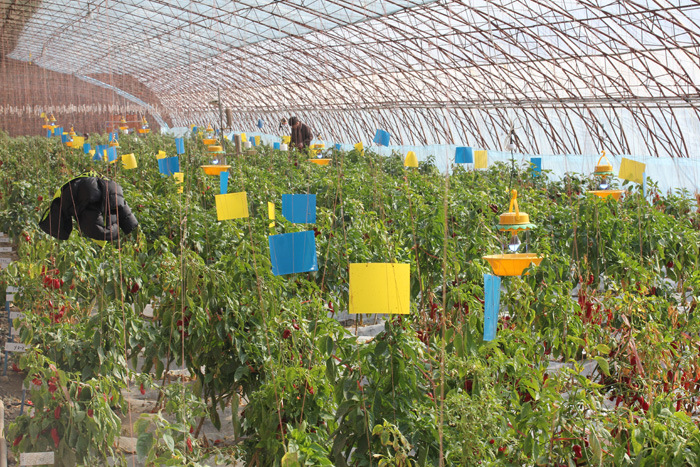
The attractants used are either sexual pheromones (which I told you about in the previous chapter http://culturagriculture.blogspot.com/2019/03/145-the-alternatives-aux-pesticides-4.html) used in particular for the monitoring of Lepidoptera, numerous on many crops, either food-based attractants as used for Mediterranean fruit fly (Ceratitis capitata), or obstacles, such as sticky strips to monitor mealybug larvae, or stained plates or strips of color (usually yellow or blue) for whiteflies or thrips. There are also colored traps or light traps for certain uses, as is the case for domestic mosquito trapping.


The design of the insect trap is also very important in its effectiveness, and depends both on the target pest and the bait employed.
In the case of flies for example, they must go in without having the possibility of going out. So we use the principle of the fish trap that is to say that once entered the trap, it is almost impossible for him to find the opposite way.
We will play on the shape of the trap, its color, transparency or opacity of the materials used.
Still in the case of the fly, it is attracted by the yellow color. Inside, we place an alimentary bait whose smell will guide it to the entrance hole, located on the yellow and opaque part. The top of the trap is made of transparent material. Once inside, the fly is attracted by the light, so towards the transparent part, and thus does not find the exit.
The same principle is used to capture wasps in gardens.
A pellet impregnated with insecticide, synthetic or natural depending on the case, kills the insect inside the trap. In some cases, it is the alimentary bait in itself, liquid, which will kill the insect by drowning. In other cases, the pheromone pellet is placed on a stuck plate from which the insect cannot escape.


The same principle is used in the technique of mass trapping, which consists in using traps of the same type as for monitoring, but in very large numbers, with the aim of attempting to capture almost all the individuals present, thus avoiding the use of insecticides in direct contact with the crop.
The technique works well in some cases, bad in others.
In most cases, crop damage is produced by insect larvae. Therefore, adults should not be allowed to mate and reproduce.
Efficacy is generally good if you catch mostly females.
By cons, if the attractant catches mainly males, we cannot avoid that females, fertilized outside the plot to protect, come to lay their eggs on the sensitive crop.

As with the sexual confusion, mass trapping is based on a long and extensive scientific research work from which these techniques can be developed avoiding the use of pesticides in direct contact with the crop.
In the same way, the farmer must have a very good knowledge of the situation of the crop and the phytosanitary risks present.

These techniques are very selective and thus make possible to minimize the undesirable side effects of crop protection.
They are likely to grow strongly in the coming years.

Picture: http://image.made-in-china.com/2f0j00sSWaybQzJVrE/Yellow-Blue-Sticky-Trap.jpg

jeudi 28 mars 2019

145- Alternatives to pesticides -4- Sexual confusion

ALTERNATIVES TO PESTICIDES -4- SEXUAL CONFUSION


This name may seem barbaric or laughable for the uninitiated. Yet it is a real revolution in the concept of crop protection.

This technique, developed in the 1980s and first developed on vines and fruit production, was later extended to a large number of crops.

The principle is particular:
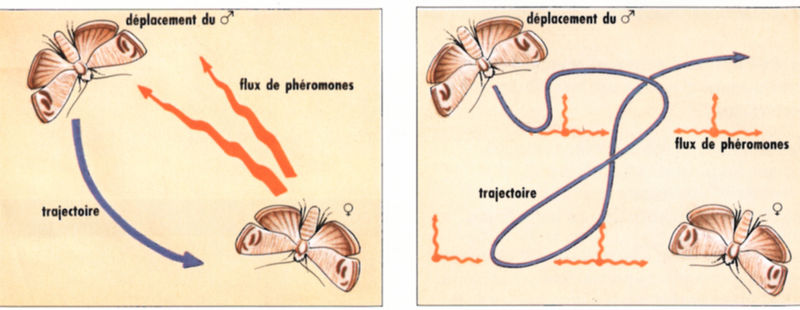
In lepidoptera, and in several other arthropods, males and females find each other for mating by olfactory signals released into the air.
Specifically, in the case of Lepidoptera, mature females produce a pheromone, a volatile substance that they release into the air, and which is intended to allow males to locate them.


Males have very sensitive olfactory receptors that allow them to locate the pheromone, and to follow the path to find the origin.
When the males find the females, the mating takes place, the females lay fertilized eggs from which the caterpillars, their larvae, will be born, which will feed on the crop by doing damage, until they are able to metamorphose to become breeding adults in their turn.

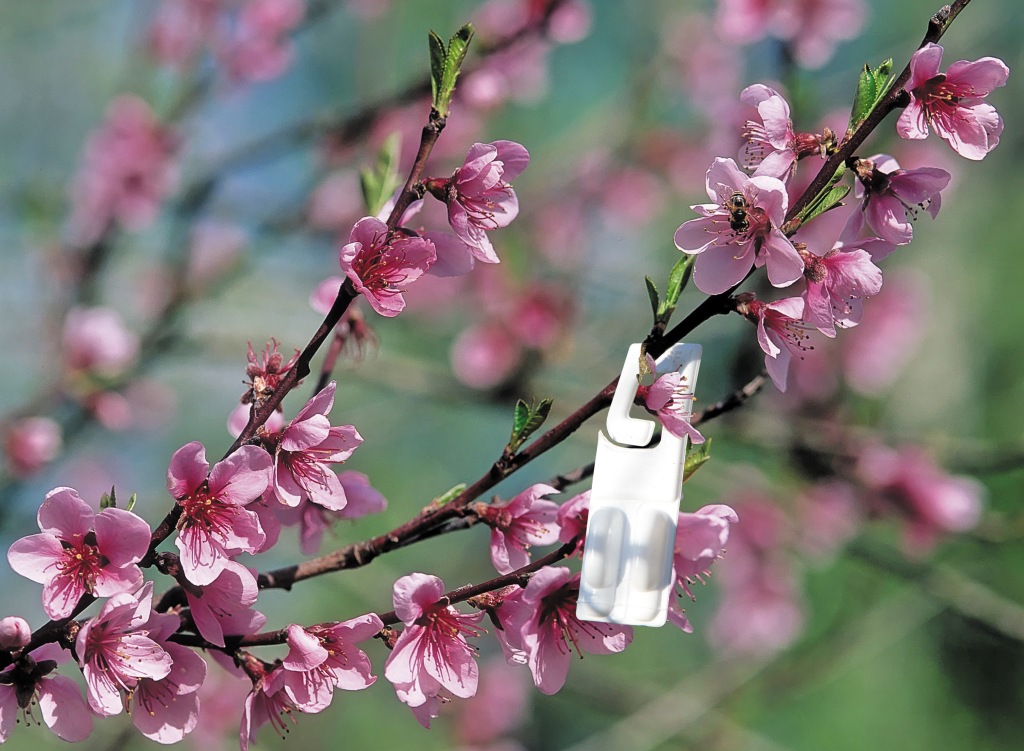
The technique of sexual confusion consists in diffusing in the fields to be protected, a large amount of sexual pheromone of the harmful insect, by installing a large number of diffusers.
Males are unable to follow a clear olfactory path. They do not find the females, the fertilization does not take place, so there are no eggs or larvae that can do damage to crops.
The crop is protected by preventing the harmful species from developing there.

In fact, this technique is not perfect because chance meetings can take place.
The species is not threatened, but its damage is negligible.
These chance meetings do not represent any agricultural risk, except in certain cases of very excessive (or invasive) presence of the pest. In these rare situations, it may be necessary to supplement the confusion with one or more insecticide sprayings, until the regulation of the populations is sufficient. It's usually pretty fast.
One of the problems of monocultures is the abnormal increase in certain phytosanitary problems, due to the concentration of a single plant species, which never occurs in Nature.
For this reason, among other things, the concern for the respect of biodiversity has become so important in recent years, as well as the many efforts made on farms.
Sexual confusion prevents the abnormal multiplication of the same species.


However this technique is operational for protection against certain insects, especially Lepidoptera, but there are still many against which the technique has not yet been developed.
The determination of the exact composition of the "pheromonal bouquet" of each species is a very long research task. Once determined, it is necessary to find the way to manufacture it, to develop an operational diffusion system (type of diffuser and density per hectare), then to test it to check its effectiveness, and its absence of side effects.

Side effects are usually negligible because each pheromone is specific to a single species, so that males and females can find each other, without the risk of crossing with other species.

In the 80s, I had the opportunity to participate development trials in orchards, in the south of France, of the first technique of sexual confusion against the Oriental fruit moth (Cydia molesta), by a pioneering Australian society. I can certify that it works.
The usual manipulation of the diffusers was that I was impregnated with pheromones, and I was followed by a troop of males, inevitably disappointed when they realized that I was only a vulgar human!
"I'm not the one you believe!"


It should be pointed out that, while this technique is a real alternative to the use of pesticides, it does not, in any way, respond to the stated desire of one part of the civil society to go out of synthetic chemistry.
Indeed, all licensed and available diffusers on the market are filled with synthetic pheromone, copy of natural pheromones (otherwise it would not work). This is called biomimicry. They are produced in chemical plants quite similar to all the chemical plants in the world.
In fact, given the amount of pheromones needed for this technique to work, it's totally inconceivable to extract it from breeding females.

But this technique represents in my opinion a real revolution in the way of conceiving the phytosanitary protection of crops:
We don't try to kill the insect, we try to prevent its population to reach levels of presence that turn it into a nuisance.
It's totally different, and it opens the door to a real change of thought.
We don't need to protect a crop that is not threatened.
But we must be able to prevent aggression from occurring.

This paradigm shift opens the door to other techniques, more natural than sexual confusion, and seeking a similar result in other ways.
We will talk about it again.

Picture: http://agrobonsens.com/wp-content/uploads/2018/11/confusionsexuelle-3.jpg

lundi 11 mars 2019

144- The soil -6- There is strength in unity

THE SOIL -6- THERE IS STRENGTH IN UNITY

A few days ago, the Facebook page "Sols Vivant - Québec" (French page, very recommendable for those who are interested in the reciprocal influences of soil life and agricultural production), published a very interesting article about the scientist Christine Jones and her work on diversity on and in soils.

This article, dated February 18, 2019 and published in the independent newspaper La Junta Tribune-Democrat, State of Colorado, highlights some points about which little is said, but which could be essential for the future of sustainable and productive agriculture, and for the fight against global warming.

Personal picture

Christine Jones explains that water vapor is the main greenhouse gas. She is not the first to talk about it, but curiously, the public debate has focused on CO2, while water vapor is actually much more important.

Then she talks about diversity as a source of vital power for soil and of fertility for crops.
This is something that has never been discussed, but which may give an interesting trail of experimentation and work for all farmers and researchers who, in one way or another, try to avoid or reduce plowing and increase biodiversity on their farms.
We can summarize his message with this sentence
"Our soils today are not deficient in minerals, they are deficient in microbes"


As usual, I publish the article in its entirety. However, here I removed a short part announcing a conference that Christine Jones will be attending a few days later. At the date of publication of this blog post, the conference is over. So I delete this part so that it does not interfere with reading. But you can access it by the link to the original article.


Soil ecologist challenges mainstream thinking on climate change

By Candace Krebs / for Ag Journal
           

How cropland and pastures are managed is the most effective way to remedy climate change, an approach that isn’t getting the attention it deserves, according to a leading soil ecologist from Australia who speaks around the world on soil health.

“Water that sits on top of the ground will evaporate. Water vapor, caused by water that evaporates because it hasn’t infiltrated, is the greenhouse gas that has increased to the greatest extent since the Industrial Revolution,” said Christine Jones, while speaking at the No Till on the Plains Conference in Wichita in late January.


“It’s a scientific fact that water vapor accounts for 95 percent of the greenhouse effect, whereas at most 3 percent of the carbon dioxide is a result of burning fossil fuels, and carbon dioxide only makes up 0.04 percent of the atmosphere anyway,” she continued. “So how can a trace gas be changing the global climate?”

That’s a crucial detail the mainstream media and much of the general public have largely missed, in her view.

“It’s got nothing to do with if you burn coal or not,” she stated emphatically.

Jones has a doctorate in soil biochemistry and worked in public research and extension before becoming a soil health consultant on the world stage.

She promotes keeping the soil covered at all times with diverse plant communities while dramatically reducing dependence on fungicides, pesticides and artificial fertilizers. The answer to healthy working landscapes is not more inputs, or even more rainfall, she contends, it’s understanding and capitalizing on the benefits of diverse mixtures of plants working together to draw carbon out of the atmosphere and back down into the soil.

[…]


The one principle Jones can’t emphasize enough in her talks is the power of diversity.

She calls for more diversity in the human diet — contending that humans need to eat at least 30 different plant foods every week for a properly functioning gut biome — more diversity in livestock diets, citing the work of Fred Provenza, a professor emeritus at Utah State University who has done extensive research on animal consumption patterns and, finally, diverse landscapes that mirror the complexity of the ancient prairie, which once contained upwards of 700 different grass and non-grass species within each small patch of earth.

To explain why plant diversity is so important, she uses a term that might be new to a lot of farmers: “quorum sensing.”

Soil microbes can sense when plant numbers hit a community tipping point, she said while speaking in Wichita.

“A quorum in an organization is that threshold that needs to be present in order to make decisions and conduct business,” she said. “What we now know about microbial populations is that they also have to meet a threshold in order to achieve “density dependent coordinated behavior.” When that happens, they are working together as a super-organism, capable of tolerating drought, or low nutrient soils, or any of those sorts of things.”


She pointed to research done in Germany that showed having diverse plants growing together boosted biomass production more than adding 200 pounds of nitrogen per acre to straight monoculture crops. In other experiments, mixed plant cultures were able to thrive on an inch of water, while strips of monocultures showed severe drought stress.

“What is happening here goes beyond the simple idea of complementarity, wherein each plant is filling a different niche,” she said.

Diverse mixes increase photosynthesis, which in turn leads to more soil carbon deposition, she explained.

“It makes you wonder why we worry so much about weeds,” she quipped.

The benefits of increased biodiversity hold true for both farmland and pasture, she added.

While some individual plants benefit more from diversity than others, the overall impact of complex interdependent networks of roots and soil microbes is what transforms the function of the landscape as a whole. It all comes back to enhancing the capacity to sequester carbon, she said.

Soil carbon, she has long maintained, is essential for plants to take full advantage of nutrients like nitrogen, something that modern agriculture has tended to overlook.

“Our soils today are not deficient in minerals, they are deficient in microbes,” she said.

Sufficient carbon is also necessary for the full expression of a plant’s genetic potential.

“In the plant world, genetic selection can take you a certain way down the track, but if you do something about the health of your soil you can make quantum leaps in a much shorter amount of time,” she said.

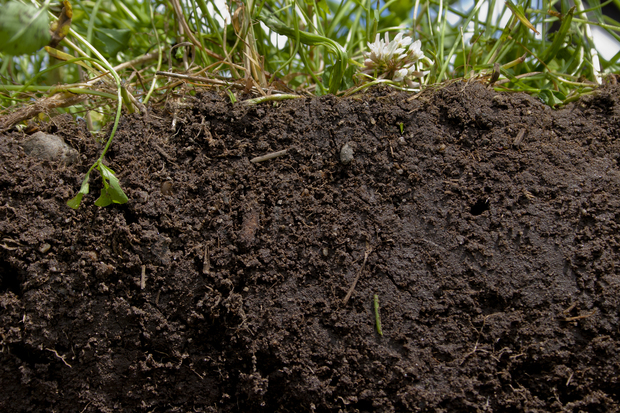
Evidence of healthy soil includes a rich, dark color, high organic matter, an aggregated structure and complex networks of filaments colonizing around plant roots, which enable increased absorption of water and nutrients.


“You should never be able to see exposed roots on a plant,” Jones said. “If you can see the roots on the plant they are not communicating properly with the soil.”

All of these qualities indicate increased carbon sequestration at work.

Jones concludes that changes in farming practices over the last century have done more to impact the global climate than is widely acknowledged. But that also means improving farming practices holds vast potential to change the climate for the better.

“The increasing temperature, the increasing aridity, has come about through inappropriate land management,” she said. “We have made huge changes to the landscape by simplifying it, by removing trees and plants, and by moving from diverse plantings to fields that now grow only one thing.”


It would be too simple to reduce the causes of climate change by stigmatizing agriculture. However its role is important.

But, on the one hand, it is necessary to recognize the mistakes of the past, even if they were made without bad intentions, and secondly to emphasize and favor the ability of agriculture to become the main actor in the fight against global warming and the reduction of greenhouse gases.

Picture: https://www.patmo.net/photos/images/ah110430004.jpg

vendredi 12 octobre 2018

139- Agroecology -10- The breeding to save the planet

AGROECOLOGY - THE BREEDING TO SAVE THE PLANET.


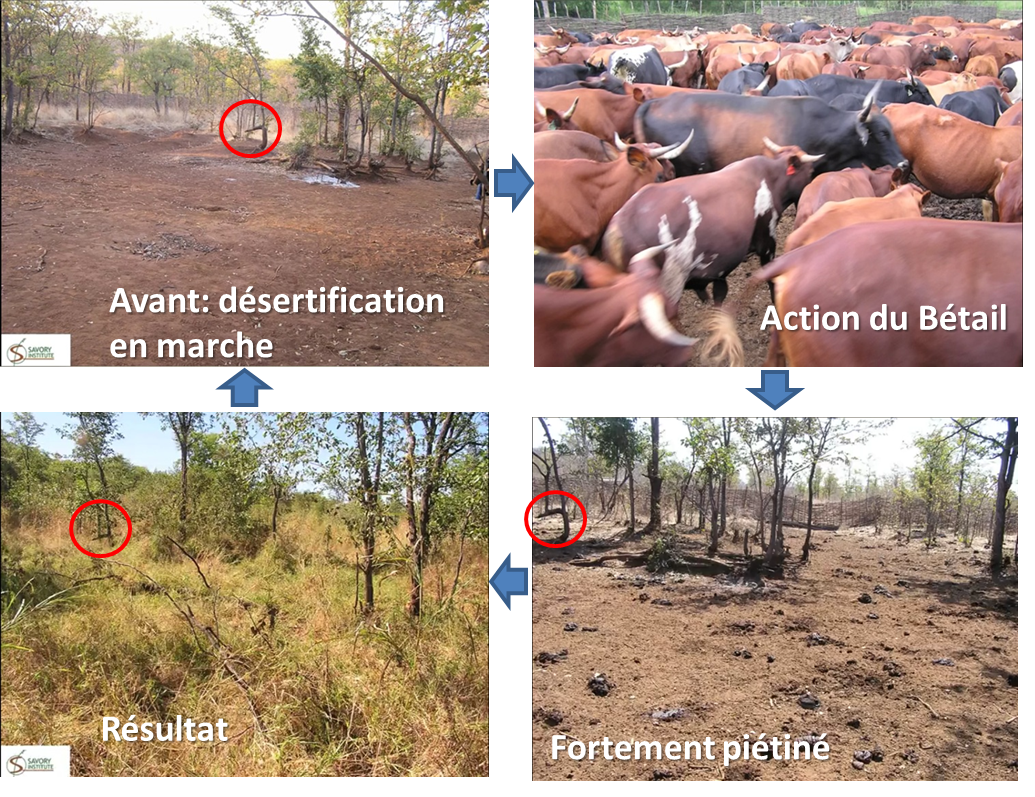
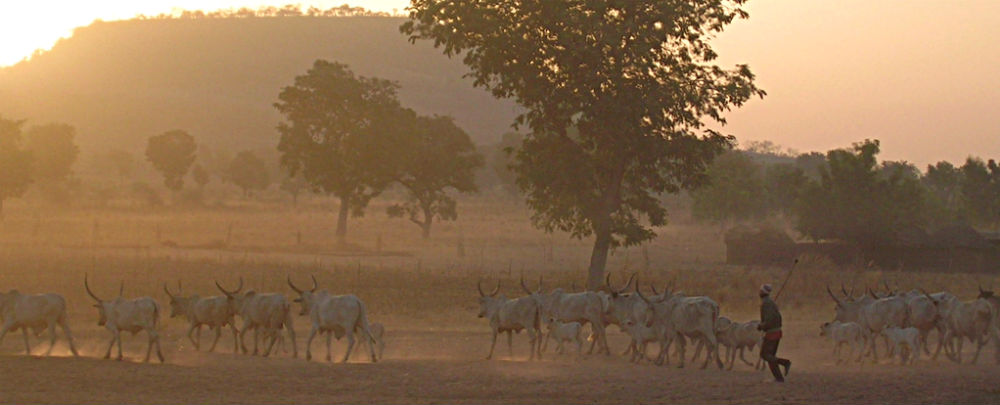
In a TEDx conference in 2013, the famous Zimbabwean biologist and ecologist Allan Savory explained how he was led to recognize his own and dramatic mistakes, to accept what, for him, was inconceivable: the breeding is the best solution to fight against desertification.
Furthermore, stopping desertification and re-vegetating 50% of desertified grasslands, according to him, would allow to return to the atmospheric situation of the pre-industrial era. In other words, we would stop and we would solve global warming.

Image 1: Before: desertification in progress
Image 2: cattle action
Image 3: strong trampling
Image 4: result


But this return to the pre-industrial atmospheric situation, as he explains and demonstrates, can only be done thanks to the breeding. And what is even more surprising is that the larger the flocks, the more beneficial their effect is, provided that they are properly managed.
These techniques, applied correctly, also have the potential to give back a life to degraded soils, to stop their erosion, to increase their potential of storage of rain water, in short, to give back hope to the populations most weakened by these changes.

I am thinking in particular of my dear Dogons of Mali, of whom I have already spoken to you, and for whom I continue to seek solutions (http://culturagriculture.blogspot.com/2017/09/114-agriculture-of-world-dogon-country.html).

I recommend you to see this conference to the end, in these times of doubts about the causes of climate change, and about available solutions, but especially at a time when breeding is so challenged by movements opposed to any form of animal exploitation.

However, Allan Savory explains, by proving it thanks to the numerous experiments carried out in the world on millions of hectares of meadows in desertification, how the breeding is the solution to go back.

(You can add subtitles in several languages ​​by clicking on the gear ⚙ on the bottom right of the video).


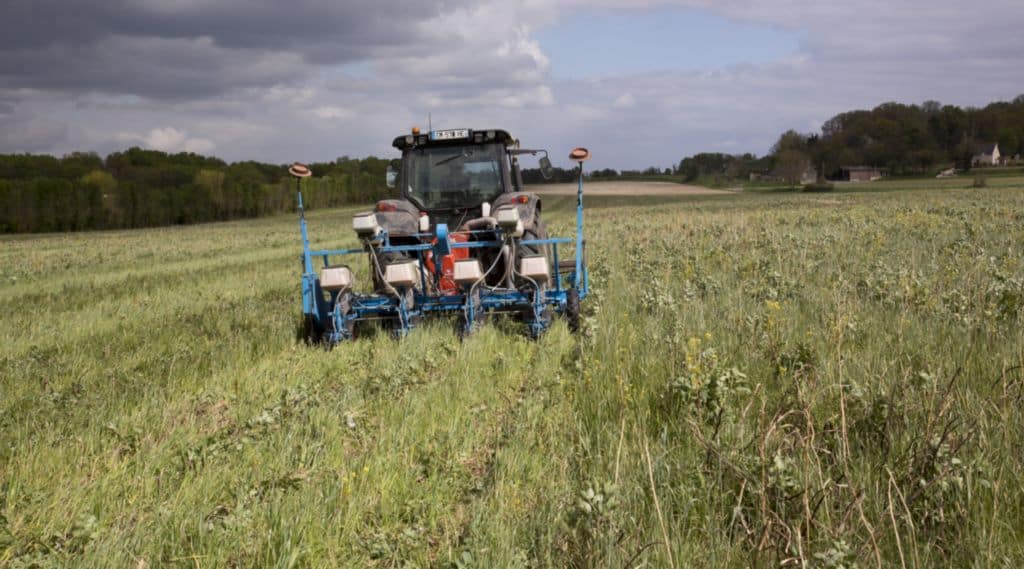
I want to add that the preservation of grass in agriculture is a technique with comparable effects on soils and climate. It's already widely used by farmers in production methods called conservation agriculture, sowing under plant cover, or simply grass cover on perennial crops. These techniques are developing rapidly because their effectiveness is well established. Millions of hectares around the world have been converted.


Yet, they are gravely threatened with abandonment because of political decisions perverted by an extremist ideology that is falsely interested in the real problems of the environment. The probable prohibition in a short time of glyphosate, whose alleged dangerousness is only a political weapon to fight against GMOs, will put a stop to these fundamental techniques to fight for soil preservation and against global warming climate.
Alternatives to glyphosate do not exist yet. It therefore seems unacceptable to me that this herbicide is thus condemned in the short term and against the opinion of all serious and recognized scientists of the planet, without viable solutions being proposed to the users.


The consequences of this prohibition without alternative will be very serious for the climate, because by forcing farmers to return to plowing, they will release into the atmosphere billions of tons of CO2 and methane, currently imprisoned in unplowed agricultural soils.

How can one, on the first hand, applaud Allan Savory for his work on the fight against desertification and soil erosion, and on the fight against global warming, and on the other hand condemn the agricultural techniques that produce the same effects?

Is there an influential politician really concerned about the future of the planet, able to say out loud that this purely political choice, without any serious scientific basis, is a gross mistake?

Desertification also threatens a large number of agricultural soils in all climates.
Cropping techniques to combat this phenomenon must be promoted, and incentives and training must be put in place to speed up farmers' conversions.
However, by demonizing agriculture, we get the opposite effect, we stop progress and we force a more conservative backtracking.
And it's very serious for the future.

Re-greening desertified areas is a good goal, but blocking solutions that prevent the degradation of agricultural soils will significantly reduce the scope.

Picture: https://africacenter.org/wp-content/uploads/2017/01/A-Fulani-man-herds-cattle-in-northern-Cameroon-1000x405.jpg

samedi 15 septembre 2018

138- Plant protection -7- Waterers

PLANT PROTECTION -7- WATERERS

Great efforts are being made daily by more and more farmers to improve biodiversity on their farms, which is reflected in a growing respect for wooded areas, in the planting of trees in crop-incompatible areas, or in tha planting of hedges that allow to delimit the farm while protecting it from malicious intrusions or by avoiding the risk of adverse effects on lakes and rivers. In some windy regions, as is the case in Provence, in the south of France, crop protection against the wind is traditionally done by hedges of cypresses.


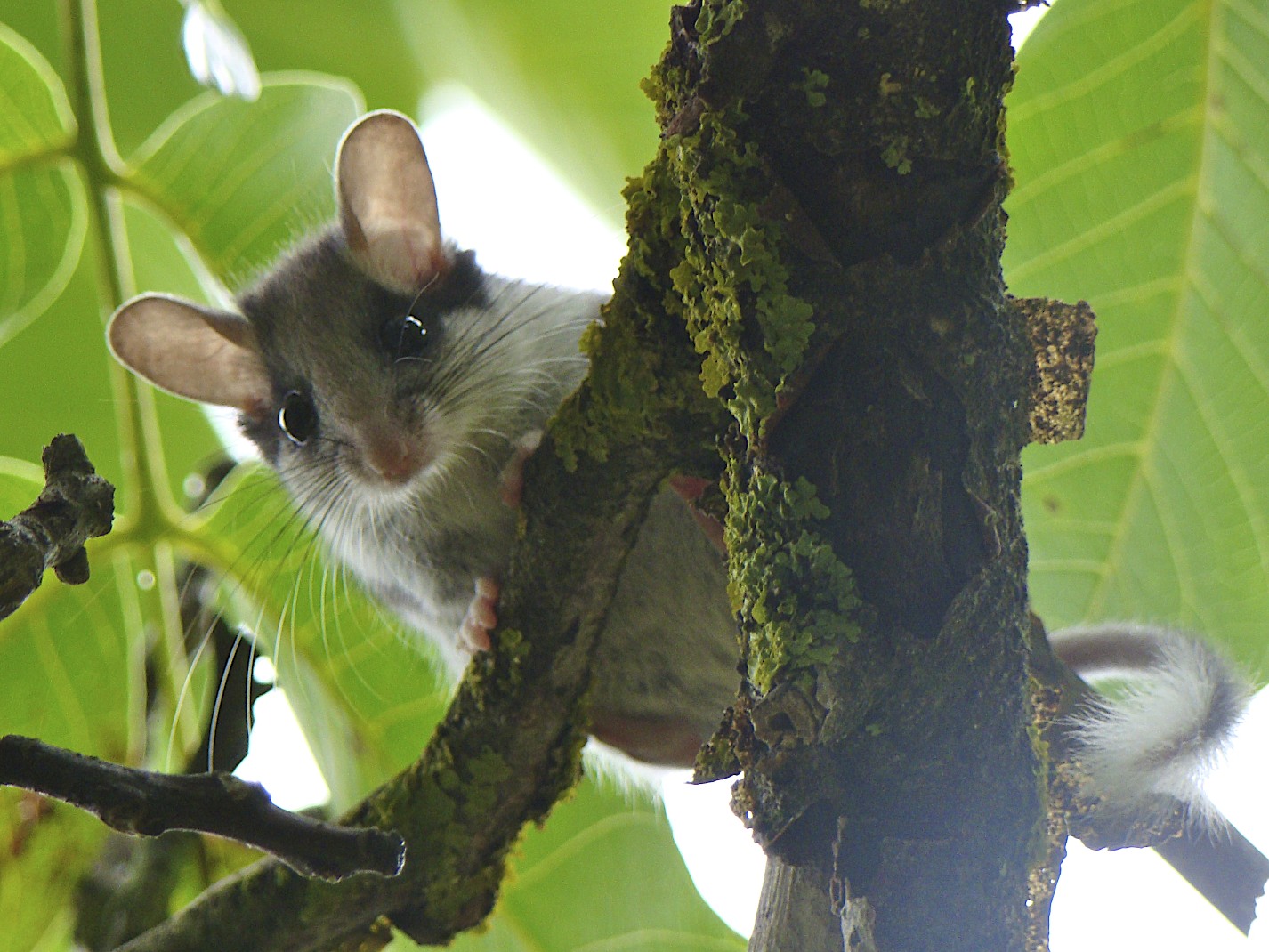
These areas of biodiversity fulfill their role perfectly, and all kinds of animals settle there quickly. This is particularly the case of charming small arboreal rodents such as squirrels, well known, or dormice much less known and often confused with rats.
As such, these animals are not pests. They feed on seeds and fruits, but their consumption is normally low and does not pose a significant risk to the farmer.
However, in some cases they can cause serious damage not to crops, but to irrigation systems. This is especially true for micro-spraying and drip irrigation.
In these systems, water is routed through a network of buried and/or surface pipes to the crop.


Our charming little rodents understand very quickly that these pipes are full of water. In spring, there are rarely any problems because they easily find water in the rain puddles or thanks to the morning dew.
But in the middle of summer, when everything is dry, they are thirsty, and finding water can be difficult, or too far away. If they want to drink outside watering hours, they try to release the water contained in these pipes by gnawing (they are often made of plastic, polyethylene type). The damage can be significant and the loss of water also. To this must be added the lack of irrigation caused by leakage and loss of pressure, which can be detrimental to the crop.
In addition, it's an exhausting type of damage for the farmer because it repairs frequently and finds the same problem again, the day after the repair, in the same place or almost, and so on, throughout the summer.

Personal pictures

The fight against what can turn into a real plague does not involve the elimination of rodents, it's difficult, almost useless and counterproductive in terms of biodiversity and pollution.
The easiest, cheapest and most effective solution is to install waterers, which are filled with irrigation water and overflow, watering the crop.

Rodents may take some time to get used to, and in the early days you may find gnawed pipes right next to a waterer, or even in the waterer itself.
It must be emphasized that after a few days rodents will understand that water is available effortlessly in the waterers, and they will stop gnawing the pipes.

Personal picture

Cases of this type are quite numerous in agriculture. It's almost always easier and more effective to find the method to live in harmony with animals than to try to fight against them.
It's one of the bases of integrated and organic production methods and of all the production methods that put a priority on the environmental balance of the farm.
Control methods are used only when other means, such as prophylaxis, nesting boxes or insect hotels, waterers or simple repellents, have failed, and the damage has become difficult to manage and dangerous.

Personal picture

samedi 16 juin 2018

133- Agroecology -9- Grass cover


AGROECOLOGY - GRASS COVER

The initial reason for my hiring here was the conversion of the irrigation system. Since its origins, the company used only traditional flood irrigation.
The switch to drip irrigation required a technical effort that the production manager could not take on alone.
Before, I was technical advisor for a group of fruit growers, among which the grassing cover in the orchard was a fairly common practice.

Picture of my own


Arrived here, I found myself in orchards whose soil was carefully kept very clean, I mean without any weed, by mechanical tillage between each flood irrigation.
The change of irrigation system required adaptation. It was obvious that tillage was no longer justified.
Naturally, we went to total weeding, to keep the soil clean, without mechanical work. The available herbicides allowed an effective, lasting and economical weed control.
This very clean soil was justified by the competition of weeds on the culture, especially for water, in a region, Andalusia, where water is a very precious good that should not be wasted. On the other hand, the presence of grass in spring can increase the susceptibility to frosts. Finally, the presence of grass increases, at harvest time, the ambient humidity, thus aggravating the risks of conservation diseases, thus the post-harvest losses and claims at destination.

Picture of my own

But over time, the end of the mechanical maintenance of the soil also resulted in a compaction, a hardening of the soil provoking a weakening of the orchards by zones, causing important irregularities of vigour and of productive and qualitative capacity.
We decided to invest in decompacting tools, expensive for purchase and use. However, the effectiveness of these mechanical means were generally limited to a few months, or even only a few weeks.

This is where I came to the idea of ​​looking for a sustainable and natural method to achieve this result. A lot of specialized reading, a few trips and many contacts then convinced me to test in local conditions, the installation of grass cover.
I first had to look for references to find plant species, adapted to these soils and especially to local climatic conditions. It must be said that here, winter is characterized by a lack of cold, summer is long (4 to 5 months), very hot (it is normal to exceed 40ºC), and especially very dry (at least 4 months without the slightest drop of rain). References being limited, seeds being expensive for a very uncertain result, I decided to work differently, from native species, necessarily very adapted to local conditions.
Some weeds can be very problematic here, especially mallow (Malva sylvestris), which easily takes enormous proportions, bindweed (Convolvulus arvensis), very invasive and climbing, purslane (Portulaca oleracea), very big consumer of water and Canadian Erigeron (Conyza canadensis) which tends to choke everything. All these plants are dicotyledons, and their control can therefore be based on selective herbicides. The only problematic grass is the nutgrass (Cyperus esculentus) which is very competing in nutrients, and very invasive on bare soil.

My decision was therefore to apply a selective herbicide on germination caused by the first autumn rains, to prevent these problematic broadleaf weeds from gaining the upper hand. Of course, grasses, unaffected by these herbicides, started very well, but very sparse at first, and nutgrass, which starts later, continued to dominate for the most part. It took 2 to 3 years for the vegetative cover, almost exclusively made up of native grasses, to establish itself sufficiently, to cover all the inter ranks, and to drastically reduce the invasions of problematic plants.
Grass is now well established, and it is normal not to need to use any herbicide. However, in some places, the first autumn sprouts can still be dominated by these invasive plants. In this case, an early and low-dose application of a selective contact herbicide prevents them from becoming problematic.
In the rest of the orchard, where no herbicides are applied, the vegetative cover, initially consisting exclusively of grasses, gradually diversifies, with the ever-increasing presence of various dicotyledons, including some sporadic specimens of problematic species.

Picture of my own

The grass cover, in this case, works differently than what I knew in France, where it's permanent, present all year long.
Here, it appears after the first rains, is more or less full and vigorous depending on the weather conditions of autumn, winter and spring, and dries completely during the summer.

I would like to point out that the only extractions made in our orchards have always been fruit, and big wood when we tear away old trees. To this we must add some wood in case of sanitation pruning that we sometimes have to do to solve a difficult phytosanitary problem (Phomopsis amygdali for example). All normal pruning woods, leaves and other plant remains are always left on the spot and milled.

Several years of experience of this system allowed me to make some very interesting observations on the effects induced by this temporary grassing.

On the purely productive level, it can be seen that irregularities in the orchard due to soil compaction have almost disappeared. With this change, the overall productive potential has increased by a simple homogenization effect.
This effect on the soil can also be confirmed by other simple observations:
-       During rain events, often torrential in this climate, the penetration into the soil is greatly improved, avoiding runoff, reducing the saturation of drainage ditches, erosion, and improving the capacity of water storage by the soil.
-       The bearing capacity of machines is greatly improved by the presence of grass, even after the rain. Only repeated passages during harvest may be a problem (but less than before) in the traffic ranks.

Picture of my own


-       The staff, abundant in peach trees, because everything is handmade, pruning, thinning and harvesting, is always working on a buoyant soil. He just needs rubber boots so he does not get wet in the morning with dew.
-       It is usual in drip irrigation to have to repair a buried leak. It's the occasion to observe a strong presence of earthworms, which was rare to observe before. When we know the fundamental role of these animals in life, fertility and structuring of the soil, it is obviously a huge benefit.
-       A very common pest and very detrimental here is the Mediterranean pine vole, Microtus duodecimcostatus. It is difficult to control, has an exponential multiplication, and can cause serious damage to woody crops, since it feeds on roots. The grass did not make them disappear. But instead of migrating in summer to the wet zones of drippers, it now stays in the grassy area, where it finds both favourable conditions for its galleries, and many roots of the grass that are the basis of its diet. A peaceful coexistence in short.
-       Rabbits and hares, very present in our orchards no longer attack the bark of trees since they find grass all year long, green for 8 months, dry for 4 months.
-       It is noted, although the relationship with grassing is not certain, a reduction of the pressure of certain pests such as mites or thrips. It is likely that some of the populations will remain in the grass, and that on the other hand, their predators will find favourable conditions for an early development, thereby ensuring a natural limitation of the populations in the orchards.
-       In general, populations of snakes, foxes, weasels, raptors, bats and other predators have increased significantly, providing better control of birds, rodents and other problematic insects.
-       Throughout this period, we have continued to reduce fertilizer inputs, particularly with regard to nitrogen, but also calcium and phosphorus, reaching levels that, very sincerely, I did not imagine to achieve, while increasing the productive and qualitative potential. This is the reality. This led me to start this year a study on soil fertility, as well as their biological activity.
-       I will add another advantage, not insignificant when it comes to fresh fruits, difficult to wash, as is the case of peach: pickers don't stain with mud, nor the hands, nor themselves, or crates, even in case of rain, thanks to this plant mat, giving a cleaner fruit as a whole, which is undeniably an improvement in the quality of the product presented for consumption.


Are there any defects?
Actually I don't see much.

Picture of my own

The risk of spring frost.
The presence of grass increases the radiation, so the risk of frost.
One can imagine the application of a low-dose defoliant herbicide during the period of risk, just to burn the leaf and stop its activity temporarily.
Personally I prefer mowing, which has the same blocking effect for a few days, and avoids the use of herbicides.

Conservation issues.
A mowing just before harvest can largely prevent them, and on the other hand, modern fungicides (synthetic, of course, but also biological) have a level of efficiency much higher than those of the last century. However, mowing is essential to avoid keeping under the trees a humid and confined atmosphere, favourable to the development of conservation fungi.

The risk of fire.
Dry grass stays on the surface. Until now, mowing in early summer, which coincides with the grinding of summer pruning wood, has always been enough to avoid this problem.


My experience is not scientific. It resides on my observations, my decisions and my conditions of soil, climate and crop.
But I am convinced that these practices, which are very easy to implement, have a very positive impact on soil microbial activity, biodiversity in general, health balance of the farm, and ultimately on the sustainability of the crop and agricultural activity as a whole.

We can also talk about cost. In fact, grassing cover management is a bit more expensive than an herbicide on the whole surface. There must be at least one more tractor pass per hectare to mow the grass.
But if my observations are correct, reducing the cost of plant protection and nutrition largely offsets this extra cost.
Not to mention that the approach is both in the context of reducing agricultural inputs, and with a view to reducing the impact of agricultural activity on biodiversity and the environment.

Picture of my own


It is obvious that grass cover is a technique that can be used mainly in woody crops, orchards, vines, citrus fruits, almond trees, olive trees, biomass crops, etc.
Other branches of agriculture look for the same effects with different techniques, as is the case with conservation agriculture, more for annual crops, which seeks to minimize ploughing, either by seeding directly on the remains of previous crops (sometimes with the use of an herbicide in preparation for sowing), or with planting under cover of living plants (in an attempt to avoid the use of the herbicide).

These techniques, which show every day a little more their efficiency, and their compatibility with a technical and economic result of high level, are gaining momentum, and gradually tend to become generalized.
This is the demonstration that conventional agriculture can be very environmentally friendly, while being very productive.

It's is also this, the sustainable farming.