Affichage des articles dont le libellé est EN- residue analysis. Afficher tous les articles

samedi 4 février 2017

98- Natural vs synthetic -2- Neem oil vs azadirachtin

NEEM OIL VS AZADIRACHTINE

In order for you to understand the idea of ​​this series, or at least the thesis I am trying to defend, I take this first example which is, in my opinion, one of the most typical.
To tell you all, I came up with the idea of ​​making a series when I was starting to write this article. This case is one among many others.

Human being have become what he is today, thanks in particular to his ability to observe his environment and to draw conclusions for his own benefit.
The observation of Nature allowed him to extract substances to meet his own needs. And since he learned, thanks to chemistry, to synthesize molecules, his first source of inspiration, at least as far as agro chemistry is concerned, has always been Nature itself.
Botanists observe a phenomenon of self-defense or toxicity in plants. They analyze it, send it to chemists, who determine the molecules involved in the phenomenon, synthesize them, study them, and then try to improve them.
This process, simple in itself, has already been repeated thousands of times to obtain medicines, textile fibers or pesticides.


NEEM OIL

Neem oil is extracted from the seeds of a tree originally from India, the Indian Lilac (Azadirachta indica). The use of this fast growing tree, well adapted to drought conditions, has spread to all South Asia, Africa and South America. 

Picture: http://www.ecologiaverde.com/wp-content/2014/12/Que-es-el-aceite-Neem.jpg

Neem oil is a widely used traditional product and has been used for centuries in India and Africa in particular for its fungicidal, insecticidal, and bactericidal effects in the treatment or prevention of lice, malaria, skin diseases, but also as a contraceptive. The list of his real or supposed actions is immense.

Its use in agriculture is quite recent. The properties as insecticide, nematicide and miticide of this extract are now well known. The active natural molecules that constitute neem oil are numerous, there are more than twenty, which explains the versatility of its use. Among these, the main for its use in agriculture, is azadirachtin, and essential secondary are salanin, meliantrol, nimbolid, nimbid, and nimbidinic acid. This versatility makes it an elemental commodity for organic farming. It is also authorized by the European Commission. Yet some countries like France don't allow this substance, which does not prevent the farmers to use it widely, despite the legal prohibition. The law is very clear on this, any product that has not been legally authorized for a concrete use is strictly prohibited for this use. But some, as you can see in the following report, don't really care of this. In the following French report, a French organic farmer explains that he uses neem oil systematically, and that he does not know any organic farmer who is not using it, even if it is forbidden.

  
However, this oil, so versatile, also presents some defects. It is precisely because of its versatility that it can be suspected. It is very toxic to bumble bees and many hymenoptera (except honeybees), is toxic to aquatic fauna, and ranks among endocrine disruptors.
Its versatility is precisely one of the criteria that suspects its negative side effects. A very specific product leaves little room for surprise, unlike products with broad spectrum of action. This is one of the criteria that guided the elimination of molecules by the European Commission.
The production of oil takes place in several regions and countries. It may be derived from specific plantations, or isolated trees, arid zones or wetlands, irrigated or not irrigated crops. This great variability in the origin of the oil causes a great variability in its chemical composition and in the proportions in active molecules. I have already succinctly addressed this question in a recent article https://culturagriculture.blogspot.com.es/2016/12/95-spirit-of-plants-7-life-lessons-from.html

It must also be pointed out that the extraction of oil is often done in a very artisanal way, from isolated trees or plantations of very different regions and climates, and therefore that its homogeneity is very variable. Commercial products guarantee a constant level of neem oil, but they can't guarantee a constant level of active ingredients, especially azadirachtin.
On the other hand, this oil is thermosensitive, which means that above 50ºC, its composition degrades. Therefore, as being produced in hot countries, its conditions of production, storage and transport will strongly influence its potential as a pesticide.


It is therefore very difficult for the farmer to make a reliable use of it, since the levels of active ingredients are not constant.
Finally, it should also be pointed out that, in the artisanal conditions of its production and transformation, its origin in countries that are often poor and with doubtful social conditions, the risks of pollution of the local environment or of poisoning of employees are high.
It should be noted that, being a natural product, the homologation process is much lighter than for synthetic molecules. However, as legislators have realized that everything natural is not always good for health or for the environment, the process of registering so-called "natural" pesticides is being strengthened.
Yet there remains one point that legislative reinforcements will not solve in the short term, residues. Indeed, when we analyze residues, we only finds molecules that we know and that we seek, since the available technologies don't make possible to work otherwise. In this case, azadirachtin can be found. But what about the other twenty molecules naturally present in the oil? They are not sought after. So it is not known if they leave residues potentially swallowed by consumers. Worse, this twenty molecules are not the subject of environmental and health studies. Do they pose health risks? Nobody knows. Yet no one thinks of putting forward the principle of precaution. Since it's natural!


AZADIRACHTIN

Chemists, after studying the properties of this "miraculous" oil, learned to synthesize the main ingredient, azadirachtin. The structure of the synthetic molecule is exactly the same as the one of the natural molecule, but it is freed from its impurities, unnecessary molecules (for agricultural use), its quality and concentration are constant, its efficiency is greatly increased, and its side effects are the same with respect to the molecule, but less with respect to the formulated product (since the secondary molecules have been eliminated).
This formulated product is therefore a synthetic pesticide, which is an exact copy of a natural molecule. Being a synthetic pesticide, it had to pass, before it was placed on sale, the whole process, very long and very expensive, of European approval first, and then national approval. The studies include toxicity to birds, mammals, aquatic fauna, beneficial insects (including bees and bumble bees), soil, surface and groundwater, degradability in water, air, soil, or by light, on its effects on health (for example its effects as an endocrine disruptor).
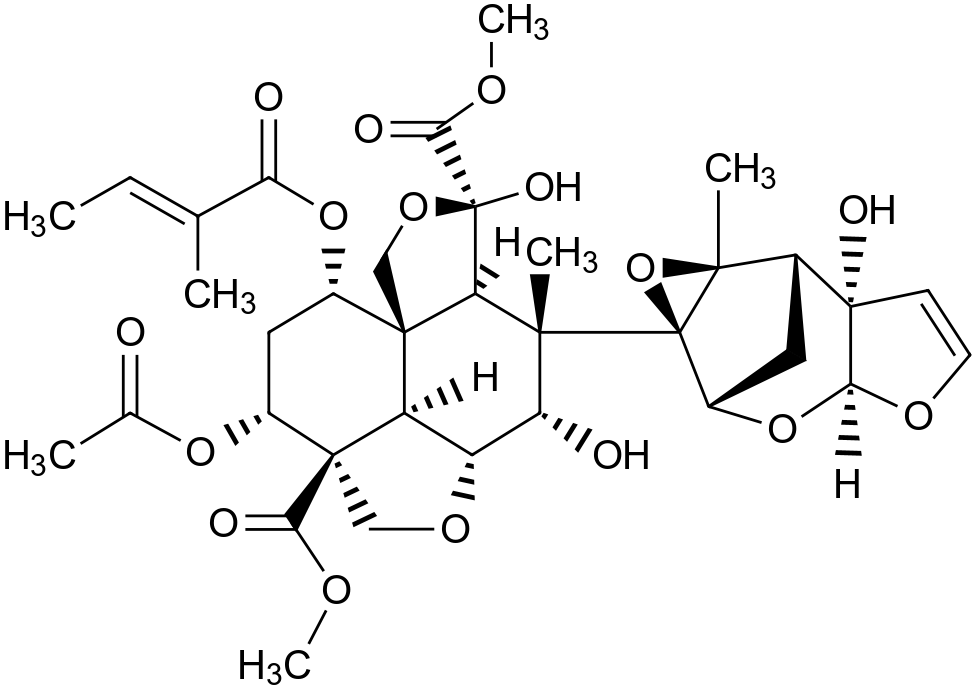
Picture: http://www.alanwood.net/pesticides/structures/azadirachtin.gif

As a user, I may, depending on the circumstances, need to use one or the other. I can tell you from personal experience, that the use of synthetic azadirachtin is much safer than neem oil.
Azadirachtin, certified on stone fruits, is consistently dosed, its use is simple, and its effectiveness without surprise, in the usual margins of the vagaries of the effectiveness of all pesticides.
Since neem oil is not dosed in active ingredient, but in oil concentration, its effectiveness varies greatly from one brand to another, and in the same brand, from one lot to another.
A farmer never uses pesticides, synthetic or natural, for pleasure. If he does, it is because he needs to do it because his crop and his income are in danger. When he does, it has previously studied the advantages and disadvantages of each of the solutions it has, and he chooses product and dose to obtain the maximum efficiency with the minimum of disadvantages.
If the batch of oil he receives, for whatever reason, does not give the expected results, he will have to renew the intervention, with all costs and environmental risks that it supposes.
This is not the case with azadirachtin.

And finally, residues are analyzed. The molecule is identified and known, in a way that the equipment can measure it precisely. There is no risk of unpleasant surprises.


Then of course, one can doubt everything.
Some say that neem oil has fewer side effects than azadirachtin alone, because the cocktail of molecules has a mitigating effect.
Personally, I would tend to think otherwise. The cocktail of molecules is derived from the botanical history of the tree and derives from its needs of self-defense (http://culturagriculture.blogspot.com.es/2015/09/52-spirit-of-plants-2-self-defense.html). The cocktail has a real reason for existing, and Nature rarely works for nothing. If these molecules exist, it's not to neutralize each other, but to strengthen the self-defense.
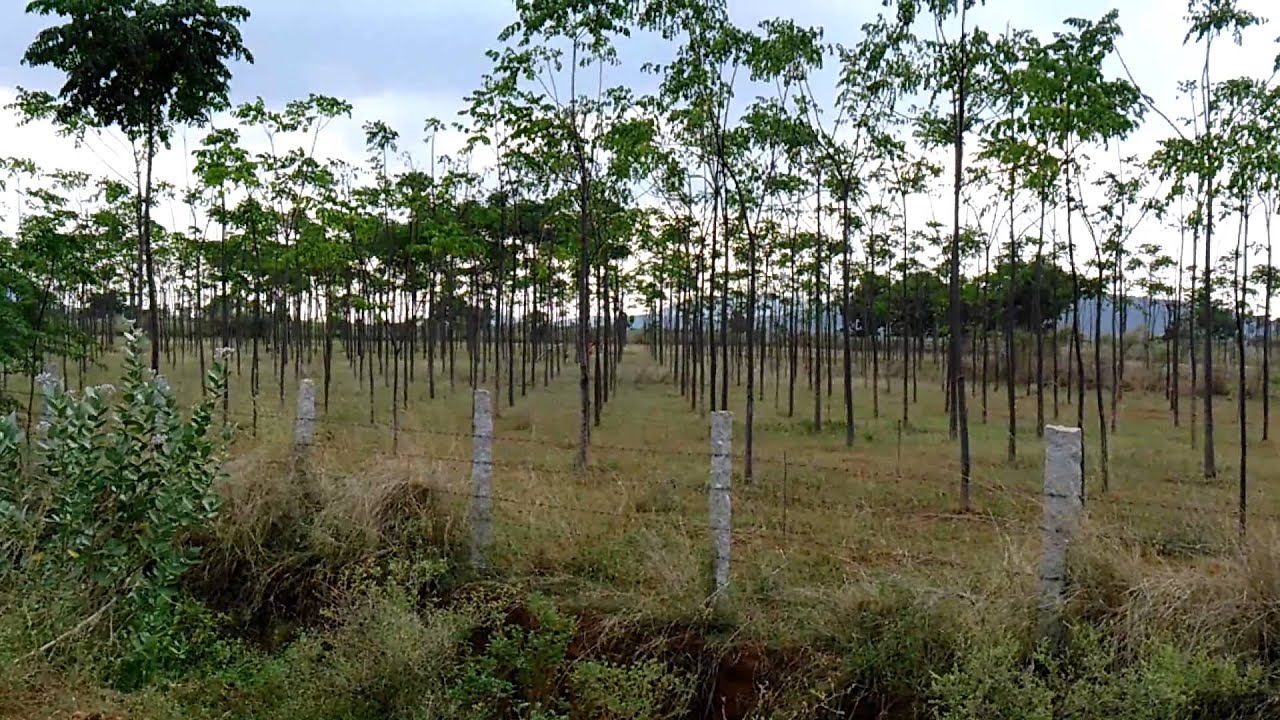
I tend to think that the longer a species has been domesticated (especially selected and hybridized), the lower its self-defense capacity is (except for certain species, such as cannabis or poppy, whose selection seeks precisely to strengthen its potential to produce alkaloids). Today the neem tree has never been domesticated, just used in its natural state, and the current plantations for plant extracts are all made from wild varieties.
Picture: https://i.ytimg.com/vi/-QyqvdtiUnM/maxresdefault.jpg

I couldn't find a single serious study that compares, in terms of efficacy, environmental effects and residues, neem oil and synthetic azadirachtin. Everything I found is based on unproven and clearly subjective assertions.
Obviously, those who defend the safety of neem oil are the mediums of organic farming. This is very logical since they need it and have few alternatives. This is all the more logical because, being used massively, and sometimes without authorization, it is necessary to find a justification.
But I can't help but be surprised that those who defend the interest of the neem oil molecule cocktail, are also those who attack pesticide cocktails in conventional agriculture (something I don't question, but I await the scientific results necessary to take position).
What is supposedly true in conventional would not be true in organic?

There is reason to be surprised.


All this to tell you, and this is the purpose of this first example, that neem oil is allowed (except in some specific cases), widely used and praised in organic farming. However, its heterogeneity, its extraction methods, its side effects, its effects of endocrine disruptor, seem not to disturb anybody. The farmer has a pretty can of a few liters, very clean, safe and well labeled. He does not arise the question of what it may have involved, before.
Azadirachtin, on the other hand, is prohibited in organic farming. It is however the same molecule, whose side effects are the same, but whose homogeneity is total, the method of production is controlled and safe. It had to go through several commissions that established conditions of use for each crop, residue levels, pre-harvest employment terms, safety standards for handling, storage and use.

Picture: https://blogger.googleusercontent.com/img/b/R29vZ2xl/AVvXsEhQo2wtUo8tifnwuceVQDF5Qx_rWTrHyqtAa3fEhp1347uMonwKe63TGvRgmReH07BZALpyEzVe9ZqDLZ6FY0CvLGLyKaA7k9T9JGY8utvJ6Kp_GhW3tHFSxZlQ44P6MWPgccDnaEcXHHJW/s1600/ARBOL+DE+neem1.jpg


In this first match, it is obviously azadirachtin that is gaining, as much for its effectiveness as for the control of its effects on environment and on health, but also by the security that it brings thanks to a strict registration process and with periodic review.
In this case, undoubtedly, the use in conventional agriculture of azadirachtin is safer than the use, in organic farming as in conventional agriculture, of neem oil.

This is a flagrant case, in which organic ideology prefers to accept health and environmental risks, rather than to relax its criteria, in a precise situation, although the general philosophy is not really questioned.
It is, however, fair to recognize that the exact synthesis copy is more effective and presents less risk than the original natural extract.
But it seems that reason is really weak, when it's facing dogma.


So why a conventional farmer like me, may be led to use an organic pesticide like neem oil, if it has an advantageous synthetic alternative like azadirachtin?
This is an interesting question to which I will reply in a specific article. Especially since it concerns neem oil as well as all organic pesticides.

Picture: http://www.hsnstore.com/blog/wp-content/uploads/2014/06/bio.jpg

dimanche 2 février 2014

4- Food safety


Today I'll speak about a subject that concerns almost everyone, and that is very polemical. Food safety. In recent years, cases of poisoning, more or less serious, and alerts have been numerous, but generally insufficiently explained. We can gather the cases in two main categories, which I will talk you separately.

Part 1: pesticides residues
Everyone is bothered by this topic. Recent alerts have affected the presence of illegal residues in Europe, or in rare cases, exceeding authorized level. Nevertheless today, as I said in a previous post, things have changed a lot.
But first, what is it?
Crops, like any living being, are subject to various parasites attacks, diseases or pests (insects, mites, birds, rodents), or climatic stress (frost, hail, floods, droughts, heat stroke, windstorms). The farmer has to protect his crops using pesticides, also known as plant protection products. Depending on the situation, the products act curatively, preventively so repulsive or attractive, or as anti-stress or healing.
Like in any living organism, these products, when applied, will act superficially or internally in the plant, and then gradually degrade, to completely disappear within a variable period, ranging from several days to several weeks, depending on the molecule and the crop.
Degradation occurs under the combined effect of the decomposition by the plant itself (hydrolysis), the decomposition by light (UV rays action), vaporization by heat, oxidation by rainwater and air oxygen, and rainout (and subsequent degradation by soil microorganisms).
There are two groups of pesticides: pesticides from synthetic chemistry, and "organic" pesticides, that is from natural origin, and whose manufacturing process does not use synthesis techniques (there are exceptions, and we'll talk about in another post).
Among the natural methods of crop protection, there is a category that I don’t include in this post: auxiliary organisms, which are living beings who, by their natural action, will act in place of pesticides. These are bacteria, viruses, fungi, auxiliary nematodes, beneficial insects and predatory animals such as bats, birds, raptors, foxes, snakes, genets, etc. They are living beings, so their evolution is different, and they don’t leave any trace of residue, although we could doubt about that, as regards bacteria, viruses, fungi or nematodes.

Let’s go back to our molecules.
Synthesis molecules.
The same way as pharmaceutical molecules, they undergo a long and expensive process of study previously to the sale authorization. For more details, please read my publication No. 2 again. What matters today is the notion of residues of pesticides.
For each molecule, will be issued, at the European level, and at the level of each country outside the European Community, an MRL (maximum residue limit), expressed in ppm that is in mg of the molecule per kg of food. It is the maximum level beyond which health authorities consider that the product may present a health hazard in the short and in the long term. The reality is that levels set as official MRLs, are between 100 and 200 times lower than levels of toxicity determined by certification studies.
This MRL has legal value. Any food that exceeds MRL is prohibited to circulation and must be destroyed. It is considered as contaminated and unfit for consumption. Alerts in recent years have concerned this kind of situation.
Checks are carried out at the starting point (grower’s field /or packing station), by plant protection services, veterinary services or health authorities, then possibly during transport by Customs or in destination in the storage stations or retail stores.
If a truck is controlled with a MRL exceeding or with presence of an unauthorized molecule, it is immediately sent to a specialized center for unloading and destruction of food. The sender would be heavily penalized with immediate cessation of its activity, at least temporarily.
If a retail store is in the same situation, and if it can’t attest its good faith, could be charged with endangering public health, with all the consequences that may result.

Organic molecules
Here we have a real problem. The organic farmer has the disposal of certain products which have been approved for the fight against phytosanitary problems. But today, there is a legal limbo regarding these products at the European level. The product manufacturer is not obliged to declare the exact content. He is allowed to say, for example "Neem extract”. The Neem tree (Azadirachta indica) is a tree from India, whose seeds produce oil with insecticidal properties. The main compound, with recognized insecticidal properties is called azadirachtin. But what other natural molecules are composing this extract? These molecules are they dangerous to human health? Are there residues of these molecules in fresh fruits and vegetables treated with natural oil? In what proportions?
On the other hand, Is this extract pure? Are there additives in the formulation (the product as it is sold to the farmer)? What are these additives? These additives are they allowed in organic agriculture? These additives may have they a health hazard?
In most cases there is no answer to these questions, and no serious study about it.
I am not doing organic farming, but I include in farming methods and programs of technical management, several elements allowed in organic farming. I have a personal experience of a similar in 2012. After a very dry and cold spring, with frost problems, we began the harvest, one week late, at the end of April. A few days before, the forecast announced rain and we decided to spray with an organic fungicide to protect against fruit rots with no residue risk. We use a known product, with an attested efficiency level and approved for this use in organic farming, and as such, exempt employment pre harvest interval and MRL. It is a "Rutaceae extract" large family of plants, some of which have fungicidal properties. Four days after the expedition of the first fruits, we received a claiming from an important German client, for the presence of a quaternary ammonium residue (a disinfectant used in food industry and health services, but prohibited on foods). As this is a product that we use in our amenities for disinfecting packing equipment, we first checked our cleaning and hygiene procedures and we took samples to send to the laboratory. As we didn’t find anything, we checked our field procedures to, and we analyzed, among other things, the organic product. Surprise! We found a high level of quaternary ammonium. In this case, the manufacturer had included it in the formulation as an additive, without declaring it. The following question is allowed: which was the real active ingredient of the product? The plant extract or quaternary ammonium? After protests and complaints (we were not the only affected company in this case, of course) the product was withdrawn from the market, but the manufacturer had no problem, because there was no breach of the law. A large survey was conducted at European level, to determine if there were other similar cases, causing the withdrawal of several products.
This example demonstrates only that the approval procedures and controls are insufficient, and this case did not change the law regarding approvals organic pesticides.
It makes the consumer believe he buys healthy products without risk to health, but the reality is very different.
The market of organic products has attracted a large number of unscrupulous people who use it to enrich themselves at the expense of unsuspecting and uninformed consumers, and at the expense of organic farmers who have to lead their crop until harvest with a minimum of problems, to get by economically.
On the other hand, authorities have not established sufficient procedures to ensure that products used in organic farming are really able and consistent, are possible to analyze, and have a traceability that allows know exactly its whole composition.
If we add to this, the majority of organic products are less efficient than their synthetic equivalents, consider that the farmer is obliged, to obtain a sufficient yield of marketable production, to spray more frequently, so with a high risk of residue. But the controls are not made, since the majority of active molecules are not reported or are unknown. A laboratory can only measure the presence of known molecules and has to previously calibrate its equipment with a standard solution.

Part 2: bacteriological safety
Paradoxically, this topic bothers people less, although the real danger is considerably higher. This aspect has, at first glance, no difference according to the mode of production. However, we must emphasize some important points.
Conventional farming freely uses synthetic or natural fertilizers.
Organic farming prohibits the use of synthetic fertilizers, favoring natural fertilizers, including manure which has an important place. These elements have to undergo a composting process, which prepares them for their agronomic use, and cleans them (a good composting eliminates all bacteria in animal manure).
However the composting process, if not complete, or if not well controlled, don’t totally clean manure. On the other hand, fresh manure, before composting, is sometimes used to warm up cold soils in the spring, in order to improve the agronomic performance of the crop, or to increase the earliness. Under these conditions, the bacteriological risk actually exists.
Recent cases of Escherichia coli in Europe (organic sprouted seeds in Germany) or Listeriosis in the United States (organically grown melons), that caused a hundred deaths in total, show that it’s essential to be extremely cautious about the use of these techniques, and above all, that health checks are not at the level of risk. To my knowledge, there are no similar cases from conventional agriculture.

Part 3: retailing
Another conflict point. I'm not particularly favorable to supermarkets for the retailing of fresh produce because they abuse their highly strong position to negotiate commercial terms, and it is finally the grower who suffers the most, not always succeeding to cover its production costs. Being myself a fruit grower, I can’t endorse practices that are sometimes grossly unfair. Furthermore, the prices proposed to the consumer are often abusive, and unrelated to the price paid to the grower, and the quality of products presented may be highly unsatisfactory.
It must be recognized that, in terms of food safety, it is today the best controlled system. It should be understood, that a supermarket chain has an urgent need to consolidate its reputation. But competition is fierce between supermarket brands. They spy, take samples for analysis from their competitors, and don’t hesitate to publish the slightest deviation about food safety. There are many cases of this type, especially in Germany. Means of controls in place are very hard, and the slightest deviation from producer may cancel trade agreements. In the example I previously mentioned, our German client put in abeyance all orders until we could be able to provide an enough complete and argued report to convince him. If we had not been in situation of demonstrating our good faith, we would simply be removed from its list of suppliers.
No other system of sale presents the same level of safety.
At my opinion it is sad to say that, but in contrast the less safe way today is direct selling, on markets and farms. Of course, I am only speaking here about food safety and only in terms of risk and quality controls.
Of course, it does not mean that farmers who sell in markets or in farm work badly, but it means that if you are used to buy this way your eggs, poultry , fruits and vegetables and so on, ask accreditations and certifications (if it is an organic production or integrated production ), records of checks and health controls. These documents must normally exist and have to be available for consultation. The mere fact of receiving the request of their customers, will force those who are not in the rules, to organize the necessary controls to avoid the risk of losing their customers.
Beware of the concept of food safety. The safest is not necessarily the one you think. This does not negate the qualities and defects of each mode of production and mode of marketing, about which I am preparing several texts.

This publication relates to food safety, not to the quality of the product. I'll come back later and it will be a big chapter. Meanwhile, I invite you, if you understand French language well, to watch the following video, which gives a different perspective, just as respectable and not incompatible, quite the contrary. I don’t necessarily agree with everything that is said, but I think it's interesting to be heard, if only for the humor that is made, although the subject is very serious.