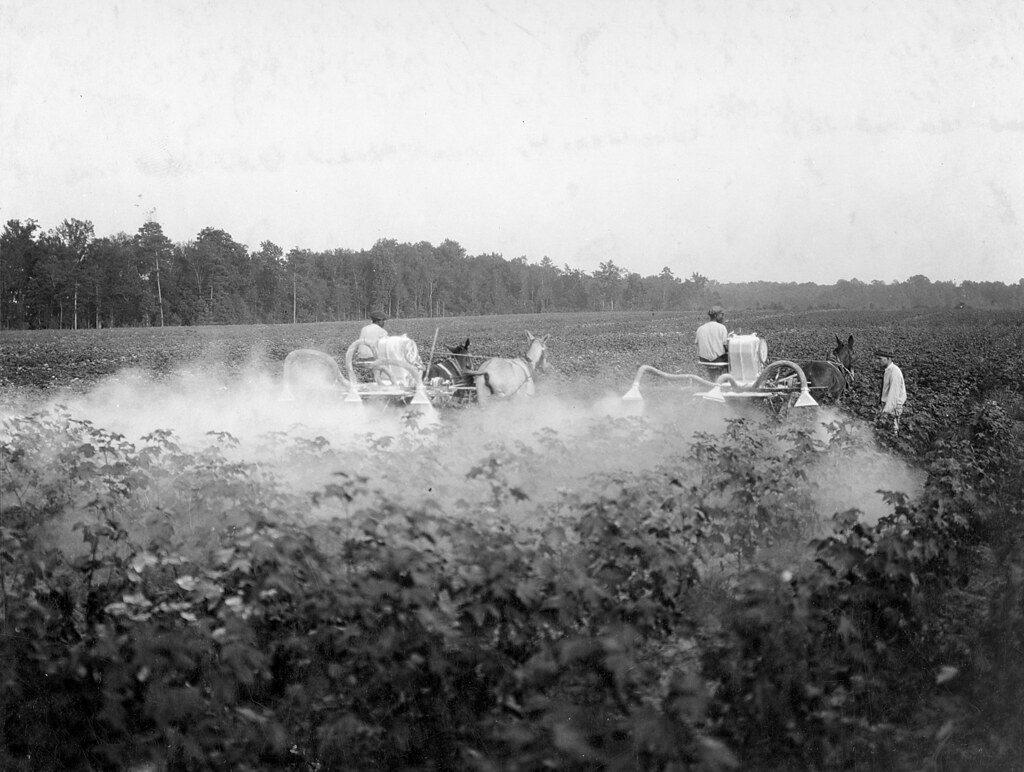
Affichage des articles dont le libellé est EN- conventional farming. Afficher tous les articles

samedi 16 juin 2018

133- Agroecology -9- Grass cover


AGROECOLOGY - GRASS COVER

The initial reason for my hiring here was the conversion of the irrigation system. Since its origins, the company used only traditional flood irrigation.
The switch to drip irrigation required a technical effort that the production manager could not take on alone.
Before, I was technical advisor for a group of fruit growers, among which the grassing cover in the orchard was a fairly common practice.

Picture of my own


Arrived here, I found myself in orchards whose soil was carefully kept very clean, I mean without any weed, by mechanical tillage between each flood irrigation.
The change of irrigation system required adaptation. It was obvious that tillage was no longer justified.
Naturally, we went to total weeding, to keep the soil clean, without mechanical work. The available herbicides allowed an effective, lasting and economical weed control.
This very clean soil was justified by the competition of weeds on the culture, especially for water, in a region, Andalusia, where water is a very precious good that should not be wasted. On the other hand, the presence of grass in spring can increase the susceptibility to frosts. Finally, the presence of grass increases, at harvest time, the ambient humidity, thus aggravating the risks of conservation diseases, thus the post-harvest losses and claims at destination.

Picture of my own

But over time, the end of the mechanical maintenance of the soil also resulted in a compaction, a hardening of the soil provoking a weakening of the orchards by zones, causing important irregularities of vigour and of productive and qualitative capacity.
We decided to invest in decompacting tools, expensive for purchase and use. However, the effectiveness of these mechanical means were generally limited to a few months, or even only a few weeks.

This is where I came to the idea of ​​looking for a sustainable and natural method to achieve this result. A lot of specialized reading, a few trips and many contacts then convinced me to test in local conditions, the installation of grass cover.
I first had to look for references to find plant species, adapted to these soils and especially to local climatic conditions. It must be said that here, winter is characterized by a lack of cold, summer is long (4 to 5 months), very hot (it is normal to exceed 40ºC), and especially very dry (at least 4 months without the slightest drop of rain). References being limited, seeds being expensive for a very uncertain result, I decided to work differently, from native species, necessarily very adapted to local conditions.
Some weeds can be very problematic here, especially mallow (Malva sylvestris), which easily takes enormous proportions, bindweed (Convolvulus arvensis), very invasive and climbing, purslane (Portulaca oleracea), very big consumer of water and Canadian Erigeron (Conyza canadensis) which tends to choke everything. All these plants are dicotyledons, and their control can therefore be based on selective herbicides. The only problematic grass is the nutgrass (Cyperus esculentus) which is very competing in nutrients, and very invasive on bare soil.

My decision was therefore to apply a selective herbicide on germination caused by the first autumn rains, to prevent these problematic broadleaf weeds from gaining the upper hand. Of course, grasses, unaffected by these herbicides, started very well, but very sparse at first, and nutgrass, which starts later, continued to dominate for the most part. It took 2 to 3 years for the vegetative cover, almost exclusively made up of native grasses, to establish itself sufficiently, to cover all the inter ranks, and to drastically reduce the invasions of problematic plants.
Grass is now well established, and it is normal not to need to use any herbicide. However, in some places, the first autumn sprouts can still be dominated by these invasive plants. In this case, an early and low-dose application of a selective contact herbicide prevents them from becoming problematic.
In the rest of the orchard, where no herbicides are applied, the vegetative cover, initially consisting exclusively of grasses, gradually diversifies, with the ever-increasing presence of various dicotyledons, including some sporadic specimens of problematic species.

Picture of my own

The grass cover, in this case, works differently than what I knew in France, where it's permanent, present all year long.
Here, it appears after the first rains, is more or less full and vigorous depending on the weather conditions of autumn, winter and spring, and dries completely during the summer.

I would like to point out that the only extractions made in our orchards have always been fruit, and big wood when we tear away old trees. To this we must add some wood in case of sanitation pruning that we sometimes have to do to solve a difficult phytosanitary problem (Phomopsis amygdali for example). All normal pruning woods, leaves and other plant remains are always left on the spot and milled.

Several years of experience of this system allowed me to make some very interesting observations on the effects induced by this temporary grassing.

On the purely productive level, it can be seen that irregularities in the orchard due to soil compaction have almost disappeared. With this change, the overall productive potential has increased by a simple homogenization effect.
This effect on the soil can also be confirmed by other simple observations:
-       During rain events, often torrential in this climate, the penetration into the soil is greatly improved, avoiding runoff, reducing the saturation of drainage ditches, erosion, and improving the capacity of water storage by the soil.
-       The bearing capacity of machines is greatly improved by the presence of grass, even after the rain. Only repeated passages during harvest may be a problem (but less than before) in the traffic ranks.

Picture of my own


-       The staff, abundant in peach trees, because everything is handmade, pruning, thinning and harvesting, is always working on a buoyant soil. He just needs rubber boots so he does not get wet in the morning with dew.
-       It is usual in drip irrigation to have to repair a buried leak. It's the occasion to observe a strong presence of earthworms, which was rare to observe before. When we know the fundamental role of these animals in life, fertility and structuring of the soil, it is obviously a huge benefit.
-       A very common pest and very detrimental here is the Mediterranean pine vole, Microtus duodecimcostatus. It is difficult to control, has an exponential multiplication, and can cause serious damage to woody crops, since it feeds on roots. The grass did not make them disappear. But instead of migrating in summer to the wet zones of drippers, it now stays in the grassy area, where it finds both favourable conditions for its galleries, and many roots of the grass that are the basis of its diet. A peaceful coexistence in short.
-       Rabbits and hares, very present in our orchards no longer attack the bark of trees since they find grass all year long, green for 8 months, dry for 4 months.
-       It is noted, although the relationship with grassing is not certain, a reduction of the pressure of certain pests such as mites or thrips. It is likely that some of the populations will remain in the grass, and that on the other hand, their predators will find favourable conditions for an early development, thereby ensuring a natural limitation of the populations in the orchards.
-       In general, populations of snakes, foxes, weasels, raptors, bats and other predators have increased significantly, providing better control of birds, rodents and other problematic insects.
-       Throughout this period, we have continued to reduce fertilizer inputs, particularly with regard to nitrogen, but also calcium and phosphorus, reaching levels that, very sincerely, I did not imagine to achieve, while increasing the productive and qualitative potential. This is the reality. This led me to start this year a study on soil fertility, as well as their biological activity.
-       I will add another advantage, not insignificant when it comes to fresh fruits, difficult to wash, as is the case of peach: pickers don't stain with mud, nor the hands, nor themselves, or crates, even in case of rain, thanks to this plant mat, giving a cleaner fruit as a whole, which is undeniably an improvement in the quality of the product presented for consumption.


Are there any defects?
Actually I don't see much.

Picture of my own

The risk of spring frost.
The presence of grass increases the radiation, so the risk of frost.
One can imagine the application of a low-dose defoliant herbicide during the period of risk, just to burn the leaf and stop its activity temporarily.
Personally I prefer mowing, which has the same blocking effect for a few days, and avoids the use of herbicides.

Conservation issues.
A mowing just before harvest can largely prevent them, and on the other hand, modern fungicides (synthetic, of course, but also biological) have a level of efficiency much higher than those of the last century. However, mowing is essential to avoid keeping under the trees a humid and confined atmosphere, favourable to the development of conservation fungi.

The risk of fire.
Dry grass stays on the surface. Until now, mowing in early summer, which coincides with the grinding of summer pruning wood, has always been enough to avoid this problem.


My experience is not scientific. It resides on my observations, my decisions and my conditions of soil, climate and crop.
But I am convinced that these practices, which are very easy to implement, have a very positive impact on soil microbial activity, biodiversity in general, health balance of the farm, and ultimately on the sustainability of the crop and agricultural activity as a whole.

We can also talk about cost. In fact, grassing cover management is a bit more expensive than an herbicide on the whole surface. There must be at least one more tractor pass per hectare to mow the grass.
But if my observations are correct, reducing the cost of plant protection and nutrition largely offsets this extra cost.
Not to mention that the approach is both in the context of reducing agricultural inputs, and with a view to reducing the impact of agricultural activity on biodiversity and the environment.

Picture of my own


It is obvious that grass cover is a technique that can be used mainly in woody crops, orchards, vines, citrus fruits, almond trees, olive trees, biomass crops, etc.
Other branches of agriculture look for the same effects with different techniques, as is the case with conservation agriculture, more for annual crops, which seeks to minimize ploughing, either by seeding directly on the remains of previous crops (sometimes with the use of an herbicide in preparation for sowing), or with planting under cover of living plants (in an attempt to avoid the use of the herbicide).

These techniques, which show every day a little more their efficiency, and their compatibility with a technical and economic result of high level, are gaining momentum, and gradually tend to become generalized.
This is the demonstration that conventional agriculture can be very environmentally friendly, while being very productive.

It's is also this, the sustainable farming.

samedi 21 avril 2018

128- Agroecology -7- Agriculture, always greener

AGROECOLOGY - AGRICULTURE, ALWAYS GREENER.


Although the general public, through an incessant media hype, thinks the opposite, the rapprochement of conventional agriculture and organic farming is obvious for those who really care about the issue.

Picture of my own

After World War II, Western agriculture abused synthetic chemistry, gradually dragging many developing countries into its wake. It was not a deliberate will of farmers, but rather a conditioning and a strong political will. It was the time of the Green Revolution, full of good intentions and very basic and sometimes mistaken conceptions.
Agriculture was a major driver of economic development. Productivism was the order of the day. It was necessary to feed a population eager for comfort and good food after years of deprivation. It was also necessary to bring in foreign currency, so to export, and agriculture was one of the most obvious axes.
The need for food and foreign exchange was enormous, as was the lack of knowledge of the risks, at least at the level of users (it was the era of the all-powerful DDT, present even in domestic insecticides and in anti-lice lotions for kids, with the blessing of the health administration). To this it should be added that the level of training of farmers was generally very low.


Gradually, research has done (and done well) its work, making many discoveries, always better understanding the functioning of animals and plants, soils and ecosystems, and gradually disclosing this new knowledge.
In short, progress was in progress.

In parallel with these agronomic advances, technologies have progressed at an even faster pace. At the time of DDT, there was no analysis of pesticide residues on food products. These techniques were developed in the 70s, with advances in electronics, and chemistry. DDT has been banned since the early 1970s.
The first residue analysis equipment was able to measure the presence of a molecule in levels of 1 mg/kg (1 ppm) or 1 gram of chemical molecule in 1 ton of food.
At that time, some products might have had pre-harvest deadlines of 0 days. In other words, it was possible to make a chemical treatment, and to harvest fruits or vegetables the same day. And despite everything, analyzes gave absence of residues.
Nowadays, these same equipment are able of determining the presence of a molecule in levels of 1 mg/ton (1 ppb), in other words 1 gram of chemical molecule in 1000 tons of food, that is to say one accuracy level 1000 times higher.
These technological advances have made possible to detect aberrations in authorized uses, and more generally in legislation.
All legislation concerning authorizations and use of chemical pesticides has been accordingly amended.


Meanwhile, medicine has also made great progress, and it has become clear that certain practices or products, known to be harmless, were not so good. Another source of modifications of uses.

At the same time, the research carried out on the environment, and on the impact of these same practices, made it possible to measure their effects, positive, and especially negative.

During the same period, agricultural education has increased considerably, and the level of training of farmers, today is good, at least in the industrialized countries. With this training came the reflection, the reasoning, the integration of agricultural activity in its environment.

Finally, technological progress has also affected information very directly, giving access to all actors in society, to an immense source of information. Unfortunately, the Internet, real revolution in the availability of information, has also become a gigantic forum in which anyone can say anything, without giving proof of what he says, while receiving a large audience.

All these advances, made in parallel, but without consultation with each other, have led to many changes in legislation, in concerns, in behavior.

However, despite all the problems detected a posteriori thanks to technological and scientific developments, despite the proven toxicity of certain products in common use, life expectancy has steadily increased in the industrialized countries. The quality and diversity of available food counterbalanced the problems caused. This does not mean that we should not change anything, on the contrary. But we have to relativize the seriousness of certain problems.
It must also be remembered, particularly with regard to soil and groundwater pollution, that we continue to pay, even today, the consequences of certain decades-old mistakes. Thus, some soils still contain DDT residues, more than 40 years after its prohibition, but decomposed as DDD and DDE. It will take several more decades to disappear.
This is why current assessments are so strict, especially concerning the degradation of new molecules in soils and water.


Going back to the subject of the day, all these changes have had a series of important consequences on agriculture:
-       Farmers are currently well trained and concerned about their health, the health of consumers and their environment.
-       Ecological movements have developed strongly and, by their often questionable action, have largely participated in this awareness, now widespread throughout society.
-       Governments have taken the measure of the problem and have legislated, both on authorizations of chemicals, and control of their use.
-       The number of authorized molecules has been drastically reduced, with the elimination of all the most dangerous products, and the authorized residue levels have all been sharply revised downwards. Currently, European legislation is the most restrictive in the world by far.
-       Chemical companies have radically changed their research orientations, in order to respond to these evolutions, with the result of the apparition of products that are ever more respectful of the environment, the user and the consumer. Even the biggest chemistry companies have started looking for organic products.
-       Most conventional farmers are integrating into their methods and production techniques, elements, always more numerous, compatible with organic farming.
-       Some points remain unresolved, in particular measures of the real impact of non-chemical pesticides, authorized in organic farming, on the environment, on the user and on the consumer. This is where the media pressure does not work well.


In fact, if we look closely, we realize that conventional agriculture has largely evolved towards an integrated production for woody crops (fruit production, vine, olive, citrus, etc.) and for many annual crops, such as horticulture. For other crops (cereals, cotton, forages, etc.), conservation agriculture goes in the same direction. These two methods and their variants have incorporated in cultivation practices, many more environmentally friendly techniques, have reduced the use of pesticides and fertilizers, the doses and times of application have been greatly improved thanks to the knowledge gained on the biology of crops, soils and the environment. See for example http://culturagriculture.blogspot.com.es/2014/11/32-farming-methods-4-integrated-farming.html

At the same time, organic farming has also evolved, especially with the arrival of new solutions to the health and nutritional problems of crops. It must be said that there is a great deal of public and private research on plant protection techniques and non-chemical pesticides.

Crop protection remains a major challenge for farmers, regardless of the production method. It must be recognized that the profitability of the crop remains the first concern for the farmer who is, above all, a business leader, whose activity must not only be profitable, but in addition it must allow him to generate sufficient income for himself in order to live worthily his family.

Picture of my own

In fact the rapprochement between these two great currents is rapid, and inescapable. I don't believe that we are coming to a fusion, because organic farming refuses certain orientations, such as biotechnologies, although they are undoubtedly the most direct and rapid way towards a disappearance of pesticide needs, be they chemical, or non-chemical.

The organic tends to stagnate in the evolution of its techniques (except on the phytosanitary protection), keeps many zones of shadows (especially in its communication), and survives with many currently insoluble problems, by accepting sometimes the use of certain synthetic pesticides, under controlled conditions. Public aid, much more important in organic than in conventional, also contributes to its development. But it is industrializing by necessity, to meet the needs of a market increasingly dominated by supermarkets.
Conventional is reforming in depth, is becoming every day a little more respectful of the environment, soil, groundwater, consumers, in short, is becoming greener and greener.
The consumer, so courted by everyone, and largely intoxicated by a politically correct and carefully orchestrated disinformation, will eventually get lost. There are signs that it's increasingly difficult to tell the difference.

And not everybody likes that.
Who among the many profiteers of organic, really wants that organic farming takes a large scale? Who wants this rapprochement and the virtual disappearance of differences?
It would be the death of the golden goose.
Would not this be one of the main causes of the ever more numerous and virulent attacks against conventional agriculture?
Who knows?

It is a short-term vision, capitalist, pure economic management but in the meantime, the benefits will be better, whether economic or political.

If particular and political interests do not take precedence over the public interest, one should actually witness a collaboration between the two tendencies. Yet, in reality, there is a clash.

So, dare I say, who benefits from the crime?
Neither the farmer nor the consumer, anyway.

Picture: http://www.mes-ballades.com/77/image-77/77_FAUNE_combat-de-cerfs-faune.jpg

dimanche 8 janvier 2017

97- Natural vs synthetic -1- The idea

NATURAL VS SYNTHETIC - THE IDEA


To start the year off, I will launch a new series, potentially quite polemic. But before entering into the subjects I have in mind, it is necessary to specify the idea of ​​this series.

I don't intend to attack organic farming as such, but rather to attack certain misconceptions, widely disseminated by the communication, said or unsaid, made by personalities, lobbies and economic groups that derive their profits (sometimes huge) from the sale of advice, articles, conferences, trainings, seminars or simply of organic products.
They deliberately sow doubt in the minds of consumers for the sole purpose of causing a change in their consumption habits, in order to be able to generate ever larger profits.
All means are good, newspaper articles, television programs, meetings with journalists, posters, advertising campaigns, market actions, lobbying with political authorities, social networks, making extensive use of lies, untruths, manipulation of figures, statistics or images, to make their ideas progress.

Picture: http://www.agrimaroc.ma/wp-content/uploads/agricultre_bio.jpg

I largely doubt the philosophical will they have to change attitudes.
I am convinced that the objective lies in two parallel lines, economic on the one hand, of pure enrichment, and on the other hand, by the power they obtain from many politic and economic decision-makers, through their actions.

I have a lot of respect for organic farmers who have to produce with very limited means. They face the same problems as conventional farmers, but have to solve them with sometimes illusory means and techniques, and have to bear sometimes important losses of production.
In some serious cases, the use of a synthetic solution to solve a desperate situation, makes them lose their organic certification, and the markets that it allows them to reach (see this French article http://www.arboriculture-fruitiere.com/content/perdre-ou-ne-pas-perdre-son-label-bio).
It shows, on the one hand, that organic farming does not have solutions for all situations, and on the other hand that making the choice of organic is risky for the farmer.
Some, the fewest, are organic farmers by conviction (I respect that choice, although I don't share the philosophy), others, the most numerous, are for economic interest. Organic has become a very buoyant market today, and they have decided to rest their company's stability or development in this market (which I also respect because it is a perfect business logic).
But I am shocked when one of my colleagues, a consultant in fruit production in France, tells me that in recent years, almost all organic conversions among his members (and generally in France, it seems), come from people who do it, neither by conviction nor by economic choice. Either choice would be perfectly consistent.
No, they are converting to organic because they no longer support social and family pressure around the subject of pesticides or pollution of soil, water and air.
Their family, friendship and social ties are sometimes questioned for a simple reason of agricultural production technique.
They feel sidelined by society.
They don't want to have to justify their work anymore, day after day.
They are tired of having to defend their activity, at the risk of having to endure stormy debates or confrontations sometimes hateful.

They prefer to abandon a struggle that they consider lost in advance and become organic farmers.
It is conversion under duress, as in the best hours of the Inquisition or the worst dictatorships.
Someone talked about Freedom?


There is much to be said, without denigrating anyone, about the reality of the use of pesticides or fertilizers, or about the impossibility of using herbicides in organic farming. Because organic agriculture requires pesticides, but authorized pesticides are chosen exclusively according to their natural origin, even if they are far from being harmless to health or to the environment.
The problem with fertilizers is similar. Organic farming uses it, but only of natural origin. Of course, this is not a defect in itself. It is however a limiting factor, and it is not a choice without environmental or health risk.

One may, moreover, cast doubt on the value of the choice of the word "natural", since synthetic chemistry employs only natural products to transform them, especially petroleum or air.
On the other hand, chemistry does not invent much. Its main source of inspiration is Nature itself. Much of the synthetic molecules are copies of natural molecules, or evolutions of these copies.
In the course of the examples, we'll see that the use of the notion of natural has ups and downs according to the interests that must be defended.

The debate on GMOs is on another level, since rejection is purely philosophical, with no real scientific justification. I recently had a lively debate on the subject, on a Facebook page of organic farming. It must be said that I dared to share there an article defending GMOs. I wanted to provoke a debate, to know if organic farmers have other arguments than the usual ones, those that are used and reused in partisan publications and articles. But in the end, my impression is very clear that the rejection of GMOs comes first and foremost from the use, sometimes abusive, of herbicides.
I have already had the opportunity to write on this blog (https://culturagriculture.blogspot.com.es/2015/09/53-gmo-why-not.html) that herbicide resistant GMOs are not, in my opinion, the main interest of the technique, and that nutritional or environmental orientation of research would be much preferable. I also wrote that it is highly probable that if the technique had been developed from the outset, not to direct economic purposes but to health or environmental purposes, the current rejection would not have found a basis for its development.
So I come back to this personal conclusion that the rejection does not come from the fact that the crop is GMO, but from the fact that being a glyphosate-resistant GMO allows farmers to use and abuse of the use of glyphosate, with consequences that involve glyphosate, not the GMO. It is very different. The arguments are against the herbicide, not against the GMO nature of the crop.
Finally, the many scientific arguments in favor of GMOs have no weight when dealing with the manipulation of minds by arguments that blend the facts into an amalgam between the GMO nature of the crop and the misuse of the herbicide.
So we are really on the ground of manipulation and belief.

Picture: http://www.pleinchamp.com/var/ca_pleinchamp/storage/images/plein_champ/home/actualites-generales/actualites/stephane-le-foll-peaufine-son-plan-agroecologie/35904779-1-fre-FR/stephane-le-foll-peaufine-son-plan-agroecologie.jpg

So I have nothing against organic farming as a method of production. Moreover, I use many techniques, since I practice integrated production on a daily basis, which can be briefly defined as an organic farming which allows the use of synthetic products, as pesticides, herbicides and fertilization.
It should be noted that the notion of integrated production, which has little carrier and little talking for whoever has no direct link with agriculture, is gradually evolving towards a notion of agroecology, which is more or less the same thing, but more "seller". We really are on the field of communication.
Agroecology, however, broadens the debate by bringing together under the same banner the various forms of organic farming and integrated production for their common efforts to reduce the negative impact of agriculture and by integrating a social and cultural dimension.


In this series, I intend to take specific subjects and examples, and to compare the organic solution with its conventional equivalent, trying to compare, as objectively as possible, the strengths and weaknesses of each, to bring to light what is from the domain of reality, of science, what is truly justified, and what is from the domain of belief.

In the end, we will find a great incoherence and, above all, a manipulation of the minds of consumers due to the great confusion deliberately maintained between the notion of "natural" and the notion of "good for nature" and "good for health ".
That's what seems to me the most serious, and that's why I'm starting this series.

You know in advance what conclusion I will reach, because you know my overall opinion on these issues.
But what you don't know yet, is that the arguments for defending my ideas are numerous and powerful, and that these arguments don't arise neither from the need to produce more, nor from a problem of profitability, nor from a manipulation by the agrochemical giants.
We will mainly talk about efficiency, health, pollution, residues and side effects.

We will see where all this leads us ...