Affichage des articles dont le libellé est EN- veganism. Afficher tous les articles

dimanche 26 août 2018

137- Humans and animals

HUMANS AND ANIMALS

More and more people in Western societies see breeding of animals only as a previous stage to a big massacre. Relationship between rearing and feeding is not done any more, but between rearing and death of the animal.
By extension, meat consumption is criminalized, and the consumer feels guilty.
The breeder is seen as a monster who is suspected of having fun driving his animals to the slaughterhouse.
It's sort of a drift of the Disney generation, which suffers deeply from what I call the Bambi syndrome.
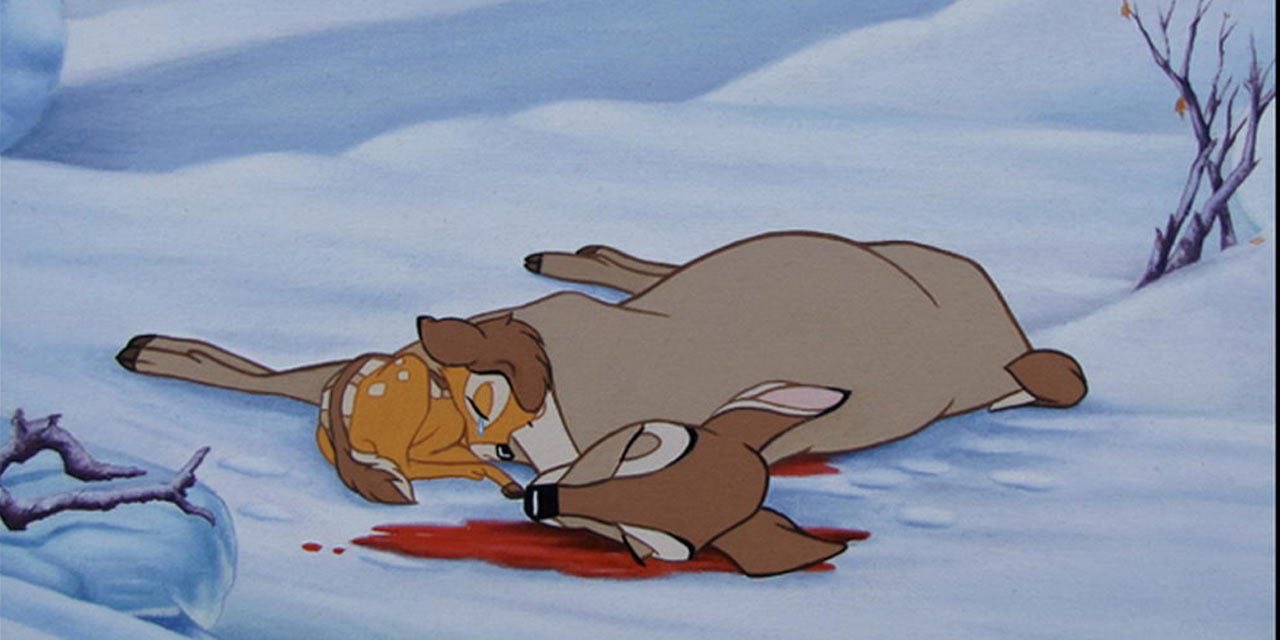

We feel sorry and we cry over the fate of animals that die, whether it is the fault of humans, or not.
It seems very healthy to me, to wonder about our superpredator practices and our excesses of consumers and of rich countries. It is becoming increasingly clear that the richest societies consume too much meat, creating a potentially very problematic ecological imbalance. Through our ancestral culture, consuming meat is a symbol of wealth, so much so that when a poor society reaches a decent standard of living, its first reflex is to eat meat frequently. In the same way, in a poor society, the consumption of meat is reserved for celebrations or to honor a guest.
But it seems to me also very abusive (and even totally decadent) to put on the same plane rhinoceros hunting, the breeding of chickens in battery, bullfighting, the moderate consumption of meat, the production of honey, the use of draft horses in biodynamics or the slaughter of baby seals.
The human being is physiologically omnivorous and the consumption of meat provides him with a number of essential nutrients that can't be found in plants. All attempts to substitute these elements by non-vegetable sources have been failures, and even dietary supplements based on synthetic nutrients don't have the same level of assimilation.

But this is where we are. Veganism is receiving ever greater reception and its abuses, close to terrorism, are viewed with a certain benevolence by governments of all sides. Our politicians have become pure bureaucrats, much more attentive to opinion polls than to scientific results, and to the actual results of the decisions they make (we communicate a lot about the decisions made, we explain at length what we expect, and collateral catastrophes they provoke are left to the following ones).


Science becomes embarrassing when it does not go in the direction of politically correct thinking. This is the case for meat consumption, as for neonicotinoids, glyphosate or GMOs.

We are in the midst of media, social and political decadence. Populism has the power, but not the usual, the vociferous, the one we see coming. This one is devious and discreet, no inflammatory speeches, no obvious scapegoats. Everything is in the manipulation of information, speech is first given to antiscience, to fear.
This is the end of the scientific empire.
This decadence and rejection of science is very evident in most European governments and in the United States government, for example.

In early June, the French newspaper L'Express published an article that challenged me about the new French law on agriculture and food, in the form of an interview. I don't repeat the first question that concerns the law itself, and only interested the French. Those who want to read this part can click on the direct link to the original article.

However, most of the article deals with the relationship of humans with animals, and seems to me quite fundamental.
This is an interview with Jocelyne Porcher, a breeder, sociologist and researcher, with a peculiar personal and professional background.

Original article:
"Food Law:" No progress for animals "
By Michel Feltin-Palas, published on June 02, 2018

 "How does a Parisian secretary find herself one day raising chickens, sheep and goats in the Toulouse region? Initially, Jocelyne Porcher is a neo-rural like any other, one of these young women eager to leave the capital, its stress and pollution, to get closer to nature. She takes the leap in the 1980s. Here she is in a village in the South West [of France], in contact with peasants respectful of their land. She is happy.


In 1990, it's the shock. She has just returned to agricultural studies and finds herself in an industrial pig farm in Brittany. Another world: "I raised animals because I loved their company, I was looking after their well-being, I was taking care of them, I was thinking about them day and night, I had a real conversation with them. In Brittany, they were perceived as mere objects, resources intended to produce animal matter, they were beaten, mutilated, insulted, with only one purpose: money. "

From this double experience, she draws a conviction: the traditional and capitalist breeding are two universes that everything opposes, in their practices as in their values. And she refuses that the first, where the man lives in symbiosis with his animals, be swept away by the excesses of the second. She then goes into research, specializes in the affective relations between men and animals, passes a thesis, is hired at the National Institute of Agronomic Research (INRA), publishes books (1). A path that allows her today to denounce both the excesses of agribusiness and the ultras of the animal cause. Interview. "

[…]

"The government is putting forward the doubling of penalties for the offense of animal abuse and the animal welfare training in agricultural high schools. Is that not going in the right direction?

Any piece of legislation obviously includes some positive measures, but it's still a drop in an ocean of violence. For my part, there is only one article that I really approve: it's the authorization to experiment with mobile slaughter, an idea that I have been defending for a long time with my association “When the slaughterhouse comes to the farm”.


What would be the advantages of such a solution?

Today, animals are pushed into a truck that takes them to an unknown place to be massively killed by men they have never seen. Slaughter on the farm avoids these drifts. This is a progress for breeders, who can watch over their animals from birth to death; a progress for the consumer who is guaranteed perfect traceability, and a progress for livestock, which avoids all stress and suffering.

Any suffering, really?

Yes, as the animals are stunned and unconscious at the moment they are bled. There is neither physical suffering nor mental suffering.

Curiously, you are very critical of the L 214 association [a french animalist association that militates for the prohibition of any type of animal exploitation, and against the consumption of meat], which also contributes to denouncing the slaughter conditions of industrial slaughter.

We differ on the purpose of the action. L 214 is abolitionist: it advocates for a farming without livestock and a rupture of domestication links. For my part, I consider that domestication is not only necessary for man, but that farm animals and those of company also have an interest.

What do you mean?

It's very simple to understand: in nature, many animals would have a very short life expectancy if they were not defended by humans. A sheep or a goat isolated in a mountain automatically becomes a prey! And the life of a mouflon in a territory where wolves roam is dominated by anxiety. That is why in the Neolithic period, about 10 000 years ago, domestication relations were created, with the agreement of the concerned species. The man and the goat, the man and the cow, the man and the pig, formed an alliance and understood that they had a mutual interest in living together, through a system of gifts and counter-gifts.


Is not this a vision a little idyllic? When the man takes the wool, the milk and the meat of a sheep, what does it bring him in return?

Food and protection. But we must go further. This relationship is not limited to issues of interest: it goes well beyond. In reality, man has always needed the company of animals. It was true at the time of the Neolithic and it has not changed. This is why today's breeders are often urban young people who choose this job. And as many French people own cats and dogs.

There is still a big difference between farm animals and pets: you kill cows and pigs, not your cat or dog!

Why would they do it? They have no reason to do so because they make a living differently. But put yourself in the shoes of a shepherd who spends all his days caring for a herd of cows. He must from time to time sell the milk or meat of his animals to earn income.

You present the situation as an "alliance" between man and animals. But animals are forced to work for us.

But work is not necessarily alienation. It has long been known how central it is in human existence. I showed with my team that it can be the same for animals too.

Really?

Observe a guide dog or a sheepdog: don't you see how happy he is to work? The same goes for a horse or a cow: all these animals invest themselves in the work that is asked of them, try to understand the requirements of their master and, when they succeed, get a real satisfaction.

The "antispecies", who refute the superiority of man over animals, believe that our duty is to change our diet and to free animals.

They are wrong! Go see the ewes who live surrounded by wolves in the Alps and ask if they want to be "liberated". Those who hold this speech often live in the city and have an idealized and disconnected image of nature. In fact, they seek to free themselves from the moral weight and guilt they feel in seeing the human race raise and kill animals. It is better to try to understand what connects us to animals, to improve their conditions of life and death, than to get rid of the problem, especially as we would only create another, even more serious.


Which?

If humanity stops raising domestic animals, we won't stop eating meat. So, we will go to meat in vitro, produced from cells. While dogs and cats, which we are supposedly shamefully appropriate, will have to be "released" and replaced by robots. Don't be fooled - this is tantamount to a historic change in the anthropological paradigm. After living with domestic animals for 10,000 years, man should break with them to build a humanity based on artificial intelligence and food biotechnology. It's undoubtedly exciting from an intellectual point of view, but, from my point of view, it's a frightening prospect for our human becoming, or rather inhuman. "

(1) Especially "Living with animals, a utopia for the 21st century (La Découverte, 2014).

dimanche 7 août 2016

85- The vegan illusion

THE VEGAN ILLUSION
OR HOW CAN YOU BE A VEGAN?

You are vegan because you refuse animal suffering. You made, by this change in your diet, militant act to say that you are not barbaric, that you respect animals, which are sentient beings (who have the ability to suffer). You are going much further than vegetarians to the extent that you refuse all animal foods, eggs, dairy products, because you object to the principle of livestock.

For you, this respect goes through a more general respect for Nature, which makes you usually also refuse conventional farming, because it fights against a large number of animals, "enemies" of crops, be they insects, mites, rodents, snails or other, thanks to the use of pesticides, baits or traps.

You usually obtain supplies directly from farmers when you have the opportunity, and the "organic" shops otherwise.

Picture: http://www.vomhof.ch/fileadmin/Vomhof/Headerbilder/Hofladen_buehler.jpg

Here you make a first mistake, because organic farmers have the same problems, are also fighting against the same animals, 'enemies' of crops, be they insects, mites, rodents, snails and others, through the use of pesticides, baits or traps. Many consumers associate organic farming with the non-use of pesticides. This is absolutely false. Yet surveys about perception of what organic farming is scarce. A recent survey shows that more than half of French people think that organic farming uses no pesticides. (in French)

Organic farming uses pesticides whenever the crop management requires, but from natural origin, whereas conventional farmers, in addition to natural products, have the possibility to use synthesis products. So there is a wide list of pesticides allowed in organic farming, which have the same effects and often have the same defects as synthetic pesticides. Except that they are of natural origin.
Are they better so far? No just that they are natural and even not always, in fact. For example we could discuss at length the natural origin of products such as deltamethrin, spinosad, or pheromones, widely used in organic farming, but which is SYNTHESIS is perfectly industrial, and chemical.
But I digress.

All that to say that you are buying organic food to stay in your philosophical logic. In this way you make sure that you have no impact in relation to animal exploitation and abuse to animals.

Are you sure of that?

I regret to inform you that you are wrong on this point also. Organic farming uses many byproducts of livestock. And when making breeding, the animals will be milked, shorn, exploited or shot, is not it?

But which by-products are we talking about?
Well, for example, manure, animal well known natural fertilizer whose origin is not in doubt, and which is the basis of fertilization in organic farming. Obviously, manure will be from organic farming, but it is still livestock, with all that that implies and that you refuse categorically.

Picture: http://www.science-et-magie.com/PLANTES/images/fumier.jpg

But manure is not always balanced with plant needs. So you might need to provide trace elements, or amino acids, that's to say nutritional supplements for plants. An effective, economical, and finally very common form to bring all this, is blood. Yes, blood, a byproduct of slaughterhouses. Especially the ox, or poultry or sheep blood, which are not commonly used in human food, unlike pig's blood.
If the farmer needs to strengthen calcium nutrition of his crops, while providing additional phosphorus, he can also use bone meal, another byproduct of slaughterhouses. Bone meal can also have an interesting side effect as repulsive of rodents, which also like organic fruits and vegetables.
We can also talk of biopesticides, with fungicide and bactericidal properties, including one, recently discovered and increasingly used, is chitosan, a natural polymer extracted from shells of crustaceans (shrimps, lobsters, crabs, etc. .), so a by-product of the fishing industry.

How awful! Maybe are you already thinking to take refuge in biodynamic, which, at least, doesn't use pesticides or fertilizers, even organic? That's true, on that point, you are right. Biodynamic is a special farming method, which seeks a balance between crop and environment through specific channels. It's harder to find because the production is very marginal and difficult to implement for farmers, especially fruits and vegetables, but there at least, you are sure of what you will find.

Are you sure of that?

Two of essential biodynamic preparations, without which there is no biodynamic agriculture, since these are the basic elements of the method, are the horn manure (preparation 500), and the horn silica (preparation 501).

Picture: http://unboutdebois.com/WordPress3/wp-content/uploads/2013/10/IMG_4267.jpg

Both preparations, as their name suggests, use horns of cows, and in large quantities. In one case, the horn is filled with fresh dung (another byproduct of livestock), and in the other with silica, before being placed into soil for several months, to follow their preparation process, before the extraction of an active principle which is sprayed on crops.
And where do we find horns in large quantities?
In slaughterhouses, I'm afraid ...
Biodynamics uses 6 other preparations for composting. The preparation 502 uses deer bladder, 503 bovine small intestine, 505 skulls of domesticated animals, and 506 cow mesentery. In short, biodynamic agriculture needs a lot of dead animals.
And besides, biodynamic agriculture prefers animal traction on mechanical traction, using oxen, mules and draft horses.

Picture: http://vernoux.org/ecodyn/wp-content/uploads/2014/04/Pulve%E2%95%A0%C3%BC-traction-animale.jpg

All these organs of dead animals, and physical exertion and possible suffering that is the traction of agricultural tools, are consistent with veganism?

Desperate, you decide to produce your own fruits and vegetables, and all your food, completely natural way, in your garden, at your own responsibility and without any help, to be sure of the origin of what you eat.
Well, first, if you are urban, which is the case of many vegans, an ideology little appreciated in the countryside, you have to change your life. A vegetable garden to feed a family all year round, is not easy to place in a two room apartment in the city center.
Let's erase this inconvenience. You change your life and you move to the countryside.
You are now able to prepare your garden and your orchard! At last!
So you have to pull weeds, to plow, to turn the soil to decompact it, prepare it to make clean way before sowing or planting your future food. But plowing, you will do serious damage to wildlife and microfauna of the place. But, hey, let's say it is a necessary sacrifice.
Plants will have to feed. They will have to take nutrients from the soil. And where did they come from, these soil nutrients? From decomposition of plant remains, and from decomposition of animal remains too. Soil fauna and microfauna live and die, and then are broken down and their mineral contents are made available to the local flora.
Let's erase that other disadvantage, because it is the cycle of life, and humans have nothing to do with it.

When your crops are installed, you observe them with relish. What beautiful tomatoes, potatoes, cereals, zucchini and more! What a pleasure!
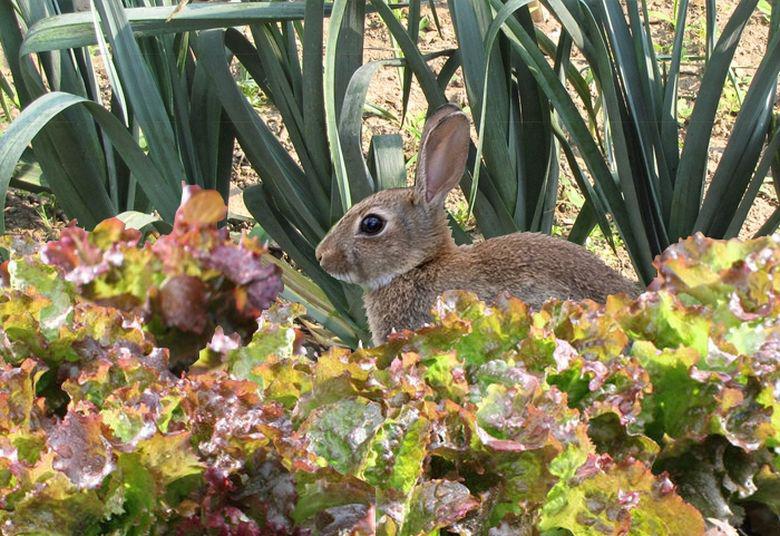
Sure, but you're not the only ones watching this marvel of Nature with relish. An incredible amount of animals of all kinds and sizes are interested, such as snails, slugs, rodents, birds, wild boars, deer, aphids, mites, scale insects, the nematodes, beetles, Lepidoptera, Diptera, Hemiptera, Thysanoptera, and more...

Picture: http://plandejardin-jardinbiologique.com/wa_images/lapin%20dans%20un%20potager.jpg

You are going to hit another problem:
Either you increase (much) the size of your garden and your orchard, so they give enough food for you, your family and for all the impressive fauna of the place,
Either you're going to resort to traps, bait, repellents and even, even, even ... to pesticides (organic of course).
In short, you have to attack, repel, or even kill many animals.

Life is hard. It is a struggle for food, a struggle for survival.
And I'm afraid that veganism is an illusion, an intellectual movement derived primarily from ignorance of the functioning of Nature.
We are one of the components. The natural cycle necessarily involves, for all animals and all plants, to use life and death of others for its own needs, and to fight every day, step by step, for its own survival and for food competition.
The human being has no way to rule out the use, voluntary or involuntary of animals. It is the law of Nature.
Well, let's be positive, all this does not mean that we should accept animal abuse. Rather, I'm quite in favor of imposing in agriculture, a charter of good practice for animal breeding and slaughter. Several scandals erupted recently and this is unacceptable, but I don't think that the refusal to consume any product or animal by-product is a solution.

It's an illusion. Everyone may accept this evidence or not. But there is no doubt.
Vegetarianism and veganism are followed, with all the good faith of the world, by people who are unaware of the ins and outs, and who are not aware (or refuse to see) that they are primarily a marketing target.
Yes, you are a lucrative market of people willing to pay the high price of the products you believe they are consistent with your beliefs.
You are part of market niches, as well as celiac and allergies of all kinds, giving very lucrative margins to all products without gluten, lactose, sugar, phosphate free, meatless or vegan.

Anyway, I am sure you are fully consistent with your beliefs.
So you have at home,
Nothing made of leather, like sofa, car seats, belt, old books, wallet or gloves,
Nothing made of horn, like comb or old knives,
Nothing made of bristles, like brushes, paintbrushes, fur hat, horsehair mattresses or seats or fur collars,
Nothing made of ivory, or false ivory made of bone,
Nothing made of animal derivatives, such as bladder lampshades, for example.
You don't use any beauty product that contains animal fat.
And of course, you don't have any wool, mohair, merino, shetland, pashmina, alpaca, angora garment, nor leather shoes, pants or jackets, silk blouses or scarves, not to mention, of course, fur coats, needless to say.
Coherence must go all the way. The slightest deviation is a favor made to exploitation and mistreatment to animals.

Picture: https://potterfs.files.wordpress.com/2008/10/pasmina.jpg

It is really very difficult to be truly vegan. I would even say that it is almost impossible.
How can one be a vegan?

Since the world is world, humans are omnivore and kill animals for use in almost everything, meat, skin, bones, and viscera for its needs.
Come on, be reasonable, a little meat, without excess, well chosen, produced by conscientious and respectful farmers, as fortunately there is a lot, from animals treated well, slaughtered in the best possible conditions, doesn't appear to me as a crime against animality.