Affichage des articles dont le libellé est EN- waste. Afficher tous les articles

samedi 3 février 2018

123- Organic peaches, really?

ORGANIC PEACHES, REALLY?

The peach, it's been a long time since I fell into it. This is in my opinion, among crops I know, one of the most difficult and the most technically interesting. No mechanization is possible, or almost, everything is still craft and manual, even on a large scale. It's one of the last "social" crops in industrialized countries, that is to say that generates a large number of jobs for non-specialized people.

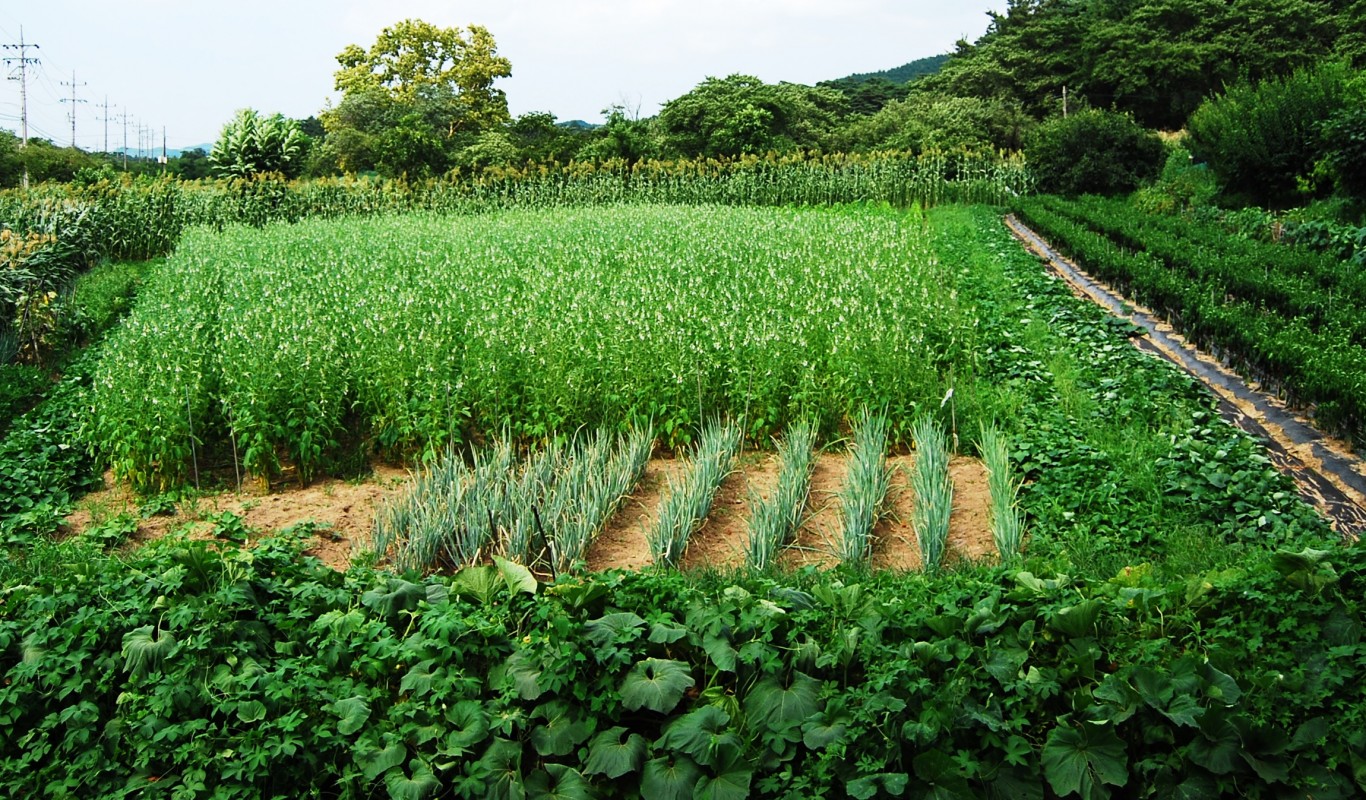
Personal picture

If you follow my blog for a long time, you know that I am not an advocate of organic, because I totally oppose the marketing line on which it's based for more than 30 years. Organic production has many qualities, but also some defects, some of them serious. Yet, all marketing is done, not on the basis of a valuation of organic, but on the basis of attacks against non-organic. The fear of poisoning is branded as a weapon of mass destruction, without looking at the collateral damage, everyday more numerous and serious. But there is no justification for that, quite the contrary. Look at cases of food-borne mortalities in the last quarter of a century. The only serious cases systematically involve food produced in organic (E.coli on sprouted seeds, salmonellosis on melon, botulism, etc.). No similar cases demonstrated exist on conventional foods.

Should we ban organic? Of course not. But it must be controlled at least as well as the conventional, which is not currently the case. The new European regulation goes in this direction, fortunately (http://culturagriculture.blogspot.com.es/2017/11/119-reforming-organic-is-not-so-natural.html).
You also know that, without doing organic production, I don't criticize organic farmers, and I often write about ecological or agroecological problems.
In fact, I am often asked why I don't do organic farming.

And that's exactly what I want to talk about today.

I don't own the land I grow. I manage the production for a private company. As such, I don't always have my hands free.
Yet, I know that, commercially speaking, it would be interesting to do organic.
But I don't do it.
Today, it's practically impossible to produce organic peach.

A clarification for those who don't know it: when I talk about peach, I'm talking about all subspecies or denominations that are included in the species Peach Prunus persica, ie peach, nectarine, (hard-flesh peaches for canning), flat peach (paraguayo), platerine (flat nectarine), as well as white, yellow or blood flesh. It's the same species, it's almost impossible to distinguish the tree from one subspecies or another and cultivation conditions are the same.


I told you that organic is almost impossible for peach. Let's clear that. I can have three peach trees in my garden, no spray them and eat peaches all the same.
There, I ask a question to those who have some peach in their garden and who eat the peaches with the more pleasure they come from their garden. These few peaches, as they are when you pick them, would you buy them in a store?
The answer will be no for most, as these fruits are usually deformed, stung, stained, small and ugly. However, fruits as damaged, even organic, are not able to be sold (http://culturagriculture.blogspot.com.es/2017/08/112-quality-5-when-organic-gets-going.html).
The peach tree is highly susceptible to an important number of diseases and pests, capable of almost completely destroying the crop.
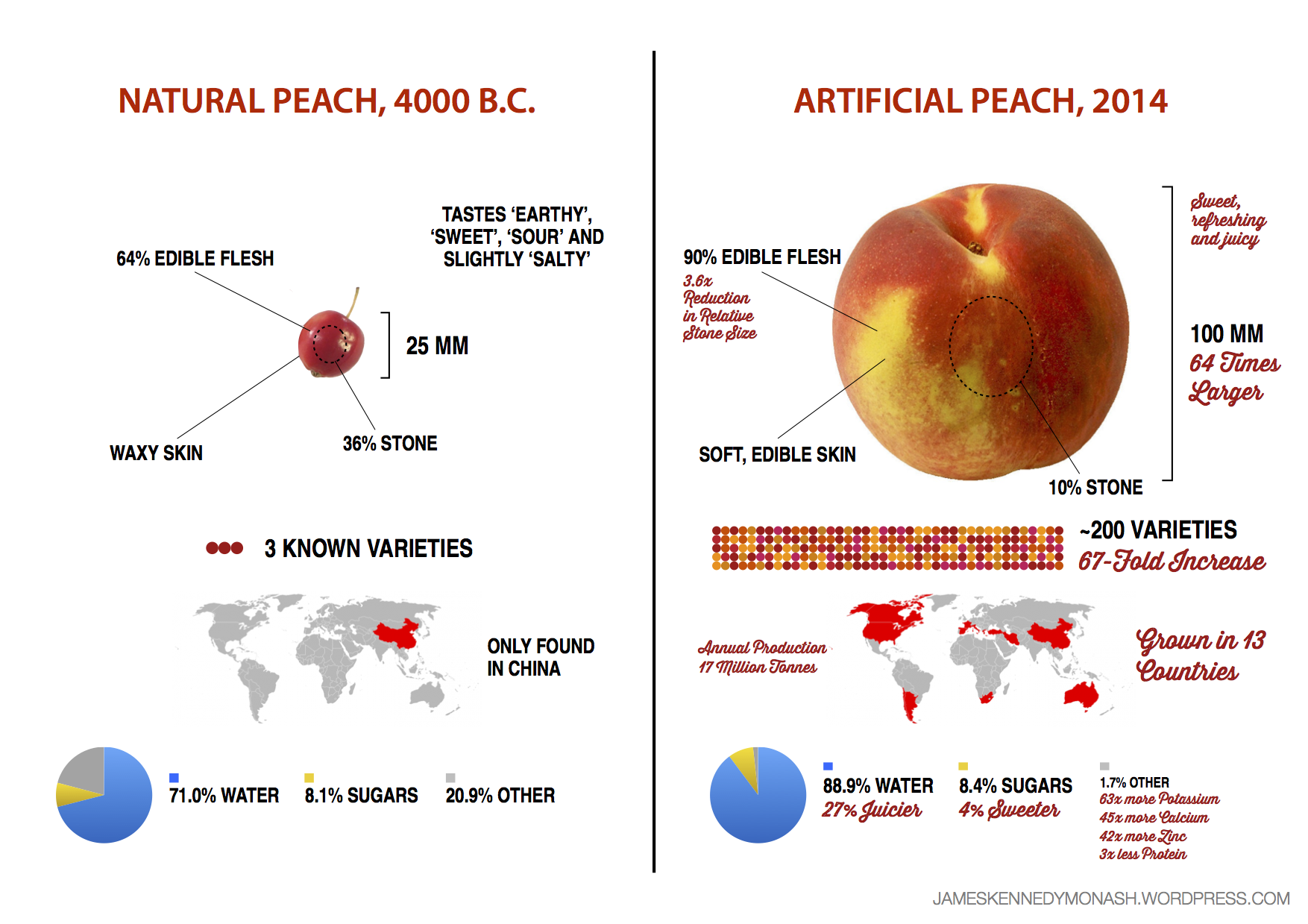
In natural conditions, tree produces small fruits and few. But the variety selection carried out for several centuries has sorted the characters of size, aesthetics and flavor, in general without combining them with criteria of rusticity (which is frequently the case for most plant species). In the cultivated peach, we don't find old rustic varieties, known locally but with characteristics not adapted to market needs, as is the case, for example with apple tree or plum tree, and which could serve as a natural genetic source of resistance.
Research or experimentation centers specialized in organic farming, very aware of the problem that everyone faces for the serious development of organic fishing, are reduced to empirically test the behavior of ancient or modern varieties. (Http://www.grab.fr/wp-content/uploads/2014/07/A12RA02SensibiliteVarietalePechers.pdf).
It is an extremely long and expensive process, which gives very poor results.
And the production of organic peaches does not take off. There are some crazy people to do a little, but always on a very small scale, for a short and confidential market, and with immense economic risks.

Since the takeoff of organic and the explosion of consumer concern for health and environment, botanists around the world have not had all the freedom to go prospecting in origin regions of peach tree, China and Persia, and more specifically Iran and Afghanistan, plagued by political tension and incessant conflicts for 40 years. There are "forests" of wild fruit trees, from natural chance crossings and centuries of adaptation, and there is therefore a huge genetic diversity. These surveys, usual in botany, allow a real work of genetic improvement within the same species, without the need to look for genes in different plant species.
I don't doubt that the day will come when scientists will have developed varieties really resistant to these diseases and pests currently very dangerous.

But in the current genetic situation, peach remains a globally non-culturable species in organic. I'm not saying that you are not going to find a small organic peach grower, in a village market, who sales some organic peaches from his meager production.
But if on the contrary you find beautiful peaches, big and in quantities, then beware.
They may be free of pesticide residues. But making a fruit without measurable residues of synthetic pesticides (the so-called zero residue), has nothing to do with organic production, because synthetic pesticides could very well have been used throughout the vegetative cycle without leaving a trace.
So organic peach today, means very small production, usually unprofitable for the farmer (with very high risk in production), and sold at a high price, or frequent deception from the farmer, and from the distribution channel. For example, be suspicious if you find organic peaches in a supermarket. The structure of peach organic production and the volumes produced don't meet the requirements of this type of marketing.

When you read all these articles that claim "bio could feed the world", just know that you are being manipulated. The future will undoubtedly be very different, but currently, organic production can’t feed the world, for the simple reason that many problems currently have no solution in organic. Today, organic can feed a certain world, rather Western and wealthy. Organic eating today is the privilege of a few. The poor and developing countries are content to hope they can feed themselves.
It's true that progress in this direction is made daily, but for the moment at least, synthetic pesticides are still essential for a large part of agriculture.

But see the case of the peach, which is not at all a unique case. The natural hardiness of the species is low. Genetic work on natural resistance is in its infancy, and will only succeed, if it succeeds, in several decades. The only solution, in the current state of knowledge, to maintain a production which allows the farmer to live from his production, by obtaining fruits in reasonable quantity having a qualitative standard sufficient for the market and the satisfaction of the consumers, is the use of pesticides.
To make organic, it will of course be natural pesticides, or in any case accepted by the organic specifications.
And again, we are facing a problem. Some diseases (rust, blisters, conservation diseases) and pests (green aphid) don't currently have an effective organic solution.
Of course, what is true today will not be true in a while, and research is progressing rapidly.


But to affirm today that organic could feed the world is a scam.
It's just letting consumers believe that farmers, marketers, and governing authorities take pleasure in allowing and using pesticides that are supposedly useless, just to be able to pollute the planet and take risks for users and consumers health.
It also suggesting that a quick and complete conversion could be achieved, while it's very far from being the case.
It is overlooking that in many cases, organic is currently profitable only because it benefits from specific aids, and especially a high price differential, which will disappear on its own when organic is the norm, causing an inevitable explosion in consumer prices, or the ruin of farmers.
It's also affirming that developing countries, where farmers often don't have access to pesticides, are the only ones responsible, because of their lack of knowledge, of their own poverty and their famine deaths.
It's also forgetting that what currently feeds city dwellers in their vast majority, is a healthy and diversified food, whose sanitary quality has never been so high, resulting from an efficient agriculture, very mechanized, sometimes industrial, and that changing it for organic will not be easy.
It is also ignoring that if the world converts to organic, it will be necessary to increase the cultivated area, deforest, use more fresh water for food production, more arable land for the production of natural pesticides or fertilizers, and therefore reduce areas of biodiversity. Even the most recent and serious studies overlook this "small" detail (https://www.nature.com/articles/s41467-017-01410-w).

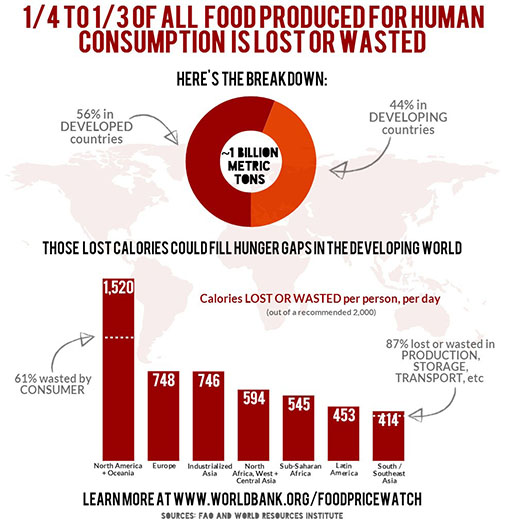
And to say that a large part of the solution involves reducing food waste is totally illusory. This is called wishful thinking. It's true, it's beautiful, it's well-thought, it does not cost anything to say, but it has almost no chance of success.
Because it's to forget that almost half of the food waste comes from poor countries where the lack of training, the lack of mechanization, the lack of availability of pesticides, the lack of transport means and the lack of conservation means are responsible of the majority of losses included in this "waste".
It also forget the fact that most of the waste in rich countries comes from the aesthetic requirements of the market and poor lifestyle shopping habits, which make a significant part of this waste occur between buying and the timing of consumption, directly at the household level. http://culturagriculture.blogspot.com.es/2014/01/v-behaviorurldefaultvmlo_10.html
And it will not be easy to change at all. The development of poor countries will not be done in a few years, and the modernization of their agriculture will inevitably lead to the same evolution as those of the developed countries. That is to say that the waste will not be reduced almost, it will change in nature.

On the other hand, to affirm that in a few decades (and remaining very vague on the deadline), organic could feed the world, I agree. The market is juicy, the concern of consumers is growing day by day, and it's obvious that this path has a great future, because it's one in which research is the most dynamic, and the most subsidized. Political and economic aid makes things highly easier. I am not very sure that we will find natural solutions to all problems. I remain personally convinced that the future is not for organic production, but for integrated production.

Now, let's be clear, the day that organic will feed the world, then it will become the food standard. This means that there will be no more price differential, no subsidies, no conversion aids. This also means that a large part of the farmers will have disappeared in rich countries, to the benefit of farmers able to produce cheaper in poor countries, or consumer prices will have risen in an explosive way.
But I don't believe that political authorities will let this situation settle, which would be a negative economic revolution that would seriously affect household consumption, and therefore countries’ economies.
And we will stay at the first hypothesis. Most of the food will then come from poor countries, which will remain competitive despite high transportation costs (both economic and ecological levels).
We will produce organic, and we will continue to pollute as much as now, if not more.


Personal picture

We must also see that the giants of agro chemistry have already felt the wind turn. They have taken the lead. All, without exception (Bayer-Monsanto, ChemChina-Syngenta, Dow-Dupont, BASF and others) are investing, or have already done so, in locations or buy-outs of companies or laboratories, specialized in the research for biological phytosanitary solutions. They started to offer organic solutions to many crop problems.
In fact, if the future is probably organic, it's probably not in the reduction of pesticides, on the contrary. We will continue to spray crops as much, if not more than currently, everything will depend on the duration ability of these new organic solutions. Simply, synthetic pesticides will be substituted by pesticides accepted in organic.

And I'm willing to bet that we will again have some pretty scandals around this or that organic pesticide which we will have discovered that it pollutes tablecloths, soils, that it's an endocrine disruptor or that one finds it in children's hair.

You see, all hope is not lost, there will still be enough to feed environmental NGOs or citizen movements, even when the world will be organic.

This is because organic does not always mean healthy and environmentally friendly.
But when the little manipulable people will understand that, I really wonder how the situation of Western agriculture will be.

But we must recognize that farmers currently converted to organic (and a priori excellent professionals, it's not to denigrate) will then have a clear head start in terms of cost management in organic farming, which will be absolutely fundamental to the survival of farms.

And the quality in all this?
The what?


Personal picture

dimanche 27 août 2017

113- Plant protection -7- Surgical control

PESTICIDES: SURGICAL CONTROL


The use of insecticides, synthetic or natural, even if very well applied, always involves negative side effects.
The farmer must protect his crop against, for example, a specific type of aphid. But at the same time, by his aphic spraying, he will eliminate all other present aphids, beetles, lepidoptera and other harmful insects, but also a large number of useful insects (bees, lacewings, ladybugs and other auxiliary insects), and also a great number of insects, neither pests nor auxiliaries, just present, such as mosquitoes or flies.


It's a general spraying, with a product chosen for the targeted problem, but always more or less versatile, thus also acting on non-target insects.

Modern insecticides are not perfect, it would be known, but their side effects have been considerably reduced compared to their elders prior to the years 70-80. Indeed, since that time the legislation, and consequently the search for new molecules, has placed an absolute priority on reducing the direct side effects of pesticides. These include, among other criteria, risks to water, soil, birds, mammals, aquatic fauna and flora, auxiliary insects, but also to health risks for users and consumers.
Nothing is perfect, no doubt, but toxicological and environmental profiles of the current products are, despite their defects, incomparably more favorable than those of the old molecules, most of which are currently banned.
However, the versatility of action of a pesticide remains a serious problem still unresolved. Today, only the techniques of "sexual confusion" or "mass trapping" arrive at an almost perfect specificity, thanks to the use of specific pheromones.


Side effects of insecticides are harmful because reducing the presence of many non-harmful insects reduces the feeding potential of many other animals (rodents including bats, birds, reptiles), and thus biodiversity on the farm.
Reducing biodiversity on the farm reduces predation pressure on insect pests, thus increasing their impact on crops.
In short, it is the snake that bites itself the tail. We spray to avoid damage, but by spraying, we reduce the biodiversity, so the pressure of pests increases and the risks of damage also, forcing to spray more.

This is one of the great arguments of environmentalists, and in this sense they are right. But beware, all this does not prevent that the initial attack, the one that caused the spraying which caused in turn the imbalance, was very real. The farmer then needed to spray, and he probably did it right. The problem lies in the means at his disposal to solve his problem.
It's so true that ecological production must also solve these same problems with insecticides, natural, of course, but not without side effects, with consequences for biodiversity that are often comparable, at least in the short term.

The stupid speeches claiming that "organic can feed the world" or "if we suppress food waste, we will solve hunger in the world", are above all an intellectualization of the concepts, and especially the rejection on others of supposed mistakes.
Yet most of the food waste in poor countries occurs in the fields, due to damage from diseases and insects. And that, in agricultural systems that don't use pesticides.
But that's another debate.


Humanity continues to grow inexorably.
If this is added to the urbanization that is gaining on agricultural land, the effects of soil erosion, which is still too often uncontrolled, and the essential need to master freshwater resources, then the control of food production is undoubtedly one of the major challenges of humanity for the 21st century. And if we speak of mastery of production we speak of reduction of the non-consumable part, thus among others, damage of insects or diseases.
Personally, I have no doubt that in the coming years we will be able to maintain, and probably even increase, agricultural productivity while greatly reducing its negative impact on the environment.
But I don't doubt either that we will continue to need natural AND synthetic pesticides.

And it's now, after this long introduction, that comes the subject of the day, recovered on Twitter https://twitter.com/collemyria/status/900489867108470785


ISCA Technologies' scientific team (https://iscatech.com/), an American company specializing in alternative crop protection technologies (traps, attractants, repellents, etc.) recently presented the results of its research on mosquitoes, so as to minimize the negative effects of mosquito control, in situations where mosquitoes are a real danger by the transmission of many diseases, including dengue, zika, chikungunya or malaria.


"Researchers collected the fragrance of flowers and other plants that produce nectar. Then, they used gas chromatography and electro-triennial detection (GC-EAD) to separate and identify the odorous compounds found there. They exposed mosquito antennas to thousands of these compounds to determine which ones could have a biological effect. They also eliminated perfumes or aromas that could attract bees. Finally, they used a semi-chemical mixture in a matrix containing sugars and proteins to mimic 20 frequent chemical signals that attract mosquitoes by prompting them to feed."


The idea is to achieve a mix of the specific attractant with a modern insecticide. This mixture is applied to specific spots in limited number. The mosquito is irresistibly attracted by the mixture, which eliminates it.
"The mix of chemicals we use to attract mosquitoes is so powerful that they will ignore natural flavors of plants to go to our formulation," says Agenor Mafra-Neto of the research team.

This technique is currently destined for mosquitoes to reduce the incidence of infectious diseases. Moreover, as the article says, "researchers conduct field trials in Tanzania where 93% of the population is in a risk of malaria. In preliminary results, they found that mosquito populations declined by two-thirds in just two weeks in treated communities [...] compared to untreated populations."

This seems to me an extraordinary piece of news.
Extraordinary, of course, for the resolution of diseases transmitted by mosquitoes and for the populations exposed to them.
But extraordinary also insofar as it opens the door to the same work on insect pests for food production. One could then carry out totally targeted treatments, with high efficiency, but extremely reduced negative effects.


This technique is already used in agriculture, for example against the Mediterranean fruit fly (Ceratitis capitata). It is a spot bait treatment. It consists in dispersing small spots of the mixture in the crop which will attract the insect and kill it, with a very low negative impact. It depends on the quality of the bait. If it's powerful enough, the insect turns away from the crop to go on the insecticide spot.

So of course, all this does not necessarily have only qualities. Assuming that in the future we will be able to select specific attractants for all crop pests, we may find ourselves in a situation where secondary insects, now controlled by the versatility of insecticides, appear again with a high incidence, because of the very high selectivity of the technique.
But let's be positive. The experience of sexual confusion, a very specific technique used on a large scale and throughout the world for at least 25 years, had few consequences of this type. It's true that sporadically some "secondary" insects can become damageable but, with some exceptions, the gravity is generally low.


From this type of technique, by similarity to the effects observed for the Mediterranean fruit fly, one can reasonably expect, depending mainly on the effectiveness of the attractant:
- Maintaining or even improving the effectiveness of the protection,
- Reduction of insecticide application rates from 80 to 90% per hectare for spot bait treatment, and more if what works is mass trapping,
- Reduction of insecticide losses by drift to the vicinity of the crop (uncultivated areas, waterbodies and rivers, neighboring crops) or by leaching by rain, by at least 90%,
- Consequently an almost total elimination of the negative side effects of the use of insecticides,
- A combination of these new generation attractants with synthetic insecticides (for duration of action) or natural insecticides (for organic production),
- For some pests at least, the possibility of using the insecticide without affecting directly the crop (application to the cover planting, on sticky patches or in traps), thus a complete elimination of the risk of residues on the final food.

Under these conditions we can expect a considerable improvement in the techniques of application of insecticides and an almost complete elimination of the negative side effects of the use of insecticides.
In the same way that sexual confusion is widely used in both conventional and organic agriculture, it is to be hoped that these techniques will find their place quickly and on a large scale in all farms.

It remains for us to hope that researchers and chemists will make rapid progress in this technique, bringing versatility by increasing the number of possible target insects.
This seems to me to be a major innovation for the evolution of agriculture towards more virtuous production and for more efficient and sustainable food production.

Picture: http://www.maxxum100.com/images2014/slider/2.jpg

jeudi 17 août 2017

112- Quality -5- When organic gets going

QUALITY - WHEN ORGANIC GETS GOING

It was to be expected. The organic begins to run up against the cancer of fresh products: the appearance. I told you about this a few months ago, explaining that this is probably the first criterion of quality, since its influence is direct, both on the purchase gesture and on the purchase price for the consumer, as well as on the price the farmer will receive for his production.

Until now, organic farming has escaped this problem which is generating an impressive amount of food waste. The classification of organic products does not follow the same requirements as conventional products.


In organic, rubbing damages, a large part of deformations, even heterogeneities of caliber in the same batch are tolerated. There is no first and second choice in organic. Normalization has not yet stuck its nose there.

This difference has long been a source of tension between organic and conventional growers, since most of these aspect defects have nothing to do with the method of production. They can be due to wind, hail, cold, pollination problems, bird strikes, and a host of other causes that can't be chemically controlled.
In short, this difference in criterion is purely political, intended to favor organic farming compared to conventional agriculture.

Historically, the difference in productivity between organic and conventional, evident in most crops, although not systematic, was largely offset by these differences in commercial criteria, allowing the organic to obtain a comparable quantity sold per hectare, thanks to a lower percentage of waste.

However, this commonly accepted rule, although without any justification in terms of taste quality, is beginning to lose its lustre. The year 2017 is a black year for many productions, mainly for serious commercial problems, great difficulties to sell, and generally very low selling prices, often lower for the farmer to his costs of production.

And what happens when the market is in this situation?
It is becoming more and more demanding on quality.
And now organic agriculture is beginning to face one of the main difficulties of conventional agriculture.
(Article recently published in the digital version of a well-known French generalist journal).


So, look at the case of these small organic farmers, despairing of a situation, altogether quite habitual, but to which they are not prepared:
 "A couple of farmers are preparing to let nearly three tons of zucchini rot, due to consumer demands.

Would a stain on a zucchini prevent you from buying it? This is in any case the reason for the mess of a large part of the production of a couple of organic farmers. Due to slight defects on their vegetables, Caroline and Cyril Roux are forced to watch their hard work rotting, due to consumer demands. "

Yes, I understand their state of mind, it is hard to accept.
Do you know, for example, that when I prepare my harvest forecasts, several months or weeks before I start, for the orchards for which I have responsibility, I introduce a value of 15% waste?
Yes, 15% of fruits not marketed, thrown in the trash mainly because of aspect defects.
And still, 15% is not too bad. This year, because of the difficult trading conditions, this percentage has risen to 20%, and last year, exceptionally difficult climatic year, we have almost reached 25%.

Every week during the harvest, dozens of tons of peaches and nectarines await trucks for industrial uses, a modern and profitable form (except for the farmer) to avoid simple destruction. They will be processed into juice, puree or concentrate. The only other option is the garbage. These fruits do not correspond to the commercial standard, mainly for aesthetic reasons (epidermis defects).

In my precocious, short cycle conditions, with specific varieties, which are generally not very productive, but adapted to the local climate, this means that for my peach or nectarine production, I know before starting that about 4,000 kilos of fruit per hectare will be trashed each year, and if I come across a tough year for any reason, that figure can exceed 6,000 kilos.
As these farmers say,
"These little green spots on zucchini were caused by the high temperatures of June. However, they don't alter the taste or quality of the vegetables. "Many want perfect organic" »

This is an inevitable evolution of the organic. This is one of the consequences of its success, its popularization.
More organic production, it's also the access to the organic of a wider, unprepared, uninformed public, who buys organic just because he thinks it's better without really thinking about the scope of this change.
As besides, it's a constantly growing market, it's a huge source of wealth for many people (see for example Biocoop or Kokopelli, unscrupulous businesses, fully exploiting a juicy vein), all means are allowed to attract new consumers, and disinformation is a great way to get there.
Many consumers are converting to organic, frightened by the nonsense that are told to them or by health scandals, for which there are only highlights on what interests ...
Who knows, for example, that among the batches of eggs contaminated with fipronil (a current food scandal in Europe), there are also batches of eggs sold as organic? This example comes from Belgium. http://www.lavenir.net/cnt/dmf20170810_01039399/j-ai-consomme-quatre-boites-d-oeufs-contamines-au-fipronil-verifiez-aussi-les-codes-hollandais.


The big capitalists of organic are succeeding their bet: people are worried about the quality of their diet. For the planet, too, of course. But it's above all an individual gesture.
And people who convert to the consumption of organic products directly transpose their habits and requirements of consumers of standardized conventional products, on organic products.

The circle is going to complete. Consumers will force organic production to increase quality criteria, at least in terms of appearance.
An ever-increasing share of organic production is sold in supermarkets, without supervision or advice, and consumers buy at sight, so at appearance.
And what makes one of the main attractions of organic farming, from the farmer's point of view, the economic margin per hectare, is melting away.
Because an organic grower produces less, but sells a greater part of his production, and at a better average price ... so far.

It's changing.

Will this problem only be a bump in the organic road, the (too) rapid and (relatively) out-of-control development of this mode of production? It is possible, in the short term.
But don't doubt it, sooner or later, we will get there.


And what will happen when we get there?
What I explained to you a few months ago about the appearance: an increasingly important part of organic phytosanitary interventions will have a cosmetic objective.
Products will be organic, of course, but they will have much greater side effects.
For when a farmer knows that at least 15% of his harvest will be unsaleable, he does everything in his power to control everything he can control, in order to limit aspect defects to the maximum of his possibilities, therefore attacks of insects, bacteria, fungi (light damages are theoretically accepted in organic, but not in conventional).
So he will use an increasing amount of insecticides and fungicides, organic but not free of undesired side-effects.

And the respect for the environment, in all this?
It's a wish, a willingness, or a requirement of people who have the means to demand it, or the ignorance that does not allow them to know that these small defects of epidermis don't affect the quality of the most of the products, neither organic nor conventional.
And these same people, who "want perfect organic", are also often the same who are scandalized by food waste, or by negative effects of agriculture on the environment.
Because these requirements inevitably lead the farmer to implement agronomically unnecessary but economically indispensable practices.

Individual logic is often incompatible with community logic.
How to resolve this?
Probably by undistorted information, without ideology or commercial undertones, and by the education of the consumer.
The farmer can do some things, and in fact, blogs, objective (non-sensational) agricultural information programs and open days on the farm are multiplying in Western countries.


But the substantive work is not within the reach of the farmer, it should rather be the role of civil society, and therefore of public administration.

A man can dream, can't he?
In France, the "General States of Food" are currently held, a major consultation at the national level, concerning all stakeholders in the sector. This is an election promise of new President Macron.
It could give birth to a mouse, or put up so many brakes and constraints that farmers would become landscape gardeners.
However, involved ministers agreed that "to improve agricultural, environmental and social practices of producers, they must first be adequately remunerated, in order to encourage investment”. http://campagnesetenvironnement.fr/etats-generaux-de-lalimentation-entre-enjeux-alimentaires-agricoles-et-environnementaux/

It should be said that in France, one of the G8 countries (one of the most modern and richest countries in the world), one farmer out of two earned less than 350 € per month (around $ 400) in 2016. This sum does not say anything if it is not related to the SMIC (interprofessional minimum wage) which was in 2016 of 1143 € per month, all expenses deducted. In other words, one farmer out of two earns three times less than his own employees, or that what the national authorities consider today as the minimum to live decently in France!

And you would these people to be preoccupied with things that are quite abstract after all, when they struggle every day to make their businesses survive and to offer their families acceptable living and education conditions?

Some found in organic farming a dignified and elegant escape, economically interesting, and intellectually and socially rewarding.

There could be some disappointments ...

Picture: http://thethreewisemonkeys.com/wp-content/uploads/2015/07/or1-1366x800.jpg