Affichage des articles dont le libellé est EN- plant physiology. Afficher tous les articles

vendredi 2 novembre 2018

140- The spirit of plants -14- Under influence

THE SPIRIT OF PLANTS - UNDER INFLUENCE


Today's theme is somewhat irrelevant, but it seems interesting to me to classify it in this series.
It happens that plants do not have a normal behavior, nor even coherent, because they can be put under influence, they can show unnatural behaviors, and it appears that they can't avoid it, that they "act against their will".


An article recently published in the digital periodical The Conversation in its French version, and written by Véronique Brault, director of research in virology at INRA (French National Institute for Agronomic Research), with the participation of Simon Bourdin, master student in "Scientific Communication" at the University of Strasbourg, explains how certain viruses, in order to ensure their propagation, are able to interfere with the behavior of their hosts, and in this case, the plants in which they are found.


"These viruses that manipulate plants
October 12, 2018
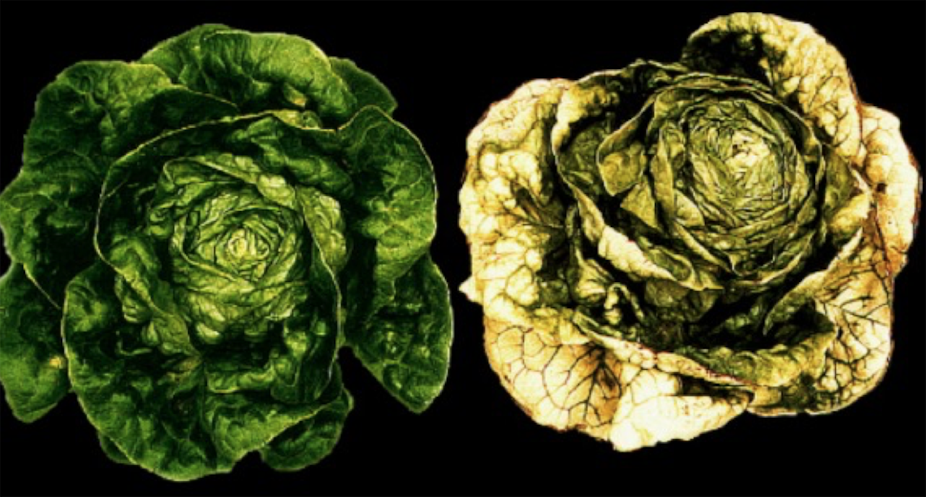


Mice that are no longer afraid of cats, crustaceans that float on the surface of the water instead of sheltering under the rocks, ants that disguise themselves as berries to be eaten by birds, humans who emit odors attracting mosquitoes ... these unexpected behaviors, sometimes suicidal, seem almost fanciful.

They are, however, present in nature, and they all have one thing in common: they are the result of parasitic infections. Indeed, many so-called "manipulative" parasites are able to alter the behavior and even the physiognomy of their host to facilitate their survival and propagation.

Plants do not escape the rule. Viruses that parasitize them are often very ingenious to overcome their immobility, using for this purpose mobile intermediate organisms called vectors.

The virology unit of the INRA in Colmar has recently highlighted a case of manipulation of the plant Camelina sativa by Turnip Yellows Virus (TuYV). This virus has the particularity of being transported from plant to plant only by an aerial vector, the aphid. The virus spreads more effectively if aphids are attracted to infected plants before they succumb to the infection.

Picture: https://www.nexles.com/articles/wp-content/uploads/2018/03/camelina-camelina-sativa.jpg


Make the plant more palatable
Researchers have shown that TuYV causes plants to emit odors that attract aphids. This same virus also changes the chemical composition of the plant, making it more palatable - in a word, more tasty - for the aphid. Having a more adapted food, the latter feeds more and ingests more viruses, a net benefit for the pathogen that can accumulate in the aphid and be more effectively propagated to other plants.

Examples abound of such "manipulations" of plants by viruses, and studies reveal that these alterations of the plant induced by the virus can vary according to the virus in question and especially according to their mode of transport by the vectors.

For example, TuYV is a "circulating" virus: for its efficient transmission, the aphid must land on the infected plant and feed for a long time to ingest the virus that travels through the sap. The pathogen is then carried with the sap in the digestive tract of the insect and then through the cells of the intestine, before joining the salivary glands, where it is reinjected to a new plant.

"Circulating" viruses have a strong interest in inducing changes in the plant to attract aphids and stimulate their diet.

Illustration showing the attraction of aphids by infected Camelins and not infected Arabidopsis. Véronique Brault/INRA


Optimize transmission
There is another category of so-called "non-circulating" plant viruses that don't pass through the insect cells but are retained in the oral tract at the stylet or esophagus of the vector.

In this group is, for example, the Cucumber Mosaic Virus (CMV) also transmitted by aphid. This virus causes infected plants to produce volatile substances that attract aphids but reduce the nutritional quality of infected plants, causing aphids to emigrate quickly.

These two contrasting phenomena are however perfectly adapted to the mode of transmission of CMV: the latter requires only brief punctures in the surface cells of the plant to be retained by the vector. The virus thus optimizes its transmission process by first encouraging the aphids to land on the infected plants and then encouraging them to leave these plants quickly after just tasting them.

More surprisingly, Rhopalosiphum padi aphids with Barley Yellow Dwarf Virus (BYDV) prefer non-infected plants, while non-infected aphids are attracted to infected plants (Ingwell et al., 2012).

This example demonstrates that the virus can, not only indirectly manipulate the plant to attract aphids, but also act directly on aphids to alter their behavior.


On the track of involved molecules
These observations raise many unresolved questions.

Why do not these examples of manipulation apply to all plants infected with the same virus? Why are there also variations in behavior according to the species of aphid considered even towards the same infected plant?

Current studies are therefore aimed at identifying in infected plants the molecules that are responsible for vector behavior changes, be they compounds that attract aphids or those that make them more appetizing. This identification would make it possible to envisage new control methods aimed at inhibiting the production of the molecules in question by infected plants, so that they no longer have this attractive power for aphids.

To date, the use of insecticides remains the best method for farmers to reduce vector populations and limit the losses associated with the viruses they carry.

A new control method based on the non-attraction or even repulsion of aphids for infected plants would reduce the spread of viruses in the field. To stop the dispersion of circulating viruses, it would also be possible to select plant varieties naturally producing little or no compounds responsible for the sustained ingestion of sap necessary for the acquisition of these viruses.

Understanding the fine mechanisms by which aphid-transmitted viruses manipulate their host plant to facilitate their spread represents a promising science front for the development of new control methods that are more respectful of human health and the environment. "

Picture: https://zoom.disneynature.fr/sites/default/files/styles/node__article__main_image__full/public/legacy_files/2015/4/news/images/01447504.jpg?itok=R2Luq8ao

samedi 19 mai 2018

130- The spirit of plants -12- Subterranean vision

THE SPIRIT OF PLANTS - SUBTERRANEAN VISION

By this interesting article published in 2016 in the digital magazine New Scientist, Alice Klein gives us a surprising information about unsuspected capacities of plants.

“Plants ‘see’ underground by channelling light to their roots


A light-bulb moment? Plants seem to pipe sunlight directly down into underground roots to help them grow.

Light receptors in stems, leaves and flowers have long been known to regulate plant growth. Roots also have these receptors, but it has been unclear how they sense light deep in dark soil.

Sensing light in the dark
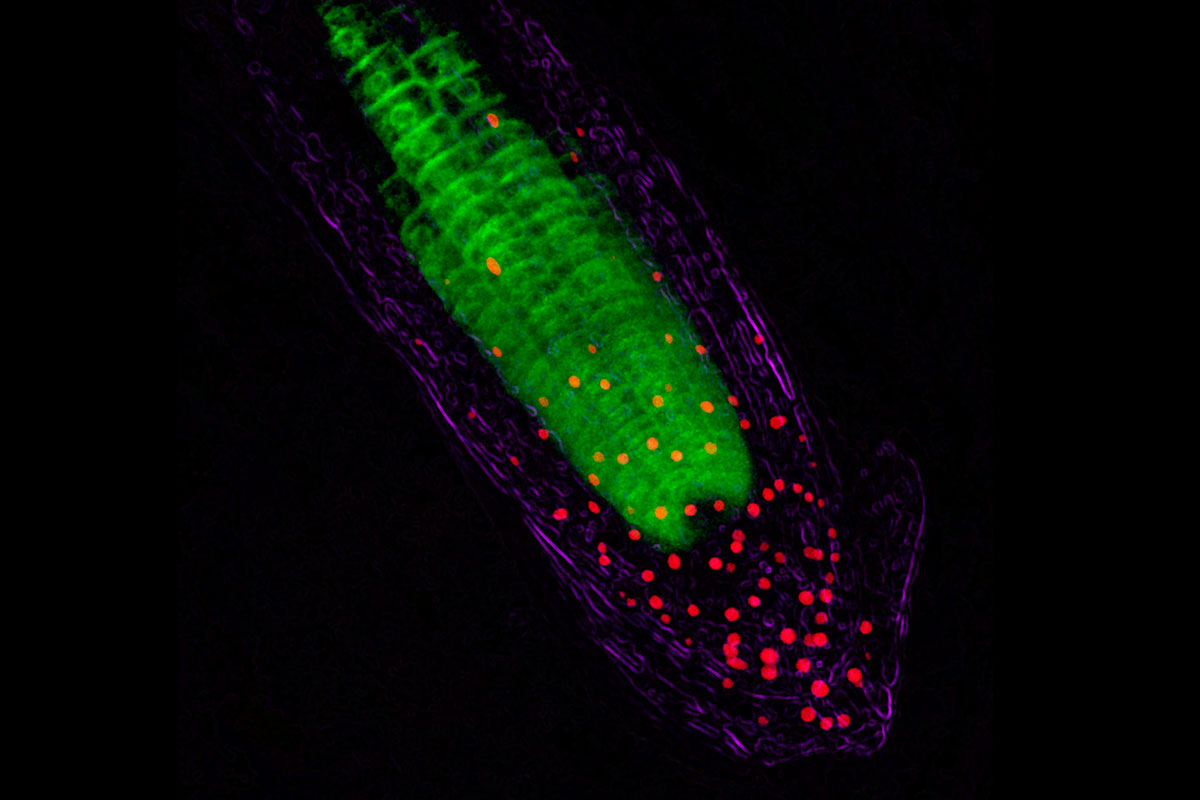
Dr John Runions/Science Photo Library


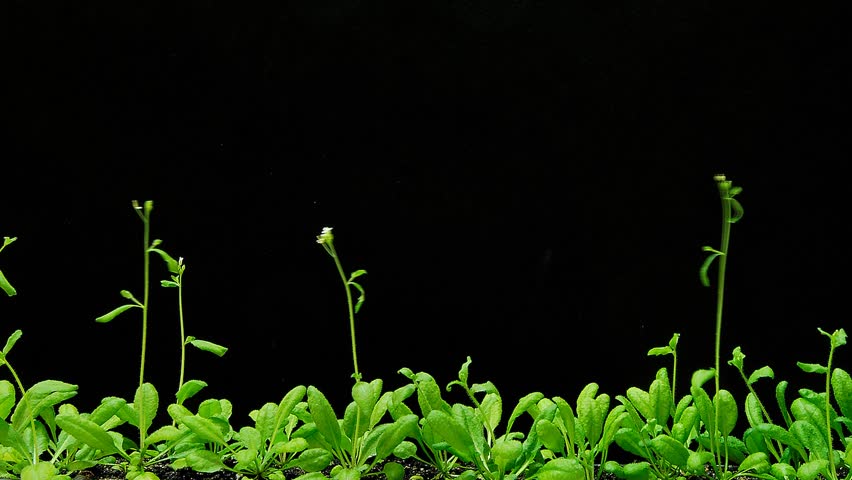
Hyo-Jun Lee at Seoul National University in South Korea and his colleagues used Arabidopsis thaliana – a small flowering plant from the mustard family – as a model to study this phenomenon.

They found that the plant stem acts like a fibre-optic cable, conducting light down to receptors in the roots known as phytochromes. These trigger the production of a protein called HY5, which promotes healthy root growth.

When the plants were engineered to have phytochrome mutations, HY5 production declined. And when they had HY5 mutations, their roots became stunted and strangely angled.

Light versus chemicals
To check whether light was directly transmitted through the plant rather than it activating signalling chemicals that travelled to the roots, the researchers attached a light source to the stem of plants via an optical fibre. An underground detector at the end of the roots confirmed that light was transmitted through.

Moreover, when they treated Arabidopsis thaliana specimens in the dark with common plant signalling chemicals such as sucrose, no significant increase in root growth was observed – suggesting that such chemicals were not driving growth.


Red light was found to move most efficiently through the plants. The long wavelengths of such light may be favourable because they can travel further than shorter blue and green wavelengths, says Lee.

However, the light’s intensity would be too low for creatures in the soil to see it illuminating the roots, or for bacteria to use it for photosynthesis, he says.

Common function?
Most plants have phytochromes, suggesting that directly piping sunlight down the stem is a common mechanism used to optimise root growth, says Lee.

This makes sense, because light signalling would be faster than chemical signalling, says Mike Haydon at the University of Melbourne, Australia.

The study does not, however, provide definitive proof, he says. The researchers found that it took 2 hours from initial illumination for plants to activate their root phytochromes – longer than might be expected if the light is directly conducted.

In addition, the study only investigated a handful of signalling chemicals that could act as mobile intermediaries between light, the stem and the roots, says Haydon. “This doesn’t really exclude the possibility of a mobile intermediate signal.”

Journal reference: Science Signaling, DOI: http://stke.sciencemag.org/content/9/452/ra106


These are partial studies, still unfinished, which reveal daily to us new capacities of the plant world, probably one of the greatest sources of scientific discoveries in the years to come.

Picture: https://www.simplyscience.ch/assets/images/b/Masoala_Regenwaldhalle_ZooZH_Wikimedia-68d73efb.jpg

dimanche 30 juillet 2017

110- The spirit of plants -9- Balance

THE SPIRIT OF PLANTS - BALANCE

I found the following article on a very interesting French blog, which I will have occasion to quote other times, "Graines de Mane" (Seeds of Mane), devoted, as its subtitle says, to popularization and debate about agriculture (https://www.grainesdemane.fr/2017/02/08/plantes-nont-tete-tourne/).

In this case, it's a curious subject, insofar as this question is not usually asked.
Yet, as you will be able to verify, this is an important question, and the similarities with animal world are surprising.


"Plants don't feel dizzy

Often agitated by the wind, plants remain standing. How do they do it? Researchers at INRA [French National Institute for Agronomic Research] have identified mechanisms that allow plants to maintain the balance.

The wind is one of the (many) natural enemies of the farmer. In the event of too strong storms, plants can overturn, that's to say lie down, to become non-harvestable in the end. Global cereal yield losses are estimated at 10% due to storms. Despite this, plants have a remarkable ability to stand, much more than us!

Shaked by the wind, the reed bends but does not break. Charles and Francis Darwin had already highlighted in their time the ability of plants to grow in a given direction. Thus, a plant always grows towards light (phototropism) or gravity (gravitropism), causing its roots to grow downwards and germinate upwards. Forcing a plant to grow horizontally and it will always end going upward.


Plants also have an inner ear
To understand the functioning of the mechanisms of plants balance, let's stop for a moment on ours, governed by the inner ear. In this, our balance is made by a so-called otolitic system, which is a set of small pebbles caught in a sensitive gel. The deformation of the eyelashes, due to the action of gravity on the pebbles, allows our inner ear to locate the vertical. However, when we are in a merry-go-round, for example, we lose the sense of gravity. Our inner ear is then incapable of distinguishing the acceleration due to gravity, of other forces, such as centrifugal force, for example.
Plants also have an equivalent of the inner ear: the statocytes. The statocytes are cells arranged throughout the stem of the plant, which contain small grains of starch called statoliths. Until now, research has demonstrated a similar function of the statocytes to that of the inner ear: the sedimentation of statoliths exerts pressure on the statocyte wall and allows the plant to detect gravity. This idea suggests that plants have a sense of balance comparable to that of humans and therefore they are not able to distinguish the gravity of another force, the wind for example. The pressure exerted on the statoliths would be the result of all the forces in an undifferentiated way.


A more acute sense of balance than humans?
Another hypothesis suggests that it's not the pressure exerted by statoliths that allows plants to "feel" gravity, but a sensor systems that detect the position of small starch grains. This idea stems from recent research carried out jointly by INRA, CNRS [French National Center for Scientific Research] and Blaise Pascal University. The researchers formed a carousel for plants, consisting of centrifuges with two axes of rotation, as they exist for astronauts training. They then subjected to centrifugal forces hundreds of plants, many of them cultivated like wheat, lentil or sunflower. They studied, for long periods, the growth of plants under these conditions, with a different angle compared to the actual gravity.
The story does not say whether the plants had fun in the carousel, but it shows on the other hand that they have managed to grow by straightening independently to the intensity of the centrifugal force they suffered. Plants thus can feel the verticality independently of the other forces to which they are subjected, and this permanently. The positioning of the statoliths, and not just the pressure they exert, would allow the plants to detect their verticality. Even shaken by the wind, plants would be able to keep their verticality.
Unlike us, they would not feel dizzy.


These recent discoveries of balance of plants mechanisms, can have very important applications in the decades to come, especially in varietal improvement, to conceive crops less sensitive to overturning. If this track should not make us forget that the overturning of plants can also be due to other agricultural factors (too much nitrogen for example), this is perhaps one of the many ways forward for securing yields against the vagaries of the climate.

If you want to learn more :


Here is another surprising characteristic which shows that the more one studies the plants, the less one finds a profound difference between the vegetable and the animal world.

A sign to call the vegans to more reason?
In the end, science shows us that most animal characteristics are also present in plants, although in a different way, since adapted to their particular condition.