Affichage des articles dont le libellé est EN- breeding. Afficher tous les articles

dimanche 29 mars 2020

147- Thank you farmer, for filling our pantry


THANK YOU, FARMER, FOR FILLING OUR PANTRY!

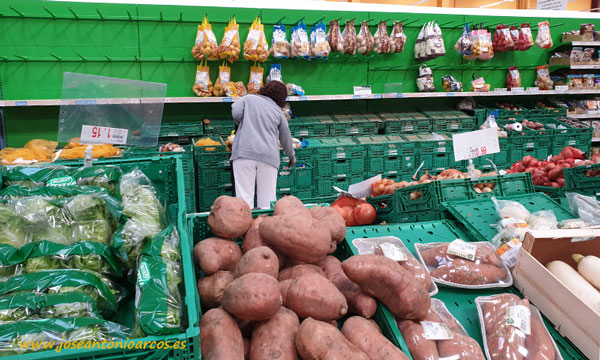
Under this title (¡Gracias, agricultor, por llenar nuestra despensa!), José Antonio Arcos, Spanish journalist specialized in agricultural information, very focused on Spain and Europe, published a few days ago a praise for farmers on his web page, which I recommend to anyone interested in agriculture and food production.


For several weeks, with the current Covid-19 crisis, we have all been very aware and grateful for the incredible work of all medical corps, often carried out in difficult and even sometimes precarious conditions, with enormous dedication in these particularly hard times that we are going through.

José Antonio Arcos wanted to remind us that farmers continue to produce the food we need, and that thanks to their daily labor and despite the situation of confinement, we have quality food day after day, although economic life of our countries is almost paralyzed.

I want to join in this praise, as a consumer and also as a farmer. Thank you all.
Thank you also to all the agricultural workers who continue their hard work in the fields despite the so tense situation that we live. Without you, many farms would be shut down, despite the goodwill of the farmers.

Personal picture


"If we can stay locked up at home for a fortnight and the days which will follow with the full pantry, it is thanks to the farmers. It is thanks to the primary sector - whether fishermen, breeders or farmers - that we can avoid hunger and despair in a situation like the one we are experiencing in Spain because of the coronavirus. There is no starvation because there is food. There is food because there are producers (farmers, ranchers and fishermen).

Thanks to the work of the men and women of the Emptied Spain*, we all eat. Emptied or Empty Spain, rural Spain gives life to urban Spain and to each table on which a plate is placed. They are my heroes.

Promote food sovereignty.

Perhaps now the millions of Spaniards living on the margins of agriculture and of the different sectors of activity in the agricultural world will understand the concept of food sovereignty. These two words that farmers and ranchers throughout Spain have been shouting in the streets during these past few weeks are not empty of content.

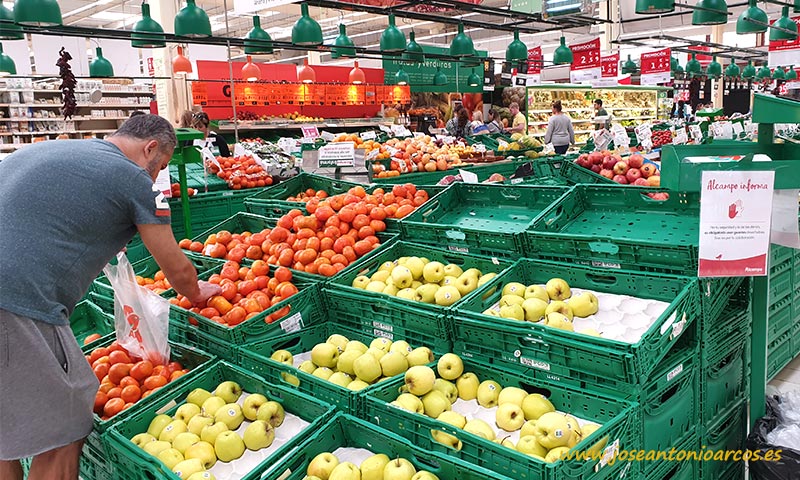
Food sovereignty means the ability of a nation to be self-sufficient. The best example can be seen these days in which millions of consumers have made massive purchases of food and have found products with which to fill their baskets. Those products, these foods, are not born by spontaneous generation in a supermarket or in a greengrocer, those foods without which nothing would be possible are produced by a farmer. He is its creator.

This food sovereignty has an even deeper meaning in crisis situations such as the current one, due to the coronavirus, in the face of hypothetical limitations or border closings. Food sovereignty allows a country, regardless of what may occur abroad, to be able to feed its population.

Thank you farmer and rancher, people of the land. Thank you fisherman, man of the sea.

When we get out of this pandemic (COVID-19), because surely we will all overcome the virus together, when it happens (it will happen) please remember that we cannot drop our primary sector, which is the one that feeds us. It is a priority.

As well as many are now being able to understand what food sovereignty is, they will also understand why farmers are a strategic sector.

Without agriculture, nothing (‘Sine agriculture, nihil‘). They are my heroes. An applause for all of them”.

* The term Emptied Spain (España Vaciada) has developed in recent months to illustrate the effects of the rural exodus, of the demographic and economic explosion of large cities in the country, and the lack of economic, technical and technological resources from which rural areas suffer more and more, without any apparent political will to influence this tendency. It is also a movement to claim rights for these immense regions, essential to the food sovereignty of the country, and abandoned by successive governments.
** Sine agricultura, nihil is the motto of the Spanish agronomist engineer’s corps.

This crisis could prove to be the revealer of the inadequate policies of the last decades, which have seen the industrial, craft and agricultural fabric change profoundly in industrialized countries.
Markets in rich countries have turned into a vast price battlefield, forcing many primary and secondary activities and companies to disappear or seek salvation in countries where costs are much lower, albeit much more distant. At the same time, for reasons that I have already explained in several articles, the urban population has lost contact with its agriculture and no longer knows what the work of the countryside is, its requirements and constraints, the risks that the production sector must bear so that all consumers can have access to abundant, diversified and healthy food at all times, at a very affordable price.

But this development has consequences that we are starting to really measure now, in environmental and economic terms of course, and now also in terms of health safety and food sovereignty.

We are currently in the midst of a health crisis. More and more countries are making drastic confinement decisions, more or less realistic depending on the country. The stricter is the confinement order, the more is the number of trades affected.
In Spain, only activities related to health, security, hygiene, communication, energy production and food are still allowed to operate. The other activities now only can operate via telework. We then realize that recreation, tourism, industry and construction are not essential activities. All this can stop, for a few days, a few weeks or a few months, but food, therefore agriculture, remains the basis of survival.
In France, the lack of immigrant labor due to the closure of borders makes certain agricultural work impossible. A call was made a few days ago, and in less than a week, 80,000 urban residents responded. Is it a sudden interest in field work, the desire to flee the city and its promiscuity, the possibility of maintaining an income despite the crisis or the possibility of escaping confinement, which attracts so many people?


What will be left of all this when this health crisis is over?
Who will remember that food sovereignty is not a creation of the mind, but a vital need of any human society?
Will we still be talking about the evolution of European agriculture towards a landscape maintenance activity, the profitability of which does not really matter, provided it is "clean" and politically correct?
Will we then rediscover a healthy, non-ideological debate on the production of food, the need to develop productive, sustainable, profitable, healthy agriculture, primarily intended for consumption of relative proximity?


Dear reader, if like me, you are confined to your home, you will have time to read.
I therefore cannot resist the urge to join the link of an article originally published on March 19, 2015, that is to say just 5 years ago. Things have really changed little since then.
But the urgency to preserve food sovereignty is always greater.

vendredi 12 octobre 2018

139- Agroecology -10- The breeding to save the planet

AGROECOLOGY - THE BREEDING TO SAVE THE PLANET.


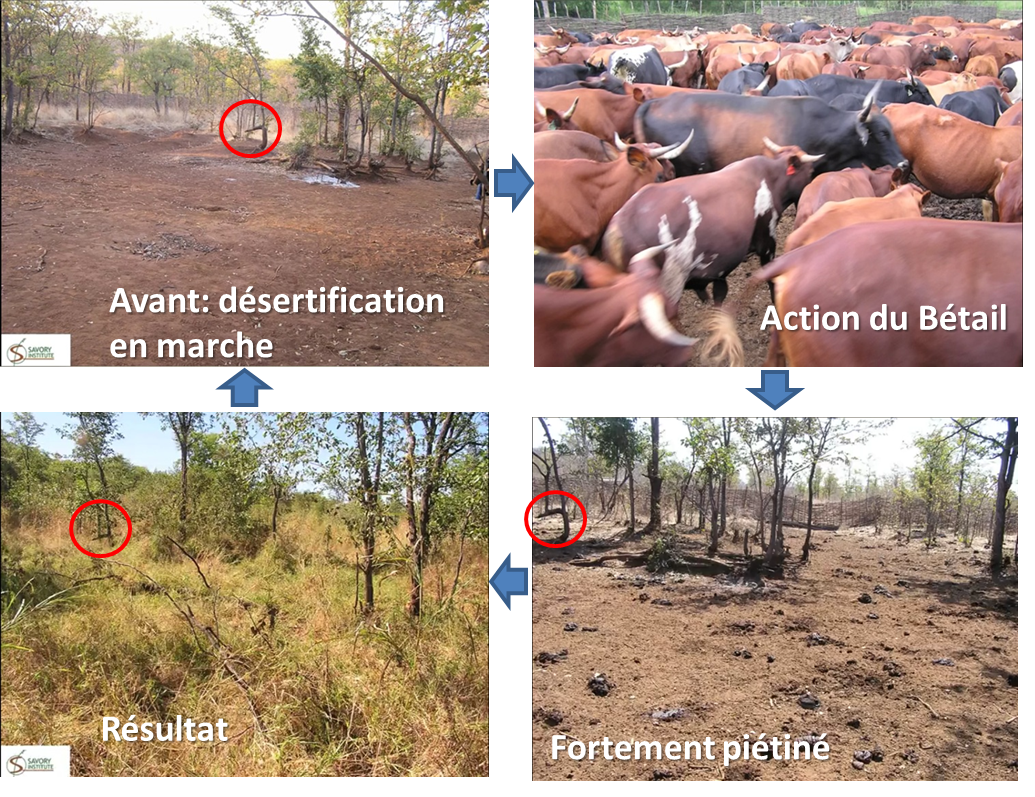
In a TEDx conference in 2013, the famous Zimbabwean biologist and ecologist Allan Savory explained how he was led to recognize his own and dramatic mistakes, to accept what, for him, was inconceivable: the breeding is the best solution to fight against desertification.
Furthermore, stopping desertification and re-vegetating 50% of desertified grasslands, according to him, would allow to return to the atmospheric situation of the pre-industrial era. In other words, we would stop and we would solve global warming.

Image 1: Before: desertification in progress
Image 2: cattle action
Image 3: strong trampling
Image 4: result


But this return to the pre-industrial atmospheric situation, as he explains and demonstrates, can only be done thanks to the breeding. And what is even more surprising is that the larger the flocks, the more beneficial their effect is, provided that they are properly managed.
These techniques, applied correctly, also have the potential to give back a life to degraded soils, to stop their erosion, to increase their potential of storage of rain water, in short, to give back hope to the populations most weakened by these changes.

I am thinking in particular of my dear Dogons of Mali, of whom I have already spoken to you, and for whom I continue to seek solutions (http://culturagriculture.blogspot.com/2017/09/114-agriculture-of-world-dogon-country.html).

I recommend you to see this conference to the end, in these times of doubts about the causes of climate change, and about available solutions, but especially at a time when breeding is so challenged by movements opposed to any form of animal exploitation.

However, Allan Savory explains, by proving it thanks to the numerous experiments carried out in the world on millions of hectares of meadows in desertification, how the breeding is the solution to go back.

(You can add subtitles in several languages ​​by clicking on the gear ⚙ on the bottom right of the video).


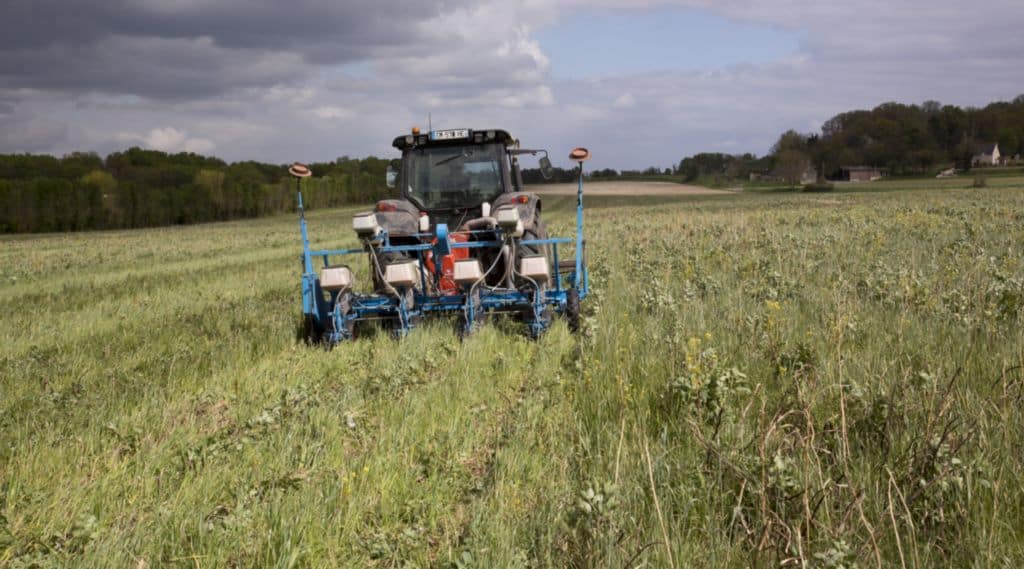
I want to add that the preservation of grass in agriculture is a technique with comparable effects on soils and climate. It's already widely used by farmers in production methods called conservation agriculture, sowing under plant cover, or simply grass cover on perennial crops. These techniques are developing rapidly because their effectiveness is well established. Millions of hectares around the world have been converted.


Yet, they are gravely threatened with abandonment because of political decisions perverted by an extremist ideology that is falsely interested in the real problems of the environment. The probable prohibition in a short time of glyphosate, whose alleged dangerousness is only a political weapon to fight against GMOs, will put a stop to these fundamental techniques to fight for soil preservation and against global warming climate.
Alternatives to glyphosate do not exist yet. It therefore seems unacceptable to me that this herbicide is thus condemned in the short term and against the opinion of all serious and recognized scientists of the planet, without viable solutions being proposed to the users.


The consequences of this prohibition without alternative will be very serious for the climate, because by forcing farmers to return to plowing, they will release into the atmosphere billions of tons of CO2 and methane, currently imprisoned in unplowed agricultural soils.

How can one, on the first hand, applaud Allan Savory for his work on the fight against desertification and soil erosion, and on the fight against global warming, and on the other hand condemn the agricultural techniques that produce the same effects?

Is there an influential politician really concerned about the future of the planet, able to say out loud that this purely political choice, without any serious scientific basis, is a gross mistake?

Desertification also threatens a large number of agricultural soils in all climates.
Cropping techniques to combat this phenomenon must be promoted, and incentives and training must be put in place to speed up farmers' conversions.
However, by demonizing agriculture, we get the opposite effect, we stop progress and we force a more conservative backtracking.
And it's very serious for the future.

Re-greening desertified areas is a good goal, but blocking solutions that prevent the degradation of agricultural soils will significantly reduce the scope.

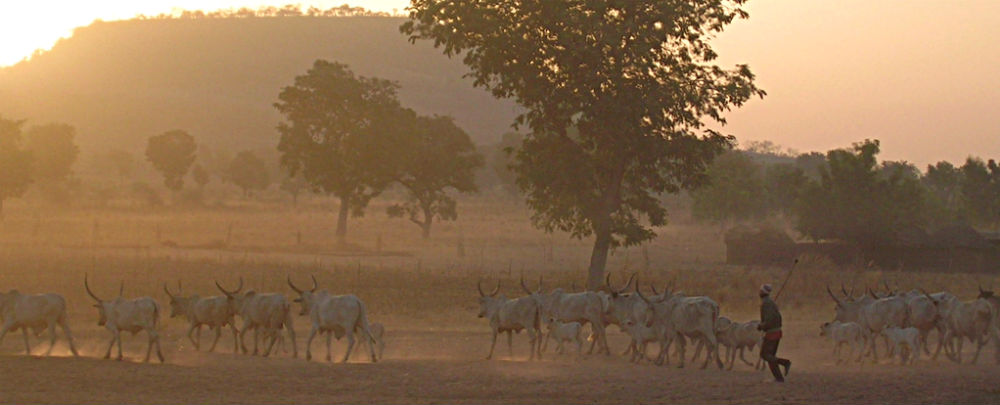
Picture: https://africacenter.org/wp-content/uploads/2017/01/A-Fulani-man-herds-cattle-in-northern-Cameroon-1000x405.jpg

dimanche 26 janvier 2014

3- Selection, mutation, breeding, GMOs


After my nervousness last week, I'm going to talk today about a more relaxed (sure?) subject: genetic evolution of species. It is a general subject, valid for both plant and animal species.
What is it?
It’s the various natural or artificial ways that cause the evolution of species. At all times since the invention of agriculture, man has tried to adapt his environment, and his agricultural activities to his needs. He has felt the need to select species for their specific characteristics, thus providing improvements to what had hitherto existed.

1-    SELECTION
It is the most simple process that will be used either alone or in combination to other methods.
It simply consists in observing a population of the same species, and chose the most interesting individuals to use them as parents, so try to transmit to their progeny, characters for which they were identified. For example, in apple, an old and almost extinct variety is Gala, bicolor variety that was achieved around 1920 in New Zealand. It is a variety whose general characteristics are very interesting, but the color does not correspond any more with current standards. In Gala orchards, trees producing the most colorful fruits were selected (in fact they are small natural mutations affecting only the color) to get the current Royal Gala variety. It is the same variety as Gala, but with a more intense red color. We proceed in the same way to select cows producing more milk, sheep producing more wool, running faster horses, or cats or dogs whose characteristics are the taste of the juries of beauty contests.
It is a very old method, which has been all time used by farmers and gardeners around the world, consciously or unconsciously.

2-    MUTATION
This is a natural process, which is a genetic change of one or more characteristics. It is one of the main causes of the evolution of species.
It is a common phenomenon in plants, where you will find in a field either a plant or a branch with different characteristics. Thus it is usual, for example in my peach orchards, find a branch of nectarine, or a twig with fruits of different color or shape. It comes from a genetic change in the formation process of a bud that develops different characteristics. This new feature is set into the genome of the mutant individual or the mutant area and can then be transmitted to its progeny. If the mutant feature is interesting, it may either be used unchanged or it may be used as a parent in order to create a new progeny by a hybridization technique.
It is also possible to cause artificial mutations by controlled irradiation in specialized laboratories.

3-    BREEDING
It is a very old method, based on the observation of characters, and their ability to combine to create a different characteristic. The breeding technique is normally done by natural ways, not allowing the breeding of naturally incompatible individuals. It is currently the main method for getting new varietal characteristics. If you cross a yellow flesh, small and early nectarine, with a late, white and bloody flesh flat peach, you will obtain a wide range of diverse fruit, which will combine in all possible ways, the original characters of parents. We generally consider that, in peach, a controlled crossing of two specific varieties can give a variability of about 500 different types.
It is in this way that, in recent years, appeared in the markets, flat peaches (paraguayo), and flat nectarines (platerines). The origin of the flat character in peach comes from a natural mutation, occurred 2000 years ago in China. Closer to us, there is an old variety, cultivated for many years in the region of Murcia, Spain, called Paraguayo, which is a small flat peach, rather shapeless, greenish, white and bloody flesh, slightly sweet but very aromatic (a type of vineyard peach, green and flat). It was used as parental in several breeding programs, allowing the current varieties diversity.
The technique is simple: you take a tree from a selected variety that will be the female parent (the receiver), and you substitute the natural pollination (normally made ​​by bees) by a delicate fine brushwork, throwing on each flower pistil, pollen grains of the variety chosen as the male parent. It is also possible to proceed by isolating trees of both chosen varieties under a fine mesh net, under which a beehive is placed. Bees have no other choice but to interpollinate the two present trees.
Finally, there is the natural pollination, without human intervention, which simply consists of a carriage of pollen from a variety to the other, done by bees. This technique is not normally used for breeding, but it is widely used for pollination of self-sterile varieties, which means whose pollen is incompatible with its own flower (usual case in apricot, cherry, plum, apple and pear, for example).
Harvested fruits will be the same as the female original variety, because genetic changes are taking place in the seed, thus immediately invisible. It’s necessary to take all seeds and place them to germinate. Each seed has a set of combined characters from both parents.
The two most common breeding types are:
- Intraspecific breeding, which means crossing two varieties (in plants) or two breeds (animals) of the same species. This is for example, crossing a Golden apple with a Granny Smith apple or a German shepherd dog with a boxer dog. In humans, the process is called miscegenation.
- Interspecific breeding, which means crossing two related and compatible species. In plants, it is a cross between wheat and rye (triticale) or clementine and tangerine (clemenvilla) or apricot and plum (aprium or pluot). In animals, there are many cases. The best known is the mule, a cross between horse and donkey, but it is quite common in cats, or in open air pig farms, where sometimes introduce boars.
Remains the problem of F1 hybrids, concerning annual crops seeds. These seeds are produced by first generation artificial pollination whose agronomic characteristics are known, and generally interesting. But the progeny of these F1 hybrids (F2 hybrids) is very different. The farmer is forced to buy seeds every year to maintain the properties of the variety. Seed companies were accused of abusing the system. Although this is partially true (these are for-profit corporations), it should however be said in their defense, that the qualities of F1 hybrids are very difficult to obtain by other ways (stable varieties usually have lower agronomical performance and tend to degenerate over generations), in the other hand, varietal research is very expensive, and it is a way to get the investment back. Seed prices are calculated for mutual profit otherwise seeds companies could not sell anything. Farmers are not stupid, anyway.

4-    GMOs
It is a technique that can be applied both to animals and plants. It consists in the laboratory, to make an artificial modification on a specific gene, to change the behavior of the original organism. The technique allows us to imagine almost any modification or crossing, impossible in nature, especially interspecific crosses, unimaginable by natural ways.
It is obvious that there can be a serious ethical problem using this technique. Moreover, some companies used it as a very powerful economic weapon. It must also be said that the first GMOs varieties, commercialized on a large scale, were for the resistance to herbicides, sometimes causing overconsumption of these herbicides, and environmental problems. Ecologist organizations took it as a symbol of struggle against GMOs, without considering the potential benefits of the method. The anti-globalization organizations, for their part, combined the refusal of GMOs with the fact that these varieties are hybrid F1 too, to violently attack the seed companies, without trying to see the positive aspects of the system. Films have been made on this topic, and political campaigns as well, but without objectivity, playing on the fear of the unknown risk, and using perfectly the power of modern communication. And we know very well, from dictatorships to main political and economic crises, how high is the power of the mass media, and how easy it is to manipulate public opinion by shocking images.
However, it should be noted that this technique allows us to imagine some interesting solutions in specific conditions. For example, there are significant works in progress to create, by this method, crops adapted to saline soils of some regions of the world (and currently prohibiting any type of agriculture), or resistant to severe drought conditions, just to give two examples.
One of the main problems encountered since the first sale of GM crops, is the modification of some proteins in the plant, giving them a sometimes dangerous character to human health. But it seems clear, that if suitable work is done, researchers learn to control these risks. Investigation works are currently in progress in this way.
The technique has probably an important future, in the inevitable goal of feeding the world in the centuries to come, but it is essential to regulate its use.
"Science without conscience is but the ruin of the soul," wrote François Rabelais in 1532 in "Pantagruel". The formula is a bit dated, but it is really current in its meaning. Any new technique can lead to abuses. This is the case with GMOs. The first GM crops have flaws that emerged after their sale. That is not why we must drop the technique, especially because, as it is known, it will inevitably be recovered by not necessarily scrupulous people, who will make it a personal enrichment or domination tool.
However, this technique can provide very interesting answers, to many currently unresolved problems, and for the good of humanity.
It is therefore preferable to continue working on it, to use it in a controlled way, but while establishing the political and legal means to prevent abuses.