Affichage des articles dont le libellé est EN- herbicides. Afficher tous les articles

dimanche 3 mars 2019

143- Alternatives to pesticides -3- Pesticides


ALTERNATIVES TO PESTICIDES -3- PESTICIDES

Can we substitute pesticides with other pesticides?
Not only is it possible, but it's even currently the most frequently used by organic farmers and the easiest for them.

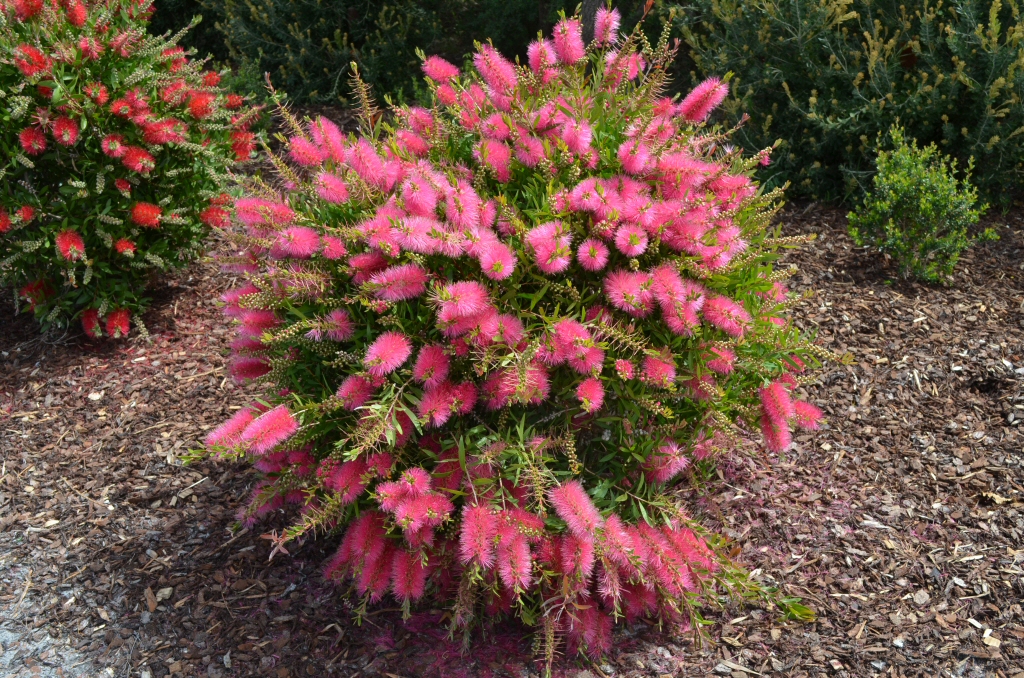
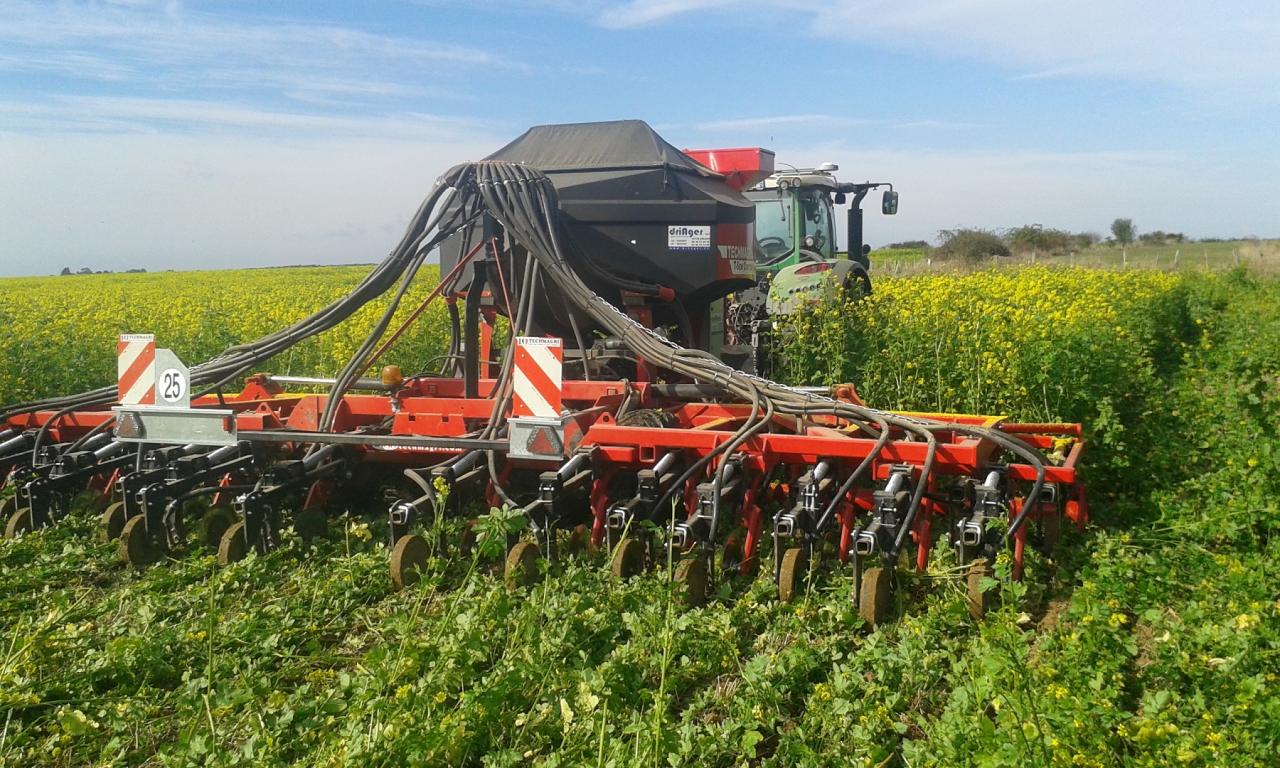
Personal picture

Let's see that.

When it's talked about pesticides, society usually only thinks about synthetic pesticides. It's rarely talked about pesticides allowed in organic farming, yet quite numerous, and whose adverse effects are not necessarily negligible. Toxicity for soils, for fish, for bees, endocrine disruptor effects, the consequences of their use often has little to envy to synthetic pesticides. The only fundamental thing that differentiates them is their natural and not synthetic origin.

Many people also think that organic farming is a way to reduce the "power" of the big multinationals of agrochemistry. This is a big mistake, since it's already several years since, feeling the wind turn, they have massively invested in the research for biological solutions for the plant protection.
For example, one of the most important organic insecticides in the world, and currently one of the most widely used pesticides, independently of the crop method, is spinosad (whose toxicity to bees is well known and widely documented), was discovered in 1985, then produced on a large scale by the American agrochemical giant Dow Chemical (now also owner of Dupont). The production of this pesticide, produced by bacteria, is done in ultramodern factories, far from the romantic image of the manual manufacture of pesticides based on plant decoctions.
In the same way, the extraction of natural pyrethrins used in organic farming is based on an intensive industrial production in monoculture using synthetic pesticides on a large scale, also far from the philosophy of organic farming (http://culturagriculture.blogspot.com/2017/04/104-natural-vs-synthetic-4-about.html).
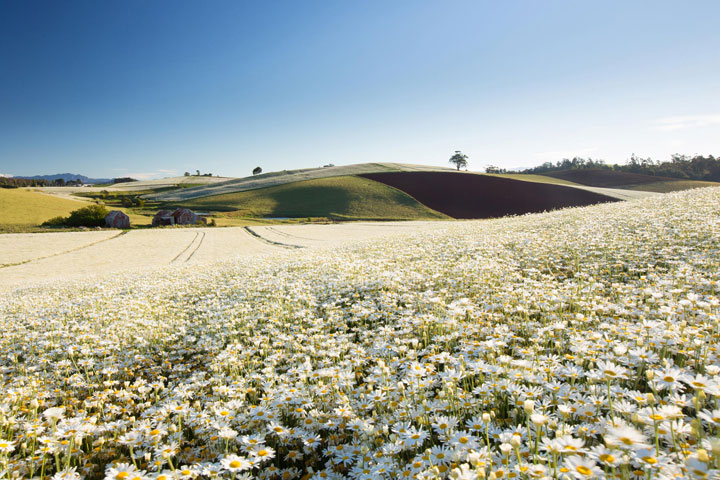

Of course, there is also an important work of homemade pesticides, usually plant extracts or fermentations. Their effectiveness is highly variable, as it depends on the manufacturing conditions (temperature, light, quality of the water used, concentration in active ingredients of plants, know-how of the preparator, etc.).
Some manufacturers, generally local or national companies, rarely multinationals, offer formulated products on the basis of these same plants, which have the advantage of providing the farmer with a certain guarantee of homogeneity and a high degree of ease of use.

But I think the most interesting thing in this field is the research, by many companies, big or small, universities and research institutes, of alternative solutions from Nature to substitute synthetic pesticides.

Nature (especially plants, fungi and bacteria) continues to surprise us with its great creativity in the solutions it has developed to defend itself against external aggressions. (http://culturagriculture.blogspot.com/2015/09/52-lesprit-des-plantes-2-autodefense.html).
Scientific research continues to make discoveries that show that our diet is heavily loaded with natural toxins of great diversity, and that many of these toxins can have interesting agricultural uses.


Thus, several studies (the most famous is American, dated 1999, by Professor Bruce Ames and his team, from the University of Berkeley https://toxnet.nlm.nih.gov/cpdb/pdfs/Paracelsus.pdf) tried to analyze and quantify the natural toxins present in our diet.
The results are very surprising, and are mostly contrary to popular belief: we consume about 10,000 times more natural toxins daily than synthetic pesticide residues.
By the way, this study is 20 years old. Since then, crop protection techniques have evolved, molecules have been modernized and their use rates have been significantly reduced.
Based on my own residue analysis, which I started in 1997, I estimate that the amount of residue on food has been reduced by 10 to 20 times since that time. On the other hand, our foods have not changed much and most probably maintain similar levels of natural toxins.
This would lead us, assuming my estimate is correct, to a proportion of 100,000 to 200,000 times less synthetic pesticide residues than natural toxins absorbed daily in our diet.

I close this parenthesis to tell you that, for what interests me today, these studies are especially interesting to show us that the plant world contains a large number of natural molecules extraction possibilities that could be used in agriculture, with effects fungicide, insecticide, repellent, nematicide and even, in some cases herbicide.
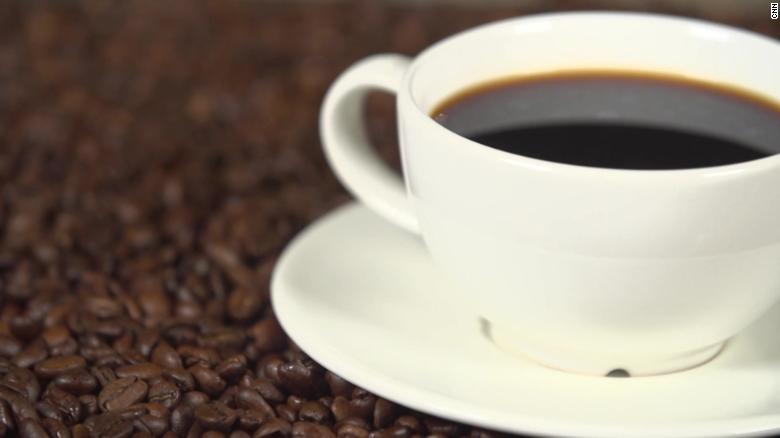
The same Bruce Ames study teaches us, for example, that a cup of coffee contains more than 1,000 chemical compounds and natural toxins.

Very recently (the publication dates from February 1st, 2019), it was discovered that there may be a biological alternative to the highly hyped and highly hated and highly controversial glyphosate https://www.nature.com/articles/s41467- 019-08476-8.
This molecule, a sugar previously unknown, is produced by a bacterium, Synechococcus elongatus, which makes it a biological alternative, with a mode of action very similar to glyphosate, which would be a guarantee of versatility and efficiency.
It would be especially a real solution to the difficulties of weed control, one of the big problems badly solved of the organic agriculture.

It remains to be seen whether this molecule will correct the "defects" of glyphosate, and in how many years the farmer will be able to freely dispose of this new natural molecule.

Many natural pesticides exist, based on plant extracts for the most part: nicotine, natural pyrethrins, neem oil, nettle fermentation, citrus seed extract, garlic extract, lavender extract, tomato leaf extract, chili extract, rotenone, cinnamon extract, vegetable oils, etc.
Some are readily available to farmers, others are handcrafted, and others are subject to bans or restrictions on environmental or health problems.
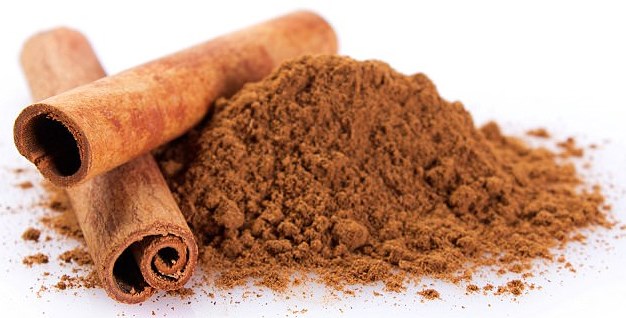

In short, organic pesticides have a bright future ahead of them. It remains pesticides, with disadvantages similar to synthetic pesticides, but their natural origin is that their use is allowed to farmers, and does not pose a state of soul to fundamentalists of organic. The general ignorance of their side effects on health and on the environment either.
They have a big advantage for farmers: there is no fundamental change in the techniques and methods of production. It can maintain the same work habits by substituting synthetic pesticides with their biological equivalents.

The only downside right now is the lack of biological solutions in many cases. It is likely that thanks to the huge investments in scientific research around the world, new developments will continue to emerge at a rapid pace.

We will see later that other techniques can represent a profound challenge to farmers' habits.
The future must logically consider all available techniques.

Even if great progress is being made, I still think that it is very regrettable and harmful to want to deprive agriculture, at least until there are real alternatives, effective solutions, currently well-known and not very problematic if they are well used, only for an ideology that is not based on any tangible or demonstrated reality.

And we have no illusions, recent or current work that studies large declines in insect or bird populations will not improve with the ban on synthetic pesticides. Natural pesticides will have very similar side effects when used on a very large scale. One can only hope, but without proof for the moment, that their biodegradability will be faster, and still, not those of mining origin, unavoidable in organic, like sulfur or copper.


mardi 1 mai 2018

129- Natural vs synthetic -7- Bilanophos vs glufosinate


BILANAPHOS VS GLUFOSINATE

About 2 years ago, I published an article on this same comparison, but from a different angle (http://culturagriculture.blogspot.com.es/2016/01/66-plant-protection-4-on-boarders-of.html).

It seems interesting to me to take it again from the angle of the opposition between natural and synthetic. We have seen in previous articles that this differentiation is sometimes at the limit of the reasonable. This example demonstrates it once more.

This time it is an herbicide. It is all the more interesting that the problem of the control of harmful to crops plants is one of the great difficulties of organic farming.


“How to Make a Natural Weed Killer
January 6, 2016 Posted by Andrew Kniss*


Well over a year ago, I wrote about a homemade herbicide containing salt, vinegar, and dish soap.

“Many of you have probably seen it posted to Facebook or Twitter or Pinterest, or on your favorite home gardening site. One of my favorite descriptions calls it a “magical, natural, weed killing potion.”

That particular potion certainly kills weeds, but it isn’t natural (and it certainly isn’t chemical-free). It contains dish soap and vinegar, both of which are synthesized industrially, so it isn’t natural by most definitions of the word. That’s disappointing, because people really yearn for a natural weed-killer. They want to kill the weeds around their homes and in their gardens, but they don’t like the idea of using a synthetic pesticide. Most people (including me) would prefer to use something natural, all else being equal. Unfortunately, there are very few truly natural products that work as effective herbicides.

That being said, I’d like to introduce you to a fascinating chemical named bilanaphos. In the early 1970’s, bilanaphos was discovered independently by two different laboratories, one in Germany and the other in Japan. Both groups isolated this chemical from Streptomyces bacteria; S. viridochromogenes in Germany, and S. hygroscopicus by the Japanese group. Bilanaphos is produced naturally by these naturally occurring bacteria. So, by nearly any definition, bilanaphos is natural.

The scientists in Germany and Japan both learned early-on that bilanaphos had strong weed-killing properties; when it was applied to plants, the plants died. Upon further investigation, scientists in the German group recognized that only part of the full bilanaphos chemical was required for herbicidal activity. In fact, when bilanaphos enters the plant, about half of the molecule is quickly chopped off, leaving behind a smaller molecule – phosphinothricin. It is this smaller molecule that acts as an herbicide in the plant.

When the naturally occurring compound bilanaphos (left) enters the plant cell, the plant removes two alanine residues leaving behind the chemical phosphinothricin (right). Phosphinothricin exhibits herbicidal activity in most plants, by inhibiting the glutamine synthetase enzyme.


So we have a natural compound (bilanaphos) that is converted naturally by plants to another compound (phosphinothricin) that works very effectively as an herbicide. And it turns out that some Streptomyces species naturally produce a small amount of phosphinothricin also. That sounds very much like a natural herbicide, right? Not so fast…

Phosphinothricin (better known in the US as glufosinate) is widely used as an herbicide today. It is the active ingredient in herbicides like Rely (mostly used in tree and vine crops), and Liberty (most commonly used in conjunction with Liberty Link crops). But even though the chemical occurs naturally, and was first discovered by extracting it from naturally occurring bacteria, the commercial herbicide is produced synthetically. So it is not considered a ‘natural’ herbicide.

The story of phosphinothricin, while very interesting, is not unique. A huge number of scientists around the world are searching nature to find new chemicals that have antibiotic, pesticidal, or other useful properties. Between 1997 and 2010, USDA scientists estimate that about 69% of all new pesticide active ingredients registered by the EPA were either natural products, synthetic products derived from natural sources (like phosphinothricin), or biological in nature. For example, another commonly used corn herbicide was discovered after an initial observation that few plants could grow underneath a red bottlebrush bush in a garden. But weed killers are actually the smallest component (less than 7%) of these new pesticides of natural origin; around 30% of new insecticide or fungicide active ingredients are either natural products or natural product-derived.


Currently, the FDA is struggling to define the word natural on food labels. It is an often-used marketing term with no clear definition. It may be even more difficult to define when discussing pesticides. As the phosphinothricin example shows, the lines between natural and synthetic can get blurred quickly. Is it natural because it occurs in nature? Or does it have to be physically extracted from nature to be considered natural?

The ‘natural or not‘ distinction can distract from what is really important when discussing pesticides. If the compound is structurally the same, the naturally occurring and the synthetically produced versions will share the same properties. The properties of the compound are far more important, in my opinion, than the source of the compound. Is the pesticide safe for applicators and the environment? Does it break down quickly in the environment to non-toxic products? If so, then I’m much less worried about whether it is natural or not, regardless of how we define natural.

But there are questions related to the source of the product that can be important. In particular, which has a greater impact, synthesis in the lab? Or extraction from natural sources? I rarely hear discussions related to this question, but this is among the most important questions related to natural products (provided they are deemed safe). If we can efficiently extract a renewable resource from nature, and avoid the energy and fossil fuel requirements of synthetic production, then a naturally produced product sounds pretty good to me. But if extracting something from nature means we’ll have a greater negative impact on the environment than we would producing it in a factory, then please give me the synthetic version.

References:
Hoerlein (1994) Glufosinate (Phosphinothricin), A Natural Amino Acid with Unexpected Herbicidal Properties. p 73-145 in  Reviews of Environmental Contamination and Toxicology (Vol 138)

Dayan et al. (2011) Rationale for a natural products approach to herbicide discovery. Pest Management Science. 68:519–528

Cantrell et al. (2012) Natural Products as Sources for New Pesticides. Journal of Natural Products. 75:1231-1242. »

_______________________________________
* Andrew Kniss is Professor of Ecology and weed management at the University of Wyoming. "


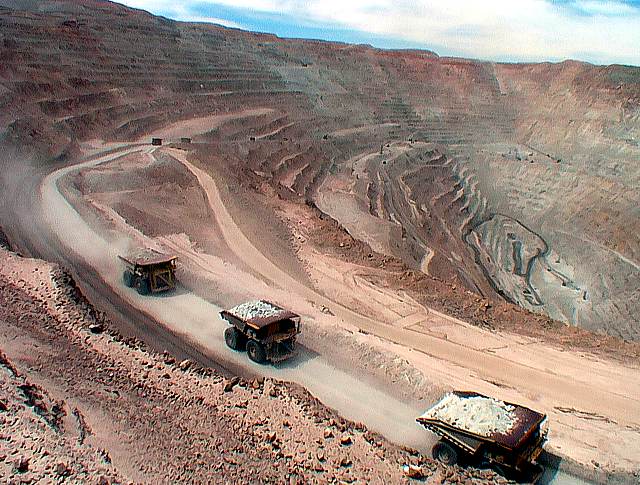
The ideology of organic farming obliges us to use only pesticides of natural origin. Yet exemptions exist, depending on the possibilities of certain molecules, or on how to use them, or on the needs of farmers who sometimes justify infringements to the rules, carefully kept under silent, at least towards consumers.

It is sometimes difficult to understand why some molecules, produced in a totally industrial way (like deltamethrin which is a pyrethroid of synthesis) are accepted in organic and others, quite comparable in their manufacturing process, while being of simple copies of molecules of natural origin, are not, as is the case of azadirachtin, naturally produced by the neem tree, and main active ingredient of all organic pesticides based on neem oil.
By cons, pheromones used in organic farming, as in conventional, are 100% synthetic products, which are copies of pheromones, naturally emitted by insects. In this case, there is no problem. It is true that these products are not sprayed on crops. But they float in the air day and night for months, and are necessarily deposited on products that will be food.
One may also wonder for example, why spinosad, naturally produced by bacteria (Saccharopolyspora spinosa), and manufactured on a large scale by a fully industrialized process, is allowed in organic farming, while bilanophos also naturally produced by bacteria (of the genus Streptomyces) is not?


After all, what is missing to organic farming to be generalized?
Tools, technical solutions to solve concrete problems, in particular at the level of phytosanitary protection.
Most of the other problems have coherent solutions (with nevertheless a weakness on the nutritional aspects, which progress however quickly), and even often of a very reasonable cost.
But we can see that, while it is certain that conversions to organic farming are becoming more numerous (rarely because of personal conviction, but more because of societal pressure, or because of economic opportunism), there are also more and more frequent steps backwards. The main cause mentioned by these farmers is the unresolved phytosanitary problems that are accompanied by significant reductions in yields or quality decline, and ultimately a serious problem of income for the farmer.

Because the increase in the supply of organic products and their democratization are accompanied by a perverse effect, moreover quite predictable, which is the decline in prices, not necessarily for consumption, but for the farmer.
Who says lower prices, also says lower income, and obligation to improve the (visual) quality, so to increase the real cost of production. While it is true that organic production does not have the obligation to meet the same criteria for standardizing food quality as conventional agriculture, the reality is slowly changing and marketing circuits require more and more a product organic and beautiful at the same time.
A kind of backlash that could be largely avoided if the use in organic farming of ever more numerous synthetic pesticides "copied from nature" was allowed.

Will reason ever win the match against dogma?


vendredi 8 décembre 2017

120- Plants protection -6- Feeling a change in the wind

GLYPHOSATE: FEELING A CHANGE IN THE WIND

In full controversy throughout the European Union after the re-authorization of glyphosate for 5 years, a small French company takes advantage of the confusion to make its public ad.

Picture: of my own

It explains that it has an organic alternative to glyphosate, but that its commercialization is blocked by the administration.
It broadly publishes on social networks (with the help of its supporters and / or environmental lobbies) articles telling anyone who wants to hear that its product exists, that it has a proven effectiveness, but that the administration, for 4 years, is blocking its file without cause. It therefore portrays itself as a victim of a situation suggesting that the administration is under influence.
And it works. In recent weeks, it is entitled to articles in all periodicals, even the most serious, it goes on television, even outside France. A well-orchestrated and, it seems, effective advertising.
Here are some French links. There are many others.

The administration in charge of the case, the ANSES (National Agency for Public Health Security, for Food, for Environment and for Work), probably tired of being attacked from all sides, has just published a statement in which it specifies the situation.


It indicates in particular that, although it's true that the file does not progress, it's completely wrong to make the administration responsible. In fact, the company in question is the only responsible for not having provided the competent administration with the necessary elements, and for not having paid the corresponding taxes.

"Upon receipt of the file, it appeared that most of the necessary documents were missing, including the Cerfa administrative application form, which specifies in particular the characteristics of the product and its intended uses, as well as, for example:
- the integral composition (the active substances which enter the composition having
necessarily to be approved beforehand at European level),
- tests and studies to evaluate the efficacy of the product, and its impact on the health and on the environment,
- The product label project.
The payment of the fee for the investigation of the file (tax reduced to 2 000 € instead of 40 000 €, in the case of a biocontrol product) has never been carried out."

It is therefore very clear that a so-called biocontrol product, in other words a biological pesticide, must follow a clear and precise procedure to be approved. We can only rejoice.
The assumption that everything natural is good is regularly undermined by reality.


We can mention, for instance,
-       Nicotine, extracted from tobacco, still used in many countries as a biological insecticide and yet directly responsible for millions of deaths per year,
-       Arsenic, a natural mineral whose toxicity is undisputed, used as a fungicide (sodium arsenate) on the vines until 2001, and combined with lead (lead arsenate), another natural mineral whose toxicity is widely recognized, which has been widely used as an insecticide for example against the Colorado potato beetle until 1971,
-       Neem oil, a plant extract from the Neem tree, a complex bunch of natural substances, authorized worldwide as a biological insecticide, and a proven endocrine disruptor,
-       Natural pyrethrins, extracted from certain plants, very versatile natural insecticides, very widely used even in domestic insecticides, very toxic to aquatic fauna, and disruptive of nerve connections (neurotoxic),
-       Copper, the first pesticide in the history of modern agriculture, fungicide and bacteriostatic recognized, widely used in agriculture, both conventional and biological, despite its status as a heavy metal and known pollutant of soil and water.
-       We could also mention many natural substances, known for centuries, such as hemlock, snake or scorpion venom, ergot of rye, curare, and a very long etc. I have described only a few natural substances known for their use as pesticides.


It seems obvious that the company in question has embarked on a perfectly dishonest communication, trying to advance its dossier thanks to the pressure of the civil society, the same who managed to turn explosive the glyphosate file, which nevertheless was initially based on meager assumptions.

You will find all details about the product and its steps in the article (in French) of my colleague Seppi on the link http://seppi.over-blog.com/2017/12/osmobio-le-successeur-du-glyphosate-serait-la.vraiment.html?utm_source=_ob_email&utm_medium=_ob_notification&utm_campaign=_ob_pushmail

This charming company probably thought that if the glyphosate almost disappeared on the basis of a totally rigged and manipulated dossier, why could not its product be approved without any dossier?
It has become clear to all those who still doubt that social networks are currently the most powerful and effective weapon of manipulation and propaganda.

The boss of this small company also declared not to use chemicals that "destroy biodiversity." As Seppi says, his product is itself derived from natural chemistry. It is therefore a chemical product.
And like any good weed killer, its role is primarily to destroy biodiversity by eliminating unwanted weeds. In the case of pesticides, and in terms of biodiversity, synthetic or natural, it's the same.
I also think it's good to remember that, in essence, agriculture is fighting against biodiversity, even in its most ecological forms, such as permaculture.


From the moment when the farmer sows a field of a single species, with or without plowing, with or without pesticides, whatever the method of production and whatever the surface of the field, it disturbs the biodiversity.
It's the same with a garden. Do you want your garden not to disturb biodiversity? Leave it open, and fallow.

But beware, the application for approval concerns a "total weed control of non-agricultural areas", so for railways and roads, but not for agriculture, and not for gardens either.
All this takes on the air of false news and manipulation.

Wise guy.
This entrepreneur uses all the ecologist rhetoric, but just forgets to clarify matters. Lying by omission is in fashion nowadays.

It is nevertheless reassuring to note that legislation is changing with regard to organic pesticides. Indeed, until a very recent past, the requirements were very superficial for the authorization of commercialization and use of biological pesticides, leaving room for a regulatory vagueness giving rise to numerous abuses, always on the pretext that "it's natural".
A natural substance, for use on future foods must now demonstrate, of course its effectiveness, but also its safety on both the environment and health.

The same trend can be observed with plant-based preparations, such as nettle manure for example, which now have to prove their safety, which does not please everyone. http://www.sudouest.fr/2017/12/04/environnement-la-guerre-de-l-ortie-n-est-pas-vraiment-finie-4004118-706.php


The precautionary principle, if it's applied to synthetic substances, must be applied in exactly the same way and in the same proportions to natural substances. Don't think that I defend the principle of precaution, I consider it a gangrene of our modern society, because of the brake to progress that it represents, often without any real justification. It's too often put forward. We must not do anything, but it is not a reason to paralyze all progress.

That being said, if this product is good and if, as the company that manufactures it asserts, it respects the environment, the user and the consumer, then very sincerely, as a farmer, user (reasonable and moderate) of the glyphosate, I'm looking forward to the arrival of this alternative.
It would still be necessary for this society to do what it takes to be approved. It has already filed a patent in Canada, in the United States, in Europe and finally an international patent on its formula. It shows that it intends to sell it, many even, to earn a lot of money.

At the beginning of any for-profit enterprise, which is obviously the case of this one, there is the notion of investment, ie an initial expenditure of funds intended to be made profitable by the future sales of the company product. The patent is part of that of course, but the homologation dossier too.
So dear sir, make the necessary investment for your product to be approved. Then I will be happy to use it, but only outside agricultural areas, unless you do the necessary so that this product can also be used in crops.
Unless of course, that its toxicity, its residues or the risks that it presents for health or environment block its homologation, or its possible future extension of use to the cultures.

Even if it's a natural product ...


dimanche 15 octobre 2017

116- Ban the glyphosate, and then...?

BAN THE GLYPHOSATE, AND THEN...?


Under this title Mathieu, on the web page Graines de Mane, published on February 15, 2017 a beautiful article, concise, on the questions that leaves in the profession, the possible future ban of glyphosate.


"In the past few days, the serial on the suspension of glyphosate, Monsanto's star herbicide, has restarted. About 40 NGOs launched a European petition on 8 February calling for "the ban on glyphosate, in accordance with the European provisions on pesticides, which prohibit the use of carcinogenic substances in humans". This happens, in particular, after WHO has classified carcinogenic glyphosate and the fuzziness of European authorities on the renewal of its employment authorization in Europe. In the end, in June 2016, the European Union finally decided to extend its use for eighteen months until a new scientific opinion was published.

Pending a possible suspension of authorization of the molecule, the question on farms thus arises in the following way: how to do without glyphosate? Some farmers can do without it or reduce doses, but its status as the best-selling herbicide in the world shows how many agricultural systems depend on it ... And not just intensive farming systems. Thus, some farmers, although engaged in virtuous environmental practices, continue to use this product at low doses. This is the case, for example, with conservation agriculture, which aims to keep a soil constantly covered by vegetation and not to plow the soil to preserve as much as possible its structure, the life it harbors (earthworms and diverse fauna) and limit erosion. These techniques represent a solution to increase soil fertility and thus the long-term sustainability of agricultural systems. By eliminating tillage, farmers improve the health of their soils, but don't have it as a tool for an effective weed management. The success of these crops therefore depends to a large extent on the use of herbicides, including glyphosate.


For these farmers, the removal of glyphosate would thus lead to a technical dead end which could result in the abandonment of their virtuous environmental practices.

The concerns of civil society are perfectly legitimate and farmers are changing their techniques to meet them. Being aware of the effects of agricultural practices on the environment or health makes it possible to enlighten our consumer choices on a daily basis. Knowing how the foods that are found on our plates are produced is therefore paramount. Understand the consequences of citizens' wishes on the reality of the technical functioning of farms as well. The debate over the removal of glyphosate calls for another: the urgent need to find alternatives that allow growers to avoid jumping into the unknown, while responding to new environmental challenges in agriculture. Every day, producers, researchers and agricultural development organizations innovate for more virtuous forms of agriculture. The announced suppression of glyphosate will be all the more effective if sustainable alternatives in agronomic, environmental and economic terms are developed. Banning is one thing, offering alternatives is even better. This is no doubt the real challenge of the actors of agriculture in the years to come. "


Since the publication of this article, much has been said about glyphosate, from the French Minister's announcement of the negative vote of France until the announcement by the same minister of a proposal of a shorter renewal, in order to have time to look for alternatives.
We have also seen the WHO announce that glyphosate is probably not carcinogenic, thus countering the classification of its own agency, the IARC.
We have seen all food safety agencies in the world, and all uncommitted scientists (without private funding or political or ideological pressure) strongly claim that glyphosate, under normal conditions of use, is not risky for health or the environment.
It's also true that it's very difficult to know (and this is moreover carefully calculated), among the thousands of published studies, which of them are objective (a minority), and which of them are financed by one side or the other (or whose scientific committees are oriented, as it was the case for IARC), and which are the majority.

Glyphosate file is a rigged and manipulated file, falsified from the beginning. This herbicide, the most widely used in the world and also the most harmless (according to all objective scientific studies) has become the scapegoat, an unwitting symbol of the fight against GMOs and against Monsanto (who has not owned it since 17 years and generates only +/- 15% of its profits from it https://www.fool.com/investing/2016/05/26/how-much-money-does-monsanto-make-from-roundup.aspx), becoming the target of a vast ideological manipulation.

We could longly argue on the reasons for this incredible propaganda, skilfully using all means at its disposal (radio, television, petitions, demonstrations, social networks and so on) worthy of the darkest hours of the worst dictatorships of the recent history, or closer to us, of the worst citizen or independence movements such as that of Catalonia (very skilful in its perverted role of the Catalan David against the Spanish Goliath), or also the Brexit.

Poster of Chinese propaganda from the time of the Great Proletarian Cultural Revolution, showing intellectuals as responsible for the evils of the country.


To make things clear, let's remember this statement by Mr. Bernard Url, Executive Director of EFSA, who explained on 1 December 2015 to the European Parliament to explain the position of EFSA:

“The letter of 96 persons were mentioned very often. For me this a very good example on how different the two organizations work. We work on glyphosate with 100 scientist from the member states. They see the evidence, they contribute, they challenge, they are in teleconferences, it’s the peer review process, and with these 100 scientists together we were able to produce this.

We did not ask these scientists to sign a letter whether they like or not the outcome. And one member of the parliament put it very rightly. She has said: 96 scientists feel uncomfortable with EFSA’s opinion. And it’s about that. People that have not contributed to the work, that have not seen the evidence most likely, that have not had the time to go into the detail, that are not in the process, have signed a letter of support.

Sorry to say that, for me with this you leave the domain of science, you enter into the domain of lobbying and campaigning, and this is not the way EFSA goes. For me this is the first sign of the Facebook age of science. You have a scientific assessment, you put it on Facebook, you count how many people like it. For us this is no way forward. We produce a scientific opinion, we stand for it, but can’t take into account whether it will be liked or not.”


This is a real problem. If a scientific report runs counter to public opinion, which in general reacts only emotionally, it's immediately vilified, massacred, and scientists (and their supporters and defenders too) suspected or clearly accused of being corrupted by someone.
We are sinking into a decadence that is on the way to ruining our civilization.

But that is not the point.
As far as glyphosate is concerned, the damage is done. It will not be possible to reverse. Remember the Alar affair, which nevertheless took place well before the existence of social networks and of the great fashion of "citizen petitions". We are in a similar manipulation of opinion, but much more serious. http://culturagriculture.blogspot.com.es/2015/02/38-alar-scare.html

The question is no longer whether glyphosate will be banned or not, sooner or later it will be. Rather, it's how farmers will have to adapt to its disappearance, legal or demanded by markets, too frightened by consumers’ opinion, who may turn to other brands if they learn that their food could have been grown with glyphosate.
I have no illusions. I expect to see glyphosate, hitherto allowed in all customer specifications (except for organic production, of course), go to the status of inadvisable or prohibited, with or without legal justification.


However, the future glyphosate substitutes, which will not fail to arrive, will necessarily be 5 to 6 times more expensive. That's normal, that's the rule. But it's considerably changing the data of the problem for farmers, who often have a hard time making a profit on their jobs.

It's therefore very urgent to find alternatives. I hope the European Commission will have the intelligence not to abandon the molecule in too short a time, and will promote the search for alternative methods.

A very interesting article on the subject was recently published in the Christian periodical "La Croix" https://www.la-croix.com/Sciences-et-ethique/Sciences-et-ethique/Comment-passer-glyphosate-2017-10-03-1200881487
It shows the interesting testimony of a young French farmer, deeply convinced and involved in a new conception of agriculture. He has worked there for a long time and explains:
“I was told I was mad, that I could not succeed. But after several years of work and adjustments, that’s it: I had good results last year, I expect them to confirm but I am confident.”
Yet he is aware that this transition is difficult:
"I did not get there overnight. And if I remain convinced that we'll be able to avoid the use of herbicides with plant cover, a brutal ban would be a mistake."


I invite my non-European readers not to doubt it. If glyphosate is banned in the European Union, the world's largest food market, the rest of the world will also come to it, in the short or long term.
The search for alternative solutions will help safeguard virtuous farming techniques, such as conservation agriculture and integrated production.

It's not permissible, for dark ideological reasons, to question everything that is a guarantee of food security, food quality and safety, and reducing the effects of agriculture on global warming.

European agriculture is the most efficient, the healthiest and most respectful in the world. People come from all over the world to learn the methods and techniques used.
It will continue to evolve and adapt to all situations, as it has always done. But any profound change requires time, training, costs, research, and investment.

Many crucial questions remain to be made, many essential points have probably not been envisaged, or not enough deeply.
Will European agriculture lose competitiveness in front of non-Community competition?
Will the players of commercial food channels play the game of rising costs, respecting the cost prices of farmers?
Will consumers be prepared to accept a probable increase in the prices of their food?
Will the markets prefer to buy non-EU products, cheaper but often less safe, in order to preserve their margins without increasing consumer prices?

The future of the quality of European food is at stake, but not many people seem to realize it.