Affichage des articles dont le libellé est EN- productivity. Afficher tous les articles

jeudi 24 janvier 2019

142- Alternatives to pesticides -2- The crop monitoring

ALTERNATIVES TO PESTICIDES -2- THE CROP MONITORING


We can't really classify the crop monitoring as an alternative to pesticides, but I decided to make it the starting point of this series because it's the foundation of Integrated Pest Management, and of phytosanitary protection in organic farming.
None of the methods, techniques, and novelties that will come into it, will develop or function properly without this fundamental step.


Any crop monitoring implies the integration of a rarely commented and yet essential aspect for a modern, productive, respectful, healthy and sustainable agriculture: the knowledge.
Sustainable agriculture is an agriculture of science and knowledge.
The knowledge of the crop first, its physiological cycle, its climatic adaptation, its agronomic requirements, its nutritional needs, its sanitary and physiological sensitivities, its compatibility with surrounding crops, etc.
The knowledge of the soil, which is the vital support of the crop, in order to take into account the potential susceptibility factors (pathogens, risks of nematodes, radicular asphyxia, etc.), and to know the nutritional contributions of the soil to the crop (including the risk of deficiencies).
The knowledge of adverse risks, especially climate risks, diseases, pests.
The knowledge of crop protection auxiliaries (insects, fungi and predatory vertebrates), which will be useful in helping to solve specific problems of the crop.
The knowledge of the environment of the growing areas, to know what help it can bring us (favorable areas for the development of some auxiliaries for example), or what constraints it assumes (the proximity of illuminated areas may increase the presence of some nocturnal Lepidoptera, harmful to crops for example), and what the farmer will have to do, or not to do in order to take into account this environment while getting the best possible result of his activity.

It should be noted that this level of training and knowledge, now recognized as the essential starting point for any evolution of agricultural production towards virtuous practices, is a recent (and not yet fully generalized) achievement in the most developped countries (from the second half of the 20th century), and still to be acquired in much of the world. Agriculture universally remains as one of the most backward sectors of human activity and the world economy, in education, training and development.

Picture: Issiaka Konate (ARAF - Dogon Plateau), Mali

Once this knowledge has been acquired and the crop put in place, the farmer will have to implement a process, often complex, which will allow him to put his crop in the most favorable conditions for its development and production, both in terms of quality in quantity.
One of the key points will be the protection of the crop against diseases and pests.

-       He has first to implement all available means to prevent health attacks from occurring. It's prophylaxis. This will be the removal of contaminated remains from previous or adjacent crops, pruning, cleaning of surrounding areas, etc.
-       He will then implement observation systems, so as to detect attacks as early as possible. It's monitoring. It's the setting up of monitoring traps, observation protocols, counting, climatological recordings, etc.
-       He will link observations and counts with reference levels called "nuisance thresholds", which vary according to the crop, the region, the type of parasite and the time. He will determine in this way from what moment a present threat becomes really dangerous and presents an economic risk. This is the notion of intervention threshold.
-       At the same time that he observes the populations of pests, he observes the presence of predators of all types. They are insects, mites, fungi or vertebrates (birds, snakes, carnivores) that feed on different risks present on crops. Their presence can greatly reduce or even completely eliminate the threat of a pest population. It's the use of auxiliary organisms.
-       He will choose the intervention method on a case by case basis. He will use pesticides, natural or synthetic, choosing them for their effectiveness, their side effects and the risks to the environment and health, when no other means will solve the problem. This is the intervention decision.

Each crop, each period of the physiological cycle, each type of climatic conditions will require a suitable response.
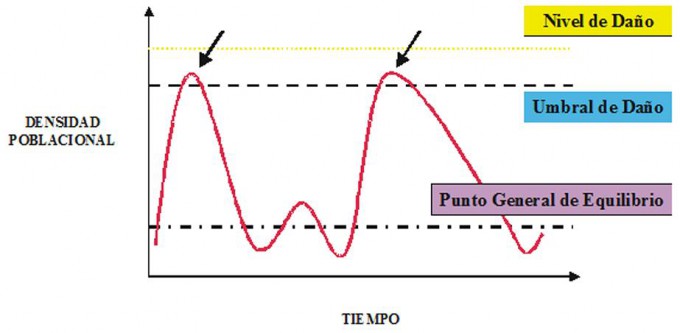
Monitoring of population levels of diseases and pests and their auxiliaries allows deciding the best intervention technique, if it is needed, and its optimal timing.


THE CHOICE OF PRODUCTS

When I started in agriculture in the early 1980s, the available phytopharmacopoeia included a large number of highly versatile synthetic molecules. When you sprayed against an attack of aphids, all that was present (Diptera, Hymenoptera, Coleoptera, Lepidoptera and other harmful or useful insects) was also eliminated. The respect for equilibrium was not on the agenda, and anyway it would have been difficult to try, because none of available and allowed pesticides, or almost, was selective.
Gradually, more and more specific products appeared, reducing the versatility, therefore the risks of "cleaning" untimely.
It must be pointed out, however, that at the same time certain problems have appeared, or reappeared, often known as described in the old treaties, but hitherto generally controlled by the versatility of phytosanitary products.

The information to the farmer has also increased a lot.
Until the 1990s, he knew only the risk for the user (and often only partially), and the time to use before harvest.
Gradually, the farmer has received ever more comprehensive information about health, the environment, and the conditions of use.
With improved measurement techniques and lower costs, pesticide residue controls have become more widespread. Standards for each product and type of food have been established.
The most versatile products have been banned for the most part.


While it is true that until the end of the 1980s it was usual (but not systematic) for farmers to spray by schedule, without really worrying about the presence of diseases or pests, let alone auxiliaries, it's no longer the case today, for several reasons:

-       The level of training and knowledge of farmers has risen sharply.
-       The improvement of technical support to farmers by public, private or cooperative-type structures also makes it possible for less-educated farmers to progress.
-       Social pressure around sustainable agriculture with minimal impact on health and environment has literally exploded in recent years.
-       Concern about the impact of farming practices by the farmers themselves has risen sharply.
-       The legislation is tightening each year a little more, both on pesticide authorizations and conditions of employment, and controls and sanctions also, at least in rich countries.
-       Supermarkets, which control the majority of consumer markets in industrialized countries, oblige their suppliers to follow and comply with specifications that are currently very focused to health and environmental risks. Controls are numerous and penalties are severe.
-       The cost of phytosanitary protection is high, and significant savings are possible (in comparison with a systematic schedule spraying program) thanks to a good management.
-       Many biological or very specific pesticides are appearing on the market, with specific technical requirements that request very precise conditions of use, but which allow the farmer good technical results without the risk of residues.


It's also important to note that the pest thresholds used in the 1980s and 1990s had to be revised in most cases because of the evolution of available solutions.
Indeed, when the farmer had very versatile products with a significant shock effect, he could wait for harmful attacks to reach relatively high levels.
Today it's very different, because solutions rarely have a powerful shock effect, forcing the farmer to anticipate.

The philosophy of protection is no longer to "let grow up and clean everything up", but rather to "prevent the problems from gaining momentum", which would make them very difficult to solve.

This paradigm shift also has a very direct impact on how the farmer focuses on protecting his crops, because he knows that if he is not able to avoid the development of some problems, the economic consequences can be extremely serious.

In short, the monitoring of the crop has long been an important technical point for the farmer.
With the many changes of recent years, it has become a real working method that occupies an essential place in the protection of the crop, and in obtaining a satisfactory technical result.

Yes, if it is true that crop monitoring is not, in itself, an alternative to the use of pesticides, it's however a key factor in the success of the crop with a minimum of pesticide interventions.
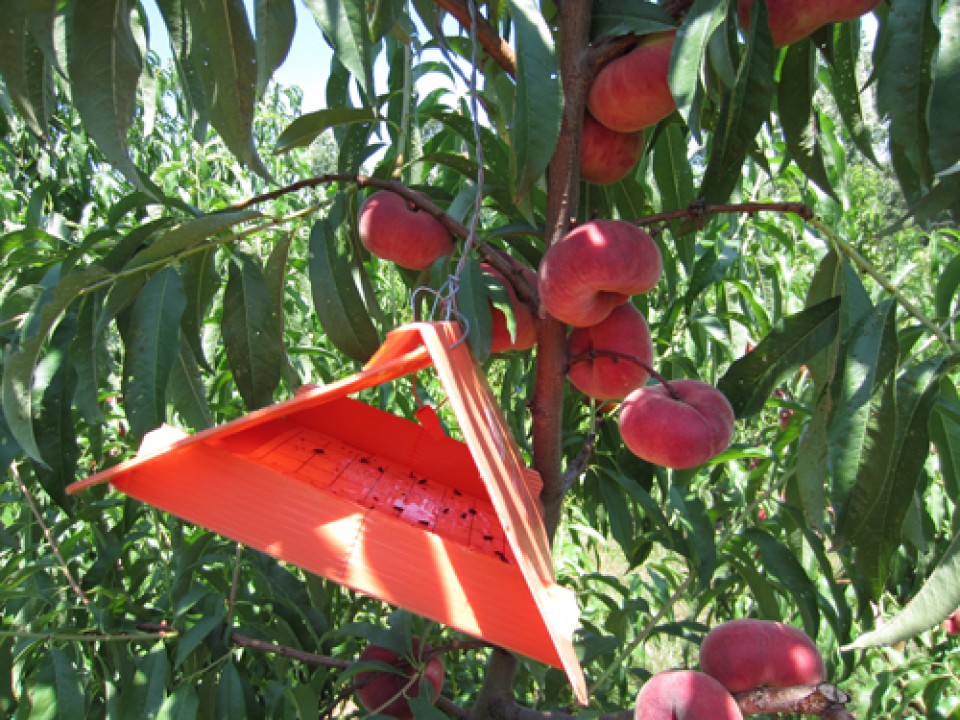
Picture: https://www.weaversorchard.com/wp-content/uploads/2014/04/IPM-027-960x600.jpg

mercredi 12 décembre 2018

141- Alternatives to pesticides -1- Why?

ALTERNATIVES TO PESTICIDES -1- WHY?

My previous article gave me the idea of ​​this new series, very important to face all challenges facing modern agriculture, in a context of societal demands for the reduction or even the prohibition of synthetic pesticides, and the need to maintain a highly productive agriculture that respects the environment and the health of consumers and users.


It seems interesting to me to take a look at what exists to replace them.
Because we will not make a sufficiently productive agriculture without means of phytosanitary protection. Although it is true that certain crops, under certain conditions, can be produced without any pesticide, the vast majority of agricultural production has an indispensable need for means of control and pesticides, whatever their origin, so that the production is sufficient, the farmer's income too, and that food safety is guaranteed to the consumer.

I remind you that I radically oppose a ban on synthetic pesticides.
It's an intellectual scam to let an uninformed, naive and manipulated public think that agriculture can live without pesticides.
It's also an intellectual scam to suggest to the same public that non-synthetic solutions exist to replace all synthetic pesticides in all crop situations.
It's still an intellectual scam to make this same public believe that all that is natural is good, and that a natural pesticide is better than a synthetic pesticide. You can see it in my series "Natural vs. Synthetic".
Finally, it's an intellectual scam to suggest, as is still the case for a large proportion of consumers, that organic farming does not use pesticides. Communications are systematically made on the same model, where it says "without pesticide" and is returned with an asterisk to a note written in small characters and at the end of the text "synthetic". 
To be convinced of this, it suffices to observe the European progress of the biopesticide market:

Even if I am certain of what I have just explained to you, I am also convinced that the organic movement has the great merit of obliging the whole agricultural sector to question itself, to change the way it looks at its own activity, to look for alternatives to the most negative aspects, in particular concerning the impact on the environment and the health risks.

It is therefore very interesting to know the alternative methods available or in development. Even though I am convinced that a pesticide-free farming is impossible, I am also convinced that it is possible to greatly reduce its use.
Many researchers around the world are trying to find solutions, because the removal of synthetic pesticides would have serious consequences for the productivity of agriculture, the increase in hunger in the world, and even the health risks of our food. One of all consequences would be a likely sharp increase in the cost of food, severe financial hardship for farmers in the affected areas, and some, often difficult to assess, risks of food insecurity. Roughly, we can estimate that the availability of food will be more difficult to maintain stable.
Dear readers of rich countries, don't worry. You will always have to eat. You are lucky, like me, to live in a solvent country, the target of choice for export, one of those destinations that will never be lacking in food because you can afford to pay for it.
But people in developing countries are likely to suffer much more from food difficulties than ever before, since the export of food could become an essential source of income for states and farmers.


New methods are especially attracting the attention of multinationals and some startups, determined to take advantage of a huge cake on the horizon, the massive supply of food to rich countries.
And that's normal.
There is a real need.
Changing mentalities, first in developed countries and then progressively in developing countries, is pushing agriculture towards organic production, or at least towards less pesticide greedy production.

Actually, it's not exactly that. Regardless of the method of production applied, and even while it is true that there are ways to reduce the pressure of attacks of many diseases and pests, the fact remains that crops will remain more or less sensitive to them.
In order to avoid excessive production losses, the farmer will implement all available means to avoid potential damage.

Organic farming forbids everything that is not of natural origin (with few exceptions), without guaranteeing the safety of the technique used, nor even the environmental risks it presents, as it is the case for copper or neem oil, or by the production of natural toxins by deficiency control of fungal diseases.


The conventional farmer no longer has any interest in using pesticides blindly. They are expensive, even very expensive, and they can have side effects on the crop itself, as is the case with pyrethroids with mites, which promote the development of other phytosanitary problems which in turn will require the use of more pesticides.

The two main directions of production, organic or conventional, thus come together on the bottom of the problem: any intervention in the fields has side effects and undesirable consequences.
Nothing is ever benign, whether using a respectful technique or a natural pesticide, or using a synthetic pesticide.

The subject of this new series is precisely to list the techniques and methods available to avoid the use of pesticides, especially synthetics.
On some crops, non-synthetic alternatives do not currently allow sufficient production.
But it will come, I don't know when or how, but it will come.

In the meantime, any ban not correctly prepared by the prior existence of a confirmed alternative solution, will have serious consequences on disponibility of food.
The likely forthcoming ban on glyphosate could prove disastrous, especially for virtuous production methods such as conservation agriculture, with a result exactly opposite to that sought after.
The ban on neonicotinoids, whose effects on bees are questionable and controversial, will also have serious consequences for some crops.


It would be better to place priorities, without bias, without ideology, according to indisputable scientific criteria, and to promote the search for solutions to resolve these priorities.

Many works are in progress or have already resulted. I will present them in several chapters of this series, and I will publish a new article every time an innovation deserves to be talked about.

In next chapters of this series, I will talk about the evolution of knowledge about pests and diseases, as well as the behavior of plants against these aggressors, pesticides of natural origin, living useful organisms that avoid the use of pesticides, the influence that the farmer can have on plant self-defense capabilities, the use of pheromones, the influence of biodiversity on parasite risks, genetic research etc.

See you soon.

dimanche 27 mai 2018

131- Agroecology -8- A world without petroleum

AGROECOLOGY - A WORLD WITHOUT PETROLEUM

It will be almost 50 years since the time of the first major oil shock of 1973 that we are told over and over again that the world's oil reserves will be exhausted in 50 years. In 1972, when this serious crisis was looming for a year, the Club of Rome, with the help of a group of MIT researchers, had even planned a depletion of oil reserves twenty years later, in the publication "The limits to growth" https://www.clubofrome.org/report/the-limits-to-growth/
That will definitely happen, that's for sure, although no one is able to predict seriously when that happens. However, one must not be a diviner to understand that a mining resource that is extracted and consumed at this rate, necessarily has a short life expectancy.
That's what will happen at the end of the oil era that interests me today.


Petroleum is the basis of an incredible and very diverse industrial and economic activity, chemistry, pharmacy, agrochemistry, textile, plastics, glues, paints, transports, lubricants, fuels and all their derived products such as paraffin for example. This immense activity will then stop, at least in its present form. Petroleum is today the flagship raw material for all human activity.
Faced with this preponderant place, a huge research activity has been set up, for several decades, to find alternative raw materials for all these activities and productions.

Moreover, the very fertile human genius has already found alternatives for many things. It is often the price, the resistance or the difficulty of supply which makes complex their generalization, as one sees for example for agricultural plastics of vegetable origin. To these technical or economic difficulties, is added the resistance of the current industries which, sometimes, slow as much as they can certain solutions likely to make them competition.
Replacing such a versatile and economical raw material is not easy, especially since oil has shaped, in 150 years, an economic and industrial model whose adaptation is complex.

To put it simply, we can say that petroleum substitutes are oil, cellulose and fibers. These three essential elements to replace petroleum come all from plant and animal production.


The future of humanity therefore passes through agriculture. It's no secret to anyone when it comes to food. But it is likely that few people are aware of it with regard to the chemical industry, textiles, plastics, many modern materials or fuels.
In short, the future of human activities depends on agriculture.


The end of petroleum will profoundly upset the geopolitical balance of the planet, and powerful countries will be those who have been able to preserve their productive capacity in agriculture, whether by preserving agricultural land, by maintaining soil fertility, or the quantity and quality of freshwater resources available for agriculture.

This is where agroecology comes into play, not through the ideologies that are linked to it, but through its development by political choice, and especially by its daily practice by farmers, and in the diversity of its many facets. .
Will major grain countries such as Ukraine still be able to produce as much without a shift to better conservation practices?
Will the frequent refusal to create water reservoirs for ecological or political reasons turn into a serious agroecological problem?


Countries must develop their agricultural potential with a long-term vision, based on conservation agriculture, which can produce a lot while preserving the fundamental resources of biodiversity, soil and water.

Industrial agriculture is not bad in itself. Producing on a large scale has its advantages in terms of quality of structures, compliance with protocols and standards, and investment power, as well as the provision of products. But it must be clearly framed and controlled to avoid the risk of social and environmental drift.

In my opinion, organic farming, in its current forms, will not be able to meet all the needs of humanity in view of the disappearance of the current main raw material.
The current promotion of permaculture as a model to follow and as the future of the world, is more a need to reassure oneself of an intellectual class, mostly favored and urban, largely disconnected from reality, than a farsighted vision of the real needs of humanity and of the planet.
Feeding the world is one thing, but providing it with food, energy and raw materials is another.

The reasonable path to the future is in the middle ground, as is very often the case. And in the case of agriculture, the middle ground lies in an intensive production, but respectful of the environment and the consumer, which does not refuse the chemistry of synthesis by pure dogmatism, but chooses all its production practices for their combination of technical and agronomic advantages on the first hand, and their minimal effects on the environment and health, as well as the saving of resources on the other.

Picture of my own

This agriculture already exists. It is constantly changing, improving day by day, but does not have a real political and social recognition because it does not refuse synthetic chemistry. It is called conservation agriculture for annual cereal and industrial crops, and integrated agriculture for perennial crops and market gardening. But it is not considered politically correct, and finds itself placed by civil society at the same level as industrial agriculture or even the agricultural productivism resulting from the Green Revolution, as it was practiced in the 1960s.
It is totally different, however, and is much closer to organic agriculture than industrial agriculture.
But she has the disadvantage of not to submit to dogma and must be kept quiet.
Guardians of this dogma are in particular the big environmental NGOs, with the support, declared or not, of many personalities of the politics, the spectacle, the cooking and the journalism, and don't accept what they consider as a deviance.
"It's hard to accept the truth when the lies were exactly what you wanted to hear." (Quotation of unknown origin found on Web).

Organic farming retains its place in this agricultural panorama of the post-oil era, to serve a demanding public, rather wealthy, and rather urban. It also remains an important source of evolution and search for new solutions. The fact of never being able to resort to certain solutions obliges to invent, to imagine. Organic farming, in all its forms, is an excellent laboratory of progress.

But agroecology is both a farmer's decision and a political orientation.
Countries that are interested in it, or have already chosen to make it a socio-economic goal, need to make progressive decisions.
Nobody must ever forget that agriculture is not a person.

Agriculture is a whole, a set of people, businesses and interdependent activities, often fragile, that should be changed gradually and with the necessary support so as not to weaken them further.

Countries that will be able to properly prepare for this post-oil era have a bright future ahead of them.

Still, it will be necessary to arrive at this crucial moment with an agriculture in good condition, capable of responding to these new challenges.

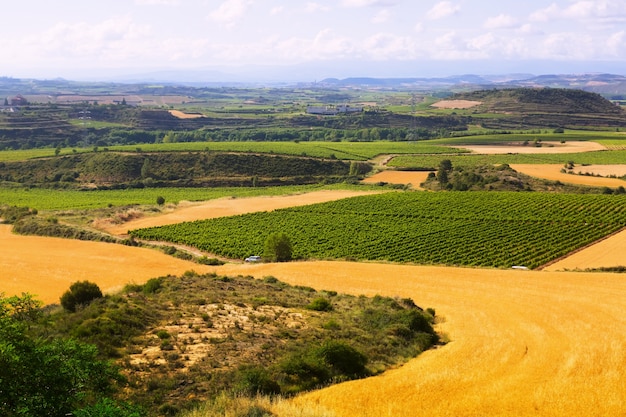
Picture: https://image.freepik.com/photos-libre/paysage-rural-en-ete-la-rioja_1398-4757.jpg

samedi 21 avril 2018

128- Agroecology -7- Agriculture, always greener

AGROECOLOGY - AGRICULTURE, ALWAYS GREENER.


Although the general public, through an incessant media hype, thinks the opposite, the rapprochement of conventional agriculture and organic farming is obvious for those who really care about the issue.

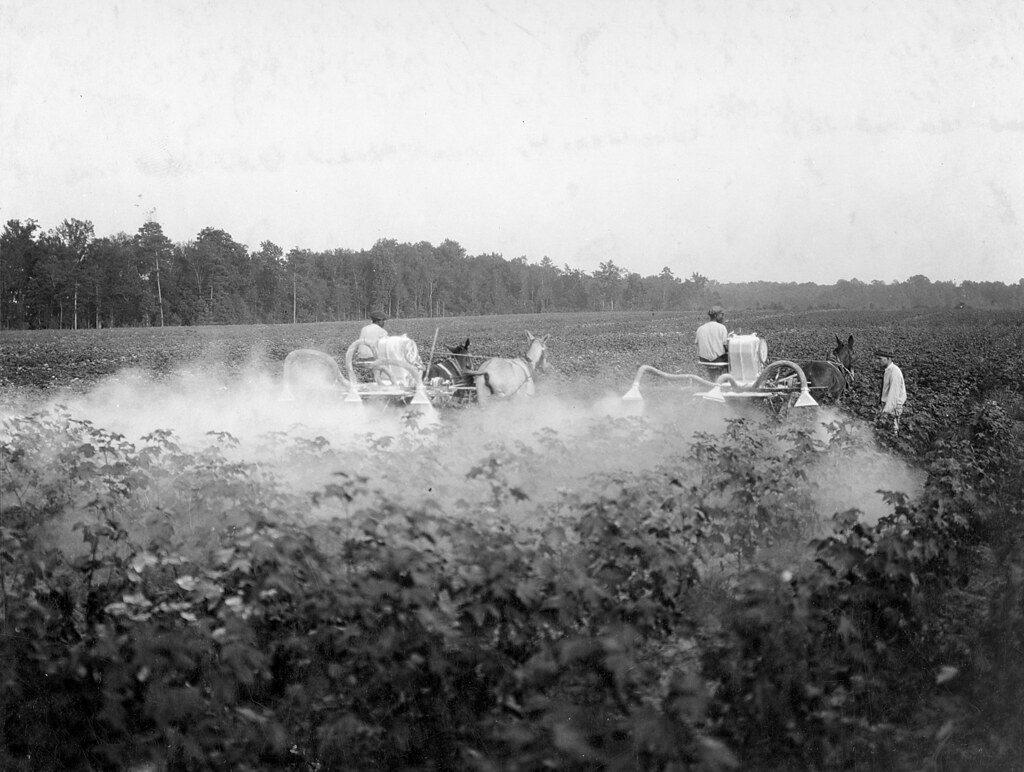
Picture of my own

After World War II, Western agriculture abused synthetic chemistry, gradually dragging many developing countries into its wake. It was not a deliberate will of farmers, but rather a conditioning and a strong political will. It was the time of the Green Revolution, full of good intentions and very basic and sometimes mistaken conceptions.
Agriculture was a major driver of economic development. Productivism was the order of the day. It was necessary to feed a population eager for comfort and good food after years of deprivation. It was also necessary to bring in foreign currency, so to export, and agriculture was one of the most obvious axes.
The need for food and foreign exchange was enormous, as was the lack of knowledge of the risks, at least at the level of users (it was the era of the all-powerful DDT, present even in domestic insecticides and in anti-lice lotions for kids, with the blessing of the health administration). To this it should be added that the level of training of farmers was generally very low.


Gradually, research has done (and done well) its work, making many discoveries, always better understanding the functioning of animals and plants, soils and ecosystems, and gradually disclosing this new knowledge.
In short, progress was in progress.

In parallel with these agronomic advances, technologies have progressed at an even faster pace. At the time of DDT, there was no analysis of pesticide residues on food products. These techniques were developed in the 70s, with advances in electronics, and chemistry. DDT has been banned since the early 1970s.
The first residue analysis equipment was able to measure the presence of a molecule in levels of 1 mg/kg (1 ppm) or 1 gram of chemical molecule in 1 ton of food.
At that time, some products might have had pre-harvest deadlines of 0 days. In other words, it was possible to make a chemical treatment, and to harvest fruits or vegetables the same day. And despite everything, analyzes gave absence of residues.
Nowadays, these same equipment are able of determining the presence of a molecule in levels of 1 mg/ton (1 ppb), in other words 1 gram of chemical molecule in 1000 tons of food, that is to say one accuracy level 1000 times higher.
These technological advances have made possible to detect aberrations in authorized uses, and more generally in legislation.
All legislation concerning authorizations and use of chemical pesticides has been accordingly amended.


Meanwhile, medicine has also made great progress, and it has become clear that certain practices or products, known to be harmless, were not so good. Another source of modifications of uses.

At the same time, the research carried out on the environment, and on the impact of these same practices, made it possible to measure their effects, positive, and especially negative.

During the same period, agricultural education has increased considerably, and the level of training of farmers, today is good, at least in the industrialized countries. With this training came the reflection, the reasoning, the integration of agricultural activity in its environment.

Finally, technological progress has also affected information very directly, giving access to all actors in society, to an immense source of information. Unfortunately, the Internet, real revolution in the availability of information, has also become a gigantic forum in which anyone can say anything, without giving proof of what he says, while receiving a large audience.

All these advances, made in parallel, but without consultation with each other, have led to many changes in legislation, in concerns, in behavior.

However, despite all the problems detected a posteriori thanks to technological and scientific developments, despite the proven toxicity of certain products in common use, life expectancy has steadily increased in the industrialized countries. The quality and diversity of available food counterbalanced the problems caused. This does not mean that we should not change anything, on the contrary. But we have to relativize the seriousness of certain problems.
It must also be remembered, particularly with regard to soil and groundwater pollution, that we continue to pay, even today, the consequences of certain decades-old mistakes. Thus, some soils still contain DDT residues, more than 40 years after its prohibition, but decomposed as DDD and DDE. It will take several more decades to disappear.
This is why current assessments are so strict, especially concerning the degradation of new molecules in soils and water.


Going back to the subject of the day, all these changes have had a series of important consequences on agriculture:
-       Farmers are currently well trained and concerned about their health, the health of consumers and their environment.
-       Ecological movements have developed strongly and, by their often questionable action, have largely participated in this awareness, now widespread throughout society.
-       Governments have taken the measure of the problem and have legislated, both on authorizations of chemicals, and control of their use.
-       The number of authorized molecules has been drastically reduced, with the elimination of all the most dangerous products, and the authorized residue levels have all been sharply revised downwards. Currently, European legislation is the most restrictive in the world by far.
-       Chemical companies have radically changed their research orientations, in order to respond to these evolutions, with the result of the apparition of products that are ever more respectful of the environment, the user and the consumer. Even the biggest chemistry companies have started looking for organic products.
-       Most conventional farmers are integrating into their methods and production techniques, elements, always more numerous, compatible with organic farming.
-       Some points remain unresolved, in particular measures of the real impact of non-chemical pesticides, authorized in organic farming, on the environment, on the user and on the consumer. This is where the media pressure does not work well.


In fact, if we look closely, we realize that conventional agriculture has largely evolved towards an integrated production for woody crops (fruit production, vine, olive, citrus, etc.) and for many annual crops, such as horticulture. For other crops (cereals, cotton, forages, etc.), conservation agriculture goes in the same direction. These two methods and their variants have incorporated in cultivation practices, many more environmentally friendly techniques, have reduced the use of pesticides and fertilizers, the doses and times of application have been greatly improved thanks to the knowledge gained on the biology of crops, soils and the environment. See for example http://culturagriculture.blogspot.com.es/2014/11/32-farming-methods-4-integrated-farming.html

At the same time, organic farming has also evolved, especially with the arrival of new solutions to the health and nutritional problems of crops. It must be said that there is a great deal of public and private research on plant protection techniques and non-chemical pesticides.

Crop protection remains a major challenge for farmers, regardless of the production method. It must be recognized that the profitability of the crop remains the first concern for the farmer who is, above all, a business leader, whose activity must not only be profitable, but in addition it must allow him to generate sufficient income for himself in order to live worthily his family.

Picture of my own

In fact the rapprochement between these two great currents is rapid, and inescapable. I don't believe that we are coming to a fusion, because organic farming refuses certain orientations, such as biotechnologies, although they are undoubtedly the most direct and rapid way towards a disappearance of pesticide needs, be they chemical, or non-chemical.

The organic tends to stagnate in the evolution of its techniques (except on the phytosanitary protection), keeps many zones of shadows (especially in its communication), and survives with many currently insoluble problems, by accepting sometimes the use of certain synthetic pesticides, under controlled conditions. Public aid, much more important in organic than in conventional, also contributes to its development. But it is industrializing by necessity, to meet the needs of a market increasingly dominated by supermarkets.
Conventional is reforming in depth, is becoming every day a little more respectful of the environment, soil, groundwater, consumers, in short, is becoming greener and greener.
The consumer, so courted by everyone, and largely intoxicated by a politically correct and carefully orchestrated disinformation, will eventually get lost. There are signs that it's increasingly difficult to tell the difference.

And not everybody likes that.
Who among the many profiteers of organic, really wants that organic farming takes a large scale? Who wants this rapprochement and the virtual disappearance of differences?
It would be the death of the golden goose.
Would not this be one of the main causes of the ever more numerous and virulent attacks against conventional agriculture?
Who knows?

It is a short-term vision, capitalist, pure economic management but in the meantime, the benefits will be better, whether economic or political.

If particular and political interests do not take precedence over the public interest, one should actually witness a collaboration between the two tendencies. Yet, in reality, there is a clash.

So, dare I say, who benefits from the crime?
Neither the farmer nor the consumer, anyway.

Picture: http://www.mes-ballades.com/77/image-77/77_FAUNE_combat-de-cerfs-faune.jpg