Affichage des articles dont le libellé est EN- sanitary control. Afficher tous les articles

jeudi 24 janvier 2019

142- Alternatives to pesticides -2- The crop monitoring

ALTERNATIVES TO PESTICIDES -2- THE CROP MONITORING


We can't really classify the crop monitoring as an alternative to pesticides, but I decided to make it the starting point of this series because it's the foundation of Integrated Pest Management, and of phytosanitary protection in organic farming.
None of the methods, techniques, and novelties that will come into it, will develop or function properly without this fundamental step.


Any crop monitoring implies the integration of a rarely commented and yet essential aspect for a modern, productive, respectful, healthy and sustainable agriculture: the knowledge.
Sustainable agriculture is an agriculture of science and knowledge.
The knowledge of the crop first, its physiological cycle, its climatic adaptation, its agronomic requirements, its nutritional needs, its sanitary and physiological sensitivities, its compatibility with surrounding crops, etc.
The knowledge of the soil, which is the vital support of the crop, in order to take into account the potential susceptibility factors (pathogens, risks of nematodes, radicular asphyxia, etc.), and to know the nutritional contributions of the soil to the crop (including the risk of deficiencies).
The knowledge of adverse risks, especially climate risks, diseases, pests.
The knowledge of crop protection auxiliaries (insects, fungi and predatory vertebrates), which will be useful in helping to solve specific problems of the crop.
The knowledge of the environment of the growing areas, to know what help it can bring us (favorable areas for the development of some auxiliaries for example), or what constraints it assumes (the proximity of illuminated areas may increase the presence of some nocturnal Lepidoptera, harmful to crops for example), and what the farmer will have to do, or not to do in order to take into account this environment while getting the best possible result of his activity.

It should be noted that this level of training and knowledge, now recognized as the essential starting point for any evolution of agricultural production towards virtuous practices, is a recent (and not yet fully generalized) achievement in the most developped countries (from the second half of the 20th century), and still to be acquired in much of the world. Agriculture universally remains as one of the most backward sectors of human activity and the world economy, in education, training and development.

Picture: Issiaka Konate (ARAF - Dogon Plateau), Mali

Once this knowledge has been acquired and the crop put in place, the farmer will have to implement a process, often complex, which will allow him to put his crop in the most favorable conditions for its development and production, both in terms of quality in quantity.
One of the key points will be the protection of the crop against diseases and pests.

-       He has first to implement all available means to prevent health attacks from occurring. It's prophylaxis. This will be the removal of contaminated remains from previous or adjacent crops, pruning, cleaning of surrounding areas, etc.
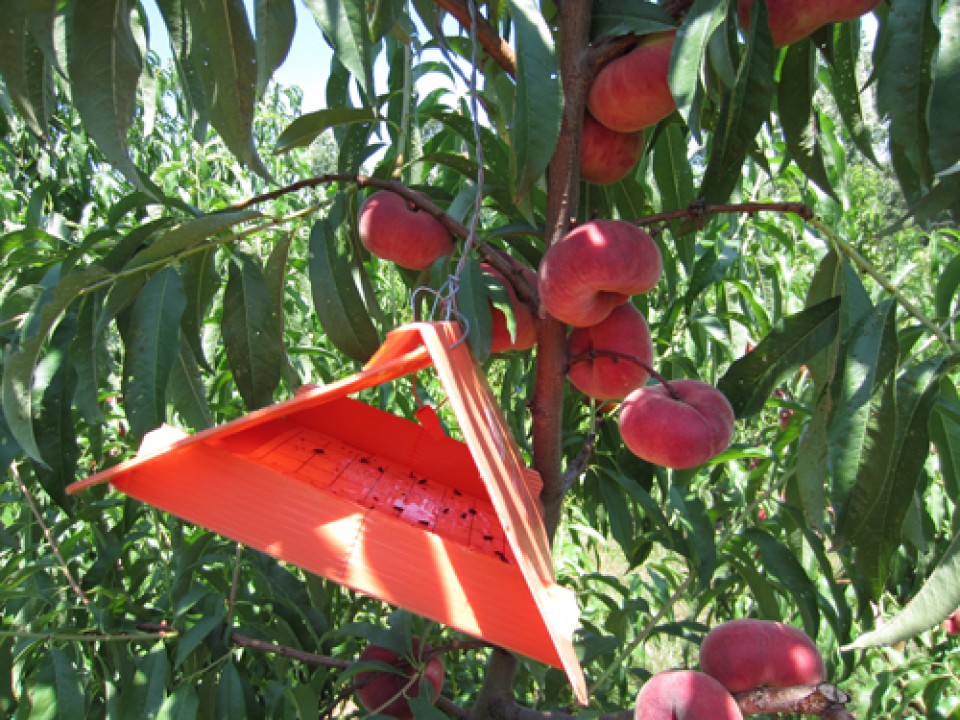
-       He will then implement observation systems, so as to detect attacks as early as possible. It's monitoring. It's the setting up of monitoring traps, observation protocols, counting, climatological recordings, etc.
-       He will link observations and counts with reference levels called "nuisance thresholds", which vary according to the crop, the region, the type of parasite and the time. He will determine in this way from what moment a present threat becomes really dangerous and presents an economic risk. This is the notion of intervention threshold.
-       At the same time that he observes the populations of pests, he observes the presence of predators of all types. They are insects, mites, fungi or vertebrates (birds, snakes, carnivores) that feed on different risks present on crops. Their presence can greatly reduce or even completely eliminate the threat of a pest population. It's the use of auxiliary organisms.
-       He will choose the intervention method on a case by case basis. He will use pesticides, natural or synthetic, choosing them for their effectiveness, their side effects and the risks to the environment and health, when no other means will solve the problem. This is the intervention decision.

Each crop, each period of the physiological cycle, each type of climatic conditions will require a suitable response.
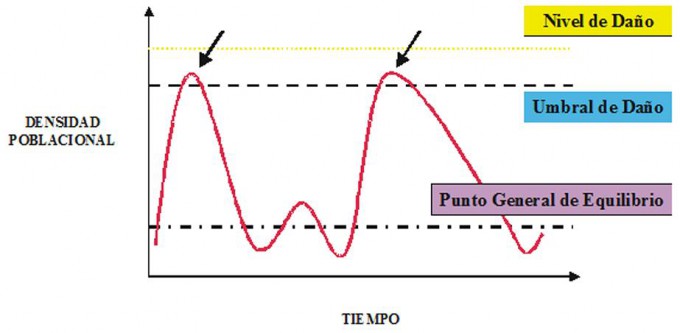
Monitoring of population levels of diseases and pests and their auxiliaries allows deciding the best intervention technique, if it is needed, and its optimal timing.


THE CHOICE OF PRODUCTS

When I started in agriculture in the early 1980s, the available phytopharmacopoeia included a large number of highly versatile synthetic molecules. When you sprayed against an attack of aphids, all that was present (Diptera, Hymenoptera, Coleoptera, Lepidoptera and other harmful or useful insects) was also eliminated. The respect for equilibrium was not on the agenda, and anyway it would have been difficult to try, because none of available and allowed pesticides, or almost, was selective.
Gradually, more and more specific products appeared, reducing the versatility, therefore the risks of "cleaning" untimely.
It must be pointed out, however, that at the same time certain problems have appeared, or reappeared, often known as described in the old treaties, but hitherto generally controlled by the versatility of phytosanitary products.

The information to the farmer has also increased a lot.
Until the 1990s, he knew only the risk for the user (and often only partially), and the time to use before harvest.
Gradually, the farmer has received ever more comprehensive information about health, the environment, and the conditions of use.
With improved measurement techniques and lower costs, pesticide residue controls have become more widespread. Standards for each product and type of food have been established.
The most versatile products have been banned for the most part.


While it is true that until the end of the 1980s it was usual (but not systematic) for farmers to spray by schedule, without really worrying about the presence of diseases or pests, let alone auxiliaries, it's no longer the case today, for several reasons:

-       The level of training and knowledge of farmers has risen sharply.
-       The improvement of technical support to farmers by public, private or cooperative-type structures also makes it possible for less-educated farmers to progress.
-       Social pressure around sustainable agriculture with minimal impact on health and environment has literally exploded in recent years.
-       Concern about the impact of farming practices by the farmers themselves has risen sharply.
-       The legislation is tightening each year a little more, both on pesticide authorizations and conditions of employment, and controls and sanctions also, at least in rich countries.
-       Supermarkets, which control the majority of consumer markets in industrialized countries, oblige their suppliers to follow and comply with specifications that are currently very focused to health and environmental risks. Controls are numerous and penalties are severe.
-       The cost of phytosanitary protection is high, and significant savings are possible (in comparison with a systematic schedule spraying program) thanks to a good management.
-       Many biological or very specific pesticides are appearing on the market, with specific technical requirements that request very precise conditions of use, but which allow the farmer good technical results without the risk of residues.


It's also important to note that the pest thresholds used in the 1980s and 1990s had to be revised in most cases because of the evolution of available solutions.
Indeed, when the farmer had very versatile products with a significant shock effect, he could wait for harmful attacks to reach relatively high levels.
Today it's very different, because solutions rarely have a powerful shock effect, forcing the farmer to anticipate.

The philosophy of protection is no longer to "let grow up and clean everything up", but rather to "prevent the problems from gaining momentum", which would make them very difficult to solve.

This paradigm shift also has a very direct impact on how the farmer focuses on protecting his crops, because he knows that if he is not able to avoid the development of some problems, the economic consequences can be extremely serious.

In short, the monitoring of the crop has long been an important technical point for the farmer.
With the many changes of recent years, it has become a real working method that occupies an essential place in the protection of the crop, and in obtaining a satisfactory technical result.

Yes, if it is true that crop monitoring is not, in itself, an alternative to the use of pesticides, it's however a key factor in the success of the crop with a minimum of pesticide interventions.
Picture: https://www.weaversorchard.com/wp-content/uploads/2014/04/IPM-027-960x600.jpg

mercredi 12 décembre 2018

141- Alternatives to pesticides -1- Why?

ALTERNATIVES TO PESTICIDES -1- WHY?

My previous article gave me the idea of ​​this new series, very important to face all challenges facing modern agriculture, in a context of societal demands for the reduction or even the prohibition of synthetic pesticides, and the need to maintain a highly productive agriculture that respects the environment and the health of consumers and users.


It seems interesting to me to take a look at what exists to replace them.
Because we will not make a sufficiently productive agriculture without means of phytosanitary protection. Although it is true that certain crops, under certain conditions, can be produced without any pesticide, the vast majority of agricultural production has an indispensable need for means of control and pesticides, whatever their origin, so that the production is sufficient, the farmer's income too, and that food safety is guaranteed to the consumer.

I remind you that I radically oppose a ban on synthetic pesticides.
It's an intellectual scam to let an uninformed, naive and manipulated public think that agriculture can live without pesticides.
It's also an intellectual scam to suggest to the same public that non-synthetic solutions exist to replace all synthetic pesticides in all crop situations.
It's still an intellectual scam to make this same public believe that all that is natural is good, and that a natural pesticide is better than a synthetic pesticide. You can see it in my series "Natural vs. Synthetic".
Finally, it's an intellectual scam to suggest, as is still the case for a large proportion of consumers, that organic farming does not use pesticides. Communications are systematically made on the same model, where it says "without pesticide" and is returned with an asterisk to a note written in small characters and at the end of the text "synthetic". 
To be convinced of this, it suffices to observe the European progress of the biopesticide market:

Even if I am certain of what I have just explained to you, I am also convinced that the organic movement has the great merit of obliging the whole agricultural sector to question itself, to change the way it looks at its own activity, to look for alternatives to the most negative aspects, in particular concerning the impact on the environment and the health risks.

It is therefore very interesting to know the alternative methods available or in development. Even though I am convinced that a pesticide-free farming is impossible, I am also convinced that it is possible to greatly reduce its use.
Many researchers around the world are trying to find solutions, because the removal of synthetic pesticides would have serious consequences for the productivity of agriculture, the increase in hunger in the world, and even the health risks of our food. One of all consequences would be a likely sharp increase in the cost of food, severe financial hardship for farmers in the affected areas, and some, often difficult to assess, risks of food insecurity. Roughly, we can estimate that the availability of food will be more difficult to maintain stable.
Dear readers of rich countries, don't worry. You will always have to eat. You are lucky, like me, to live in a solvent country, the target of choice for export, one of those destinations that will never be lacking in food because you can afford to pay for it.
But people in developing countries are likely to suffer much more from food difficulties than ever before, since the export of food could become an essential source of income for states and farmers.


New methods are especially attracting the attention of multinationals and some startups, determined to take advantage of a huge cake on the horizon, the massive supply of food to rich countries.
And that's normal.
There is a real need.
Changing mentalities, first in developed countries and then progressively in developing countries, is pushing agriculture towards organic production, or at least towards less pesticide greedy production.

Actually, it's not exactly that. Regardless of the method of production applied, and even while it is true that there are ways to reduce the pressure of attacks of many diseases and pests, the fact remains that crops will remain more or less sensitive to them.
In order to avoid excessive production losses, the farmer will implement all available means to avoid potential damage.

Organic farming forbids everything that is not of natural origin (with few exceptions), without guaranteeing the safety of the technique used, nor even the environmental risks it presents, as it is the case for copper or neem oil, or by the production of natural toxins by deficiency control of fungal diseases.


The conventional farmer no longer has any interest in using pesticides blindly. They are expensive, even very expensive, and they can have side effects on the crop itself, as is the case with pyrethroids with mites, which promote the development of other phytosanitary problems which in turn will require the use of more pesticides.

The two main directions of production, organic or conventional, thus come together on the bottom of the problem: any intervention in the fields has side effects and undesirable consequences.
Nothing is ever benign, whether using a respectful technique or a natural pesticide, or using a synthetic pesticide.

The subject of this new series is precisely to list the techniques and methods available to avoid the use of pesticides, especially synthetics.
On some crops, non-synthetic alternatives do not currently allow sufficient production.
But it will come, I don't know when or how, but it will come.

In the meantime, any ban not correctly prepared by the prior existence of a confirmed alternative solution, will have serious consequences on disponibility of food.
The likely forthcoming ban on glyphosate could prove disastrous, especially for virtuous production methods such as conservation agriculture, with a result exactly opposite to that sought after.
The ban on neonicotinoids, whose effects on bees are questionable and controversial, will also have serious consequences for some crops.


It would be better to place priorities, without bias, without ideology, according to indisputable scientific criteria, and to promote the search for solutions to resolve these priorities.

Many works are in progress or have already resulted. I will present them in several chapters of this series, and I will publish a new article every time an innovation deserves to be talked about.

In next chapters of this series, I will talk about the evolution of knowledge about pests and diseases, as well as the behavior of plants against these aggressors, pesticides of natural origin, living useful organisms that avoid the use of pesticides, the influence that the farmer can have on plant self-defense capabilities, the use of pheromones, the influence of biodiversity on parasite risks, genetic research etc.

See you soon.

lundi 31 octobre 2016

91- Urban agriculture -1- The city to the countryside

URBAN AGRICULTURE -1- THE CITY TO THE COUNTRYSIDE ...

This summer during my holidays, I spent a lovely few days with my mother in Bordeaux. During one of our rides, by car, I was struck by a small fact, insignificant at first glance that inhabitants of Bordeaux know very well, without paying attention, or at least without seeing its full impact.
I won't use any name, because my goal is just to reflect and to make you reflect with me on a real problem.

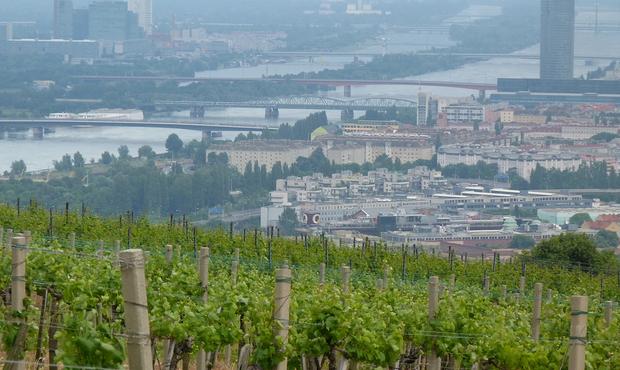
Chateau XX, one of the most famous Chateaux of Bordeaux, is entirely contained in the city. Over time, urban and industrial growth making their work of conquest of new territories, this very famous Chateau with all its vineyards, was left entirely in the city, surrounded by housing and industrial areas, and even intersected by roads, with their train of roundabouts, traffic lights and traffic jams.

Picture: http://www.lafdv.fr/images/20151022/3676_9195.jpg

It's precisely at one of those traffic lights that my eye was attracted by something small, quite insignificant, and very normal in a vineyard in September: the lovely black grapes.
And what did they have then, those grapes, that have since certainly been harvested, so to get my attention?
They were barely a few meters from the road, from my exhaust pipe, and from all exhaust pipes of all cars, trucks and autobuses that pass by this road daily.

And I asked myself the following question: wines of Château XX, true icons of great wines of Bordeaux production, are they sometimes analyzed to know their urban pollutant content?
I refer in particular to hydrocarbon residues, to nitrogen oxides, to fluorinated compounds, and especially to heavy metals, lead, zinc, cadmium or nickel, of which it's known that the risks are far from trivial.

So I went to the biggest bookstore in the city, known for the huge variety of available books. In the city of Bordeaux, in one of the largest libraries of France, books on Bordeaux wines are countless. So I looked for something on this. But nothing. Nothing and nothing, not even a mere mention of a potential problem. Obviously, nobody questions the quality of the wines of Château XX, nor all Grands Crus of Bordeaux.

Then I decided to search the internet what I could find on the subject. Nothing neither. It's true that we can find a few documents showing the production of a pollution by wineries, but nothing on the subject that concerns me.
Suddenly, I had the idea to look if there is something about the risks of pollution in urban gardens. Bingo! There are various publications, and various studies on the subject, especially conducted by universities in the United States, Ukraine and Germany, and which report risks, both of soil pollution (but this one does not theoretically affect the fruit), and air pollution, therefore fruits pollution by atmospheric deposition.

And then it begs the question.

Picture: https://theurbanprospector.files.wordpress.com/2015/03/chicagofarm-thegreenhorns-wordpress.jpg

Indeed, grapes are not washed and brushed one by one after the vintage, and atmospheric deposition therefore likely arrive until the barrique. Molecules like nitrogen oxides decompose probably during the winemaking process. But metals no.

Is it a problem? Maybe not, it is possible that metals are at levels low enough so that there is no health risk.
Yet, according to the above links, plants placed within 10 meters of high traffic roads have a high risk of exceeding European standards.
However, the article also states that the plant barriers are among the most effective ways to reduce the polluting effect. It is reasonable to assume that the bulk of the harvest is in very low levels of pollutants. Or, in the case of wine, the grape is not consumed alone, but mixed with millions of others. It is therefore likely that the levels in wine are low.
But apparently not many people concerned did verify, or in any case, to make it public.
It is likely that it does not present a public health problem. This is especially true in this case, since this Chateau charges prices that don't put this potential risk, to the level of risk to the general public (I saw just last week here in Seville, in the shop gourmet of a department store, a bottle of Chateau XX on sale at more than 450 € ...).

But this situation, involuntary on behalf of Castle XX, who only saw the city moving closer over time, without intervene, is common in agriculture. The more the farm is close to the city, the more it is susceptible to it. This is also the case of all "green belts" around cities, whose local farmers often take advantage of the economic windfall that represents the possibility of direct sale of farm products. Many have also converted their production in organic to attract an ever-growing and eager audience of those "authentic" products.

However, this development that seems inevitable, of a progression from cities to the countryside must not make us forget the negative consequences of this conquest: reduction of agricultural land, disappearance of farmers, rural pollution, and obligation to increase productivity to maintain food capacity.

Picture: http://menehayfarm.co.uk/wp-content/uploads/2016/01/website-intro.jpg

The media, hungry for sensitive subjects, present too often the farmer as the main responsible for the (supposed bad) food quality (increasingly challenged by NGOs with opaque objectives). But should we evade the growing responsibility of urbanization?
Is the farmer responsible for the pollution caused by urban growth? We don't speak of this pollution and its effects on food, then it is, in my opinion, more worrying that the use of pesticides.
The reality on pesticides is made up in order to accuse them, and also their manufacturers and their users. It is fashionable, we distrust everything. Therefore let's provide suspicion to those that want! It's so easy to sell...
The reality of pollution is hidden because there is no one to blame, no scapegoat. In this case, the accusers (the producers of the show and viewers themselves) would find themselves directly on the dock. It's quite difficult to sell ...

...AND THE COUNTRYSIDE TO THE CITY.

But to go further in this reflection, urban agriculture is in full vogue, especially in the environmentalist community.
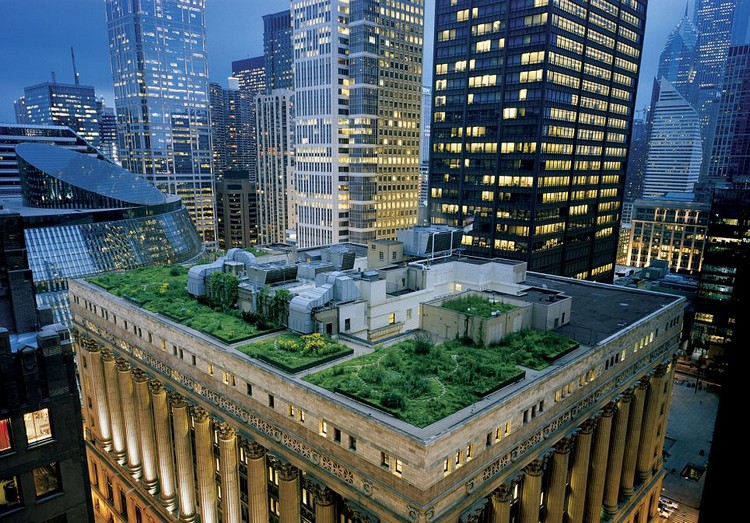
Projects of gardens and orchards on roofs, in courtyards and on balconies are legion. There we can produce without pesticide, only by organic techniques, fruits and vegetables we are sure they are healthy.
Is that true?
Is urban pollution better for health that residues of synthetic pesticides?

The revegetation of roofs, facades and buildings is excellent for biodiversity, for health of bees and birds, as well as for air quality in large cities, there is no doubt. But to make a supposedly healthy food resources, there is a step that personally I will not cross ...

Picture: http://deavita.fr/wp-content/uploads/2016/02/jardin-sur-le-toit-pleine-ville-ultra-moderne.jpg

At least with pesticide residues, there are serious and numerous references, we can always discuss, but which exist. Very long and comprehensive studies are conducted to determine the action on the health and environment of all licensed molecules. Teams to assess the molecules consist of scientists, physicians and agronomists, all highly skilled and controlled. We can trust their conclusions, whatever some think.
Yet some don't hesitate to affirm that the origin of pollutants could be in pesticides (eg permaculture enthusiasts http://www.permaculteurs.com/article/risques-de-pollution-au-potager /).
Does anyone know a pesticide containing lead, cadmium or nickel? There are not any. It's so easy to accuse pesticides of anything, and of the rest also...

For industrial and urban pollutants, there are few references and standards are only for heavy metals. Yet some plants, in particular leaf-foods like salads, spinach, cabbage, and other leaf herbs are particularly exposed to any pollutants having a large collecting area, which increasingly is consumed. This is also the case for a food such as peppers, food that weighs little but has a relation weight/surface very unfavorable.

So, my dear urban gardeners, convinced that your fruits and vegetables are healthier than the ones you buy at the supermarket, you have to know that you probably eat a large number of pollutants for which you are laboratory mice yourselves ...

Picture: http://static.betazeta.com/www.veoverde.com/wp-content/uploads/2012/01/apodemus-660x350.jpg

mercredi 28 septembre 2016

89- Nitrites in meat, but what for?

NITRITES IN MEAT, BUT WHAT FOR?

For once, I will talk about meat. It is not my habit, not because I am a vegetarian, but because this is a subject I know very little. But if the opportunity arises to talk safely without telling you too much nonsense ...

I point to my non-French readers that France is probably the country where the media and political pressure against chemistry in general and against its uses in food (use of agricultural pesticides and additives in food) is the highest. Television programs against agriculture and agri-food industry are extremely numerous, of the order of 1 to 1.5 per week (http://alerte-environnement.fr/2016/09/08/pesticides-multiplication-des-hoax-lagri-bashing-se-poursuit/).
Whatever the subject, the negative aspects are always exhaustively examined with varying degrees of dishonesty, and the positive or simply useful aspects are systematically ignored. The monthly program Cash Investigation, led by the highly publicized and very controversial Elise Lucet is one of the spearheads of this policy to the unstated purposes.

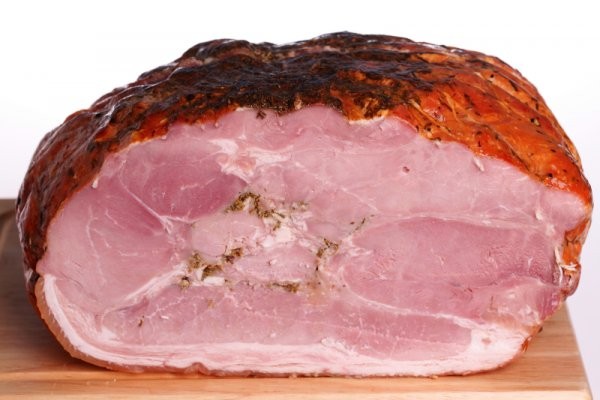
So in the Cash Investigation television program of September 13th (https://www.youtube.com/user/cashinvestigationf2 ), Elise Lucet vehemently denounced, supposed evidences and especially testimonies in support, according to her usual method, the widespread use of nitrites in preserved meats, especially ham and sausages. The sole purpose of the massive use of this additive, according to her argument, is to keep the meat with its pink color.

Picture: http://www.ziaconcetta.com/site/images/normal/Les-produits53710180a2c3f.jpg

Nitrites are accused of being among the responsible, especially of colorectal cancers. IARC, controversial reference as to the impartiality of its work, classify it in the 2A class or probable carcinogen (high probability). The product presents a danger, it seems clear, although controversy exists.
Therefore the risk question is to know what the reasonable quantity that the consumer has not to exceed is. The risk is the danger multiplied by the exposure, in this case, the consumption. (The parachute jump presents a danger. But you will have risk only if you practice).
The more you will consume products containing nitrites, the more you will have risk of developing cancers for which the product exposes you.
The subject is very serious, we should not take it lightly.

Big success for the back-to-school program. It's necessary to re-motivate the public depressed by the summer's end. A little anxiety blow, to do a good audience ratings for the autumn.
Except that the problem is not where it's claimed to be. The show presents the use of nitrites as the main responsible for the increase in certain types of cancers.

Yet there are some details that it completely ignored.

Our societies are noting a significant increase in the number of cancers of all types. The explanations for this are many. Pesticides and fertilizers are, of course, among the first accused.
Yet there is a cause of major importance that today nobody is questioning, but about which we speak little, the age. Life expectancy in the USA was just under 70 years in 1960, it is more than 81 in 2012 (source World Bank). https://www.google.es/?gfe_rd=cr&ei=UiXkV9j0ArOp8wf0u6eoDw&gws_rd=ssl#q=life+expectancy+in+the+uk
Colorectal cancers are typical diseases of the elderly. Increasing life expectancy causes a sharp increase in the number of people likely to develop this type of cancer, so the number of cases.
Should we attribute the increase in these types of cancer to the use of nitrites, or increase the number of older people?

Moreover, the increase of the charcuterie consumption approximately follows the increase in population. In France, the population grew from 44 million in 1960 to 66 million in 2012 (https://www.google.es/#q=population+fran%C3%A7aise ), an increase of 50%, while the charcuterie consumption increased from less than 1.5 million tons to 2.1 million tons, an increase of 50% as well. https://visuels.l214.com/sites/www.viande.info/2014/pages/Evolution-structure-conso-viande-France.jpg


With so few obvious evidences, why is it necessary to do a sensational TV show on a problem that does not exist?
What are the hidden interests that defends Elise Lucet on her show?


Picture (from the film "Les vieux de la vieille"): http://media.senscritique.com/media/000005516361/1200/Les_Vieux_de_la_vieille.jpg


Because the real questions, those she did not want to ask are:
Are really nitrites used only for the meat retains its beautiful pink color?
If this is the case, and that this additive is so dangerous, why do health authorities allow its massive use?
Are agri-food industry lobbies so powerful that governments let them do anything without reacting, assuming it really exists a risk to public health?

A tour on the internet to find information, and here we are on the blog of Wackes Seppi, which makes us a very clear situation summary (http://seppi.over-blog.com/2016/09/cash-investigation- on France-2-nothing-a-wax-the-csa-or-the-telespectateurs.html )

Then we go to the web Info-nitrites, which presents a very simple and clear video (http://info-nitrites.fr/nitrites-et-charcuterie/ ). We take this opportunity in order to assess the amount of ham that we can eat every day without any risk, according to European standards (http://info-nitrites.fr/categorie/questions-reponses/ ).


What do we learn from this?
-       That nitrites are today a necessity to preserve meat more than a few days. There is not, for now, any better product,
-       That, contrary to what Elise Lucet declared, the color pink is only a consequence of the use of nitrites. We must recognize that we are so accustomed to buy pink ham, that if we had to buy it brownish, we would have some difficulties to get used to,
-       That the bacteria against which nitrites have an action are infinitely more dangerous than the risk of cancer, the only cause of which nitrites are not. We speak in this case of botulism (a few hundred cases in Europe every year), listeriosis (around 1500 cases in Europe every year) and salmonellosis (over 150,000 cases in Europe every year, although the meat is not the only cause),
-       That we must choose, as is often the case, between two evils. On the one hand, we have a hypothetical risk of developing colorectal cancer in old age (if abused charcuterie). On the other hand, we have absolute certainty to witness an explosion of cases of botulism, listeriosis and salmonellosis if we ban this additive, with health problems, risks of death and public health, and also the extra costs there would be related,
-       That France is the country of the European Union where the incidence of colorectal cancer is lowest as you can see at the bottom of the following document http://info-nitrites.fr/charcuterie-et-cancer-le-debat/.

Picture: http://i.huffpost.com/gen/2992434/images/o-SALMONELLOSIS-facebook.jpg

So Elise Lucet, since these additives, according to your theory, are intended only to maintain the pink color of the meat, and has no other interest worthy of being mentioned in a broadcast "information" to a primetime on a TV channel of the public service, if we tested the method on you?

A live nitrite-free charcuterie tasting, in your studio with all your great team and your many supporters?
Then we would make a medical monitoring of the entire group, with statistical analysis in support. You could even have a control group, fed with nitrites treated meats.
There would be a public and scientific study of the impact on consumer health, of the incidence of bacteria that non-nitrite treatment would have no control.
Wouldn't it be a great TV program?

One could even make it a reality show, with live video from toilets and from emergency service of the hospital.

A nice viewership perspective!!!

But I prefer not to participate in the experiment, if Elise Lucet does not mind.

I would not steal the spotlight ...